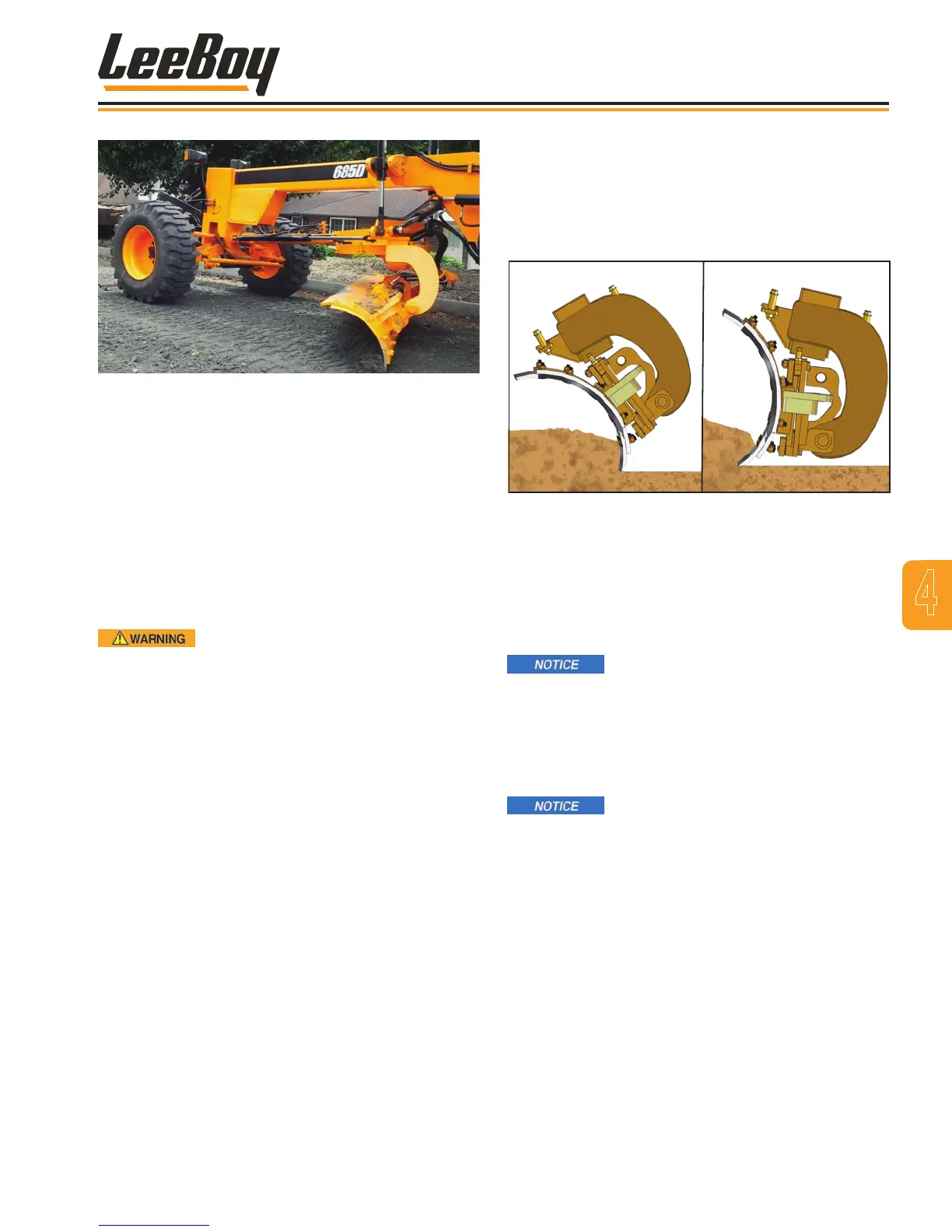
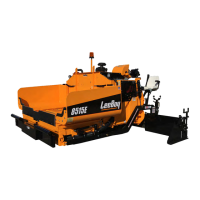
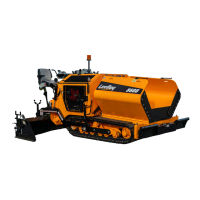
Figure 4-35. Grading with the Moldboard
MOLDBOARD
Grading is most efcient when material is consistently
rolling across the moldboard blade toe to heel. This is
achieved by proper moldboard angle while grading. The
operation of the entire motor grader machine rotates
around the moldboard blade and its precise movement
from the turntable and frame to the hydraulic cylinders
and gears. Levers on the steering column control
moldboard movement.
DO NOT allow others near the grader
while working, especially near the moldboard area.
Serious injury or even death can occur if a bystander
is struck by a moving moldboard.
Moldboard angle is one of the most important elements
of grading since the angle is what allows material to roll
along the moldboard. Improper blade angle and pitch
will overwork the grader and burn more fuel. It can also
cause unnecessary wear on the machine, moldboard
and attachments.
NOTE: When the blade is angled straight across
(perpendicular to the direction of
movement, it is at 0 degrees.
• Most grader work is done at moldboard angles of
10 to 45 degrees.
• Lower moldboard angles (10 - 30 degrees) are
normally used for light, free-owing material.
• Higher moldboard angles (30 - 50 degrees)
are required when processing wet and sticky
material, mixing large windrows, and ditching,
among others. The greater the moldboard angle,
the more material is carried across, allowing for
deeper cuts and heavier grading.
Pitching the moldboard forward or backward changes
the depth of cut across the entire moldboard. (Figure
4-36) Most grading passes start with the top of the
moldboard tilted about two inches (5 cm) ahead of the
bottom. For better penetration, tilt the moldboard more
rearward.
Forward Pitch (Tilt)
Rearward Pitch (Tilt)
Figure 4-36. Moldboard Pitch (Tilt)
• For normal cutting action, the moldboard blade is
used in the upright position only slightly tilted forward.
• Tilting the moldboard forward allows material to roll
for spreading or compacting. Use a forward pitch to
make light cuts, spread material, smoothing material
and typical road maintenance projects.
There are high levels of wear and tear
on the moldboard blade, therefore, inspect the blade
daily. Replace the blade if worn or damaged. (See
Section 5) For maximum cutting edge life in road
maintenance work, maintain consistent moldboard
pitch as frequent position changes can result in
accelerated blade edge wear.
Counteract the resulting side thrust
(inertia) from blade angle and pitch by leaning the
wheels toward the moldboard heel. You may also
need to articulate slightly toward the blade toe for
additional side thrust control.
4
Operation
LeeBoy 685D Motor Grader 4-23


 To Next Page