226
Chapter 16: Programming
16PROG.DOC TI-86, Chap 16, US English Bob Fedorisko Revised: 02/13/01 2:36 PM Printed: 02/13/01 3:04 PM Page 226 of 1616PROG.DOC TI-86, Chap 16, US English Bob Fedorisko Revised: 02/13/01 2:36 PM Printed: 02/13/01 3:04 PM Page 226 of 1616PROG.DOC TI-86, Chap 16, US English Bob Fedorisko Revised: 02/13/01 2:36 PM Printed: 02/13/01 3:04 PM Page 226 of 16
TI assembly language programs and other programs are available on TI’s World Wide Web site:
http:
àà
www.ti.com
à
calc
When you download an assembly language program, it is stored among the other programs
as a
PRGM
NAMES
menu item. You can:
♦
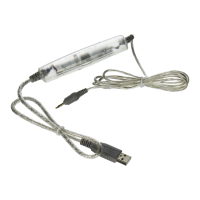
Transmit it using the TI
-
86 communication link (Chapter 18).
♦
Delete it using the
MEM
DELETE:PRGM
screen (Chapter 17).
♦
Call it from another program as a subroutine (page 224).
To run an
assemblyProgramName
, the syntax is:
Asm(
assemblyProgramName
)
If you write an assembly language program, use the two instructions below from the
CATALOG
.
AsmComp(
AsciiAssemblyPrgmName
,
HexAssemblyPrgmName
)
Compiles an assembly language program written in ASCII
and stores the hex version
AsmPrgm
Identifies an assembly language program; must be
entered as the first line of an assembly language program
Entering and Storing a String
A string is a sequence of characters that you enclose within quotation marks.
♦
A string defines characters to be displayed in a program.
♦
A string accepts input from the keyboard in a program.
To enter a string directly, the syntax is:
"
string
"
To concatenate (join together) two or more strings, use
\
. The syntax is:
"
stringA
"+"
stringB
"+"
stringC
"+
...
You do not use quotation
marks to enter a string name.
In concatenation, you can
substitute
stringName
for
any
"
string
"
.


 To Next Page