66
Chapter 4: Constants, Conversions, Bases, and Complex Numbers
04CCCB.DOC TI-86, Chap 4, US English Bob Fedorisko Revised: 02/13/01 2:20 PM Printed: 02/13/01 3:01 PM Page 66 of 1604CCCB.DOC TI-86, Chap 4, US English Bob Fedorisko Revised: 02/13/01 2:20 PM Printed: 02/13/01 3:01 PM Page 66 of 1604CCCB.DOC TI-86, Chap 4, US English Bob Fedorisko Revised: 02/13/01 2:20 PM Printed: 02/13/01 3:01 PM Page 66 of 16
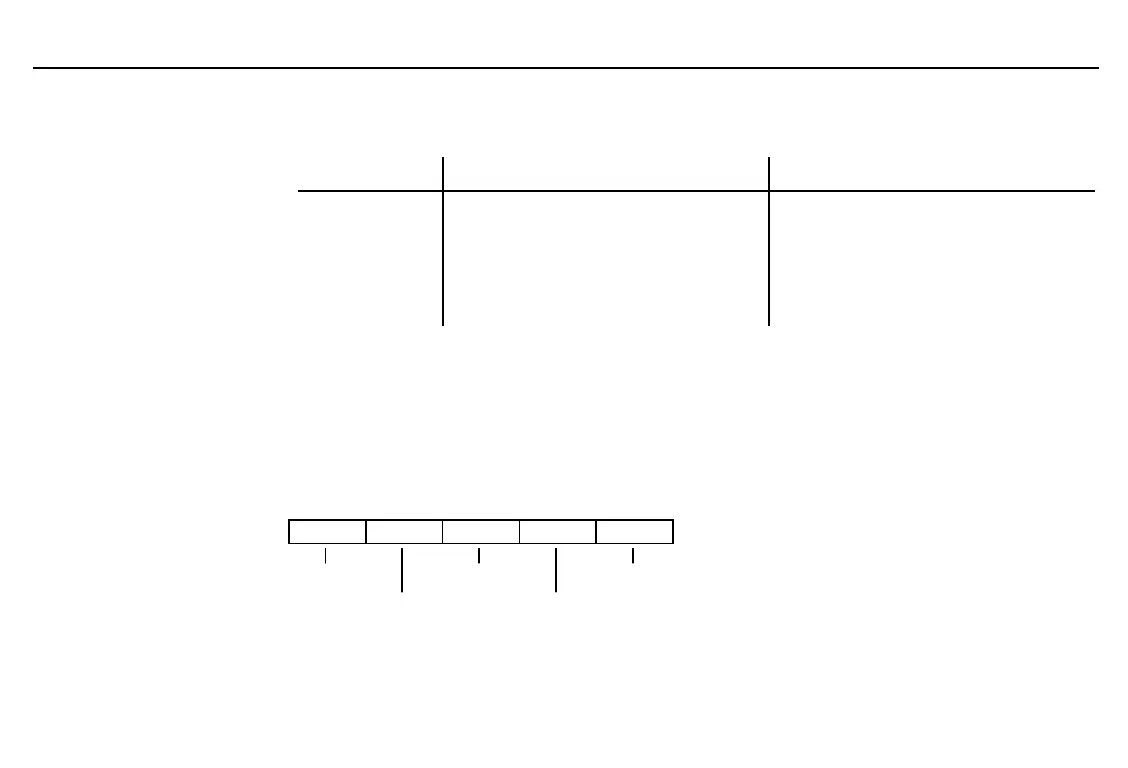
Number Base Ranges
Binary, octal, and hexadecimal numbers on the TI
-
86 are defined in these ranges.
Type Low Value
à
High Value Decimal Equivalent
Binary 1000 0000 0000 0001
b
0111 1111 1111 1111
b
L
32,767
32,767
Octal 5120 6357 4134 0001
o
2657 1420 3643 7777
o
L
99,999,999,999,999
99,999,999,999,999
Hexadecimal
ÚÚÚÚ
Õ
50
×
ÙÚ
85
×
001
h
0000 5
ÕÚ
3 107
Õ
3
ÚÚÚ
h
L
99,999,999,999,999
99,999,999,999,999
One’s and Two’s Complements
To obtain the one's complement of a binary number, enter the
not
function (page 68) before
the number. For example,
not
111100001111
in
Bin
mode returns
1111000011110000
Ü
.
To obtain the two's complement of a binary number, press
a
before entering the number.
For example,
L
111100001111
in
Bin
mode returns
1111000011110001
Ü
.
The (Number) BASE Menu
-
—
Õ
-
Ú
TYPE CONV BOOL BIT
hexadecimal base conversion rotate
à
shift
characters menu menu
menu base type Boolean operator
menu menu


 To Next Page