CFM-BL10Pro General instruction manual
16 / 87
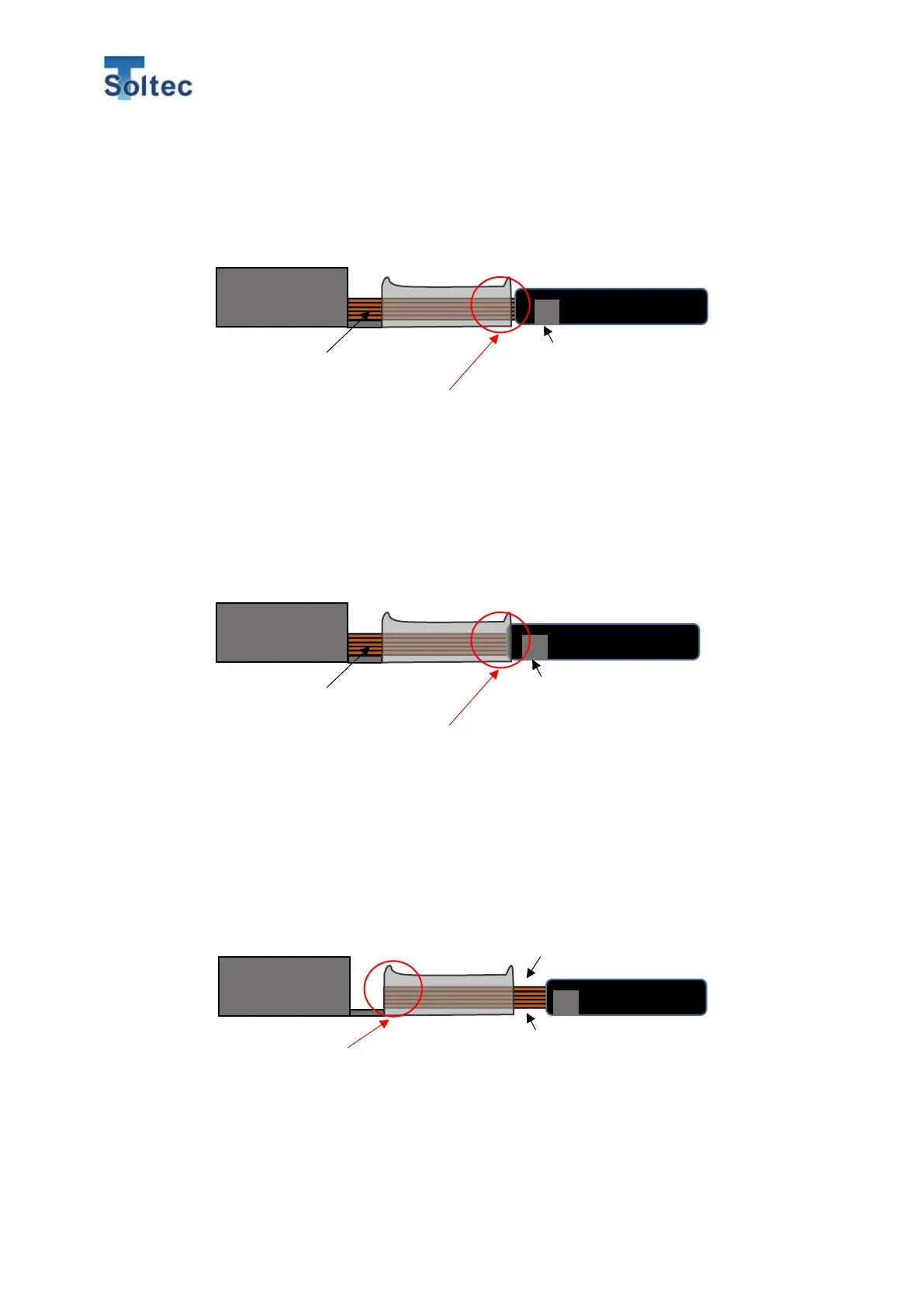
B) Defects that are difficult to detect
a) High feed (Wire barrel does not pinch the insulation)
This is the case where the wire barrel does not pinch the insulation (deep-feed
defect). The total force applied onto the wire barrel does not change, which means
the crimping force curve does not change either. That’s why it is difficult to detect.
b) High feed (The insulation is under the bell mouth, but not pinched by the wire
barrel)
This is the case of deeper feed than usual. The insulation looks like being under the
bell mouth. It seems easy to detect this kind of deep feed, but the insulation is not
pinched into the wire barrel. In this case, the total force applied onto the wire barrel
does not change. Neither do the crimping force curve. That’s why it is difficult to
detect.
c) Low feed (The total volume of wire inside the wire barrel does not decrease)
This is the case of lower feed than usual. The wire top does not appear between the
wire barrel and the fitting part window. It seems easy to detect this type of low feed.
However, as shown in the above picture, if the total volume of wire inside the wire
barrel stays the same, so does the total crimping force. That means the curve also
does not change, which is very hard to detect.
Example of deep feed (hard-to-detect case)
Example of deep feed (hard-to-detect)
Fitting part
Example of low feed (hard-to-


 To Next Page