2-20 Engine Cooling Industrial 1.6L
Pressure Cap Description
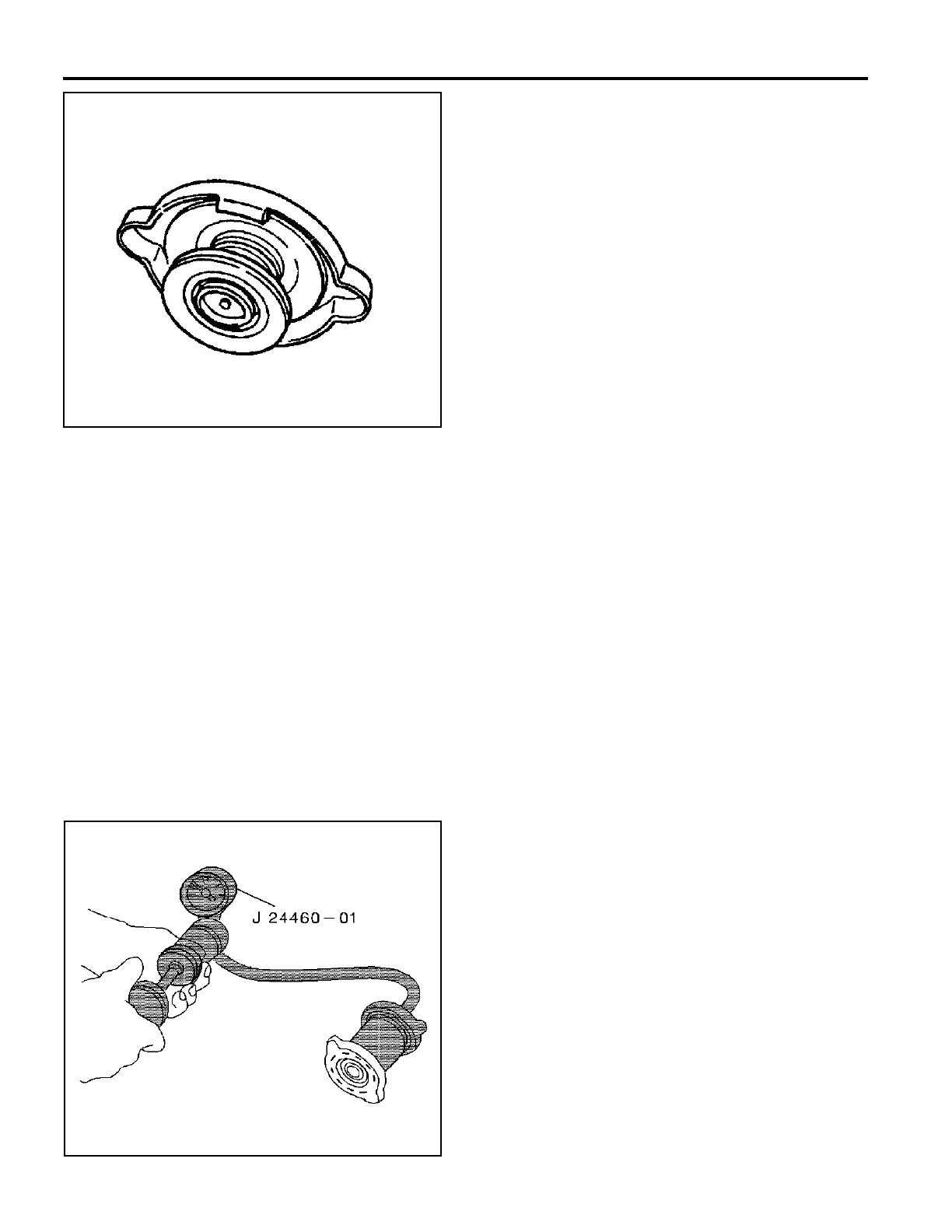
Radiator Cap
Caution: As long as there is pressure in the cooling
system, the temperature can be considerably
higher than the boiling temperature of the solution
in the radiator, without causing the solution to boil.
Removal of the radiator cap while the engine is hot
and the pressure is high will cause the solution to
boil instantaneously and possibly with explosive
force, spewing the solution over the engine, the
equipment, and person removing the cap.
The pressure–vent radiator cap allows a buildup of 48
kPa (7 psi) in the cooling system. Do not remove the
radiator cap to check the engine coolant level until the
engine is cool. Add coolant to the radiator only after the
system cools.
The radiator cap contains a blow–off or pressure valve.
The cap also contains a vacuum or atmospheric valve.
The pressure valve is held against its seat by a spring
of predetermined strength. This valve protects the
radiator by relieving internal pressure when the
internal pressure exceeds the cooling system design
limits. The vacuum valve is held against its cap seat by
a light spring. The spring permits the valve to open in
order to relieve vacuum created in the system when the
system cools.
The radiator cap is designed to discourage inadvertent
removal. In order to safely remove the cap from the
radiator, rotate the cap slowly in a counterclockwise
direction to the detent. Do not press down. Allow any
pressure to release from the radiator. Press down on
the cap. Continue to rotate the cap counterclockwise
and lift the cap off the radiator.
Radiator Cap Inspection
Check the seal of the filler cap and the operation of the
pressure valve with a conventional cooling system
107487
1375



 To Next Page