35 XFC G4 2103335 Rev AB
3.9 Display Annunciators
One of the primary functions of the flow computer is to provide complete volume and operational records. As such, it is important
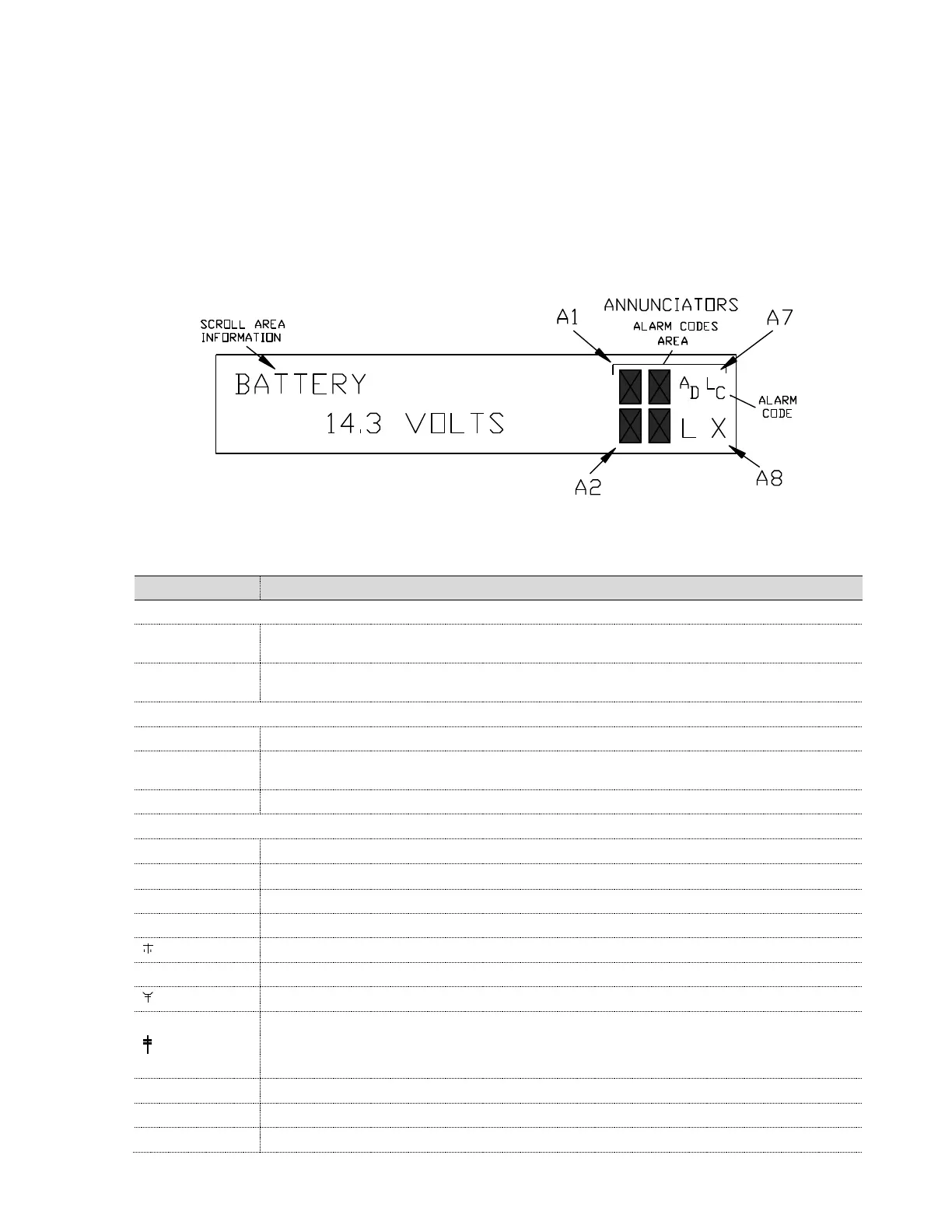
to indicate unusual or alarm conditions as they occur (see Figure 14). This is supported on the LCD using annunciators (see
Table 6). Instructions for using the display as a troubleshooting aid can be found in Chapter 6 -Troubleshooting. Whenever an
alarm is indicated, the flow computer
records it in the appropriate log period flow record. These are automatically retrieved when
data is collected.
Using technology adaptable for multi-tube devices, the status and alarm code locations are programmable. Each annunciator
may be programmed to reflect different application or tube types. The single tube device will come with a standard display
preprogrammed but can be changed (see Table 6). Consult the PCCU32 help files for more instructions on programming the
display.
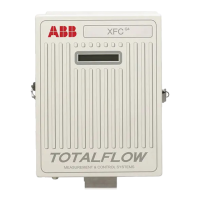
Figure 14 Liquid Crystal Display and Indicators
Table 6 XFC
G4
Status and Alarm Description
Low Lithium Battery Alarm: When LL (low lithium) is displayed, the lithium battery voltage is below 2.5
Vdc. A new lithium battery measures approximately 3.6 Vdc.
Low Charger: When LC (low charger) is displayed the µFLO
G5
battery charging voltage is (+) 0.4 Vdc or is
less than or equal to the battery voltage.
A number represents the Display Group number currently being displayed.
The displayed item’s value is above the Data High Limit value that is specified on the display Item Setup
screen.
The displayed item’s value is below the Data Low Limit value specified on the display Item Setup screen.
Transmitting Data: Sending a response
Receiving Data: Processing request
Nak: Negative acknowledgement with packet list
Ack: Positive acknowledgement of receipt of request
Waiting for Ack: Waiting for response after transmission
Exception Alarm Processing
ID Recognized: Recognized and receiving request
Listen Cycle: Flashes if this remote port is active and running Totalflow Remote Protocol. Flashes in sync
with the listening cycle that occurs at 1, 2 or 4 second intervals. When the baud rate is faster than 2400,
then the flashing symbol may not be visible. The annunciator will remain on listening cycle if the listen
cycle is set to zero.
MODBUS® ASCII: MODBUS® ASCII protocol is selected for the port assigned to this annunciator.
MODBUS® RTU: MODBUS® RTU protocol is selected for the port assigned to this annunciator.
Local Protocol: Displayed when the PCCU32 port is active and running Totalflow Local Protocol



 To Next Page