Fuel System
Fuel Component Servicing
148
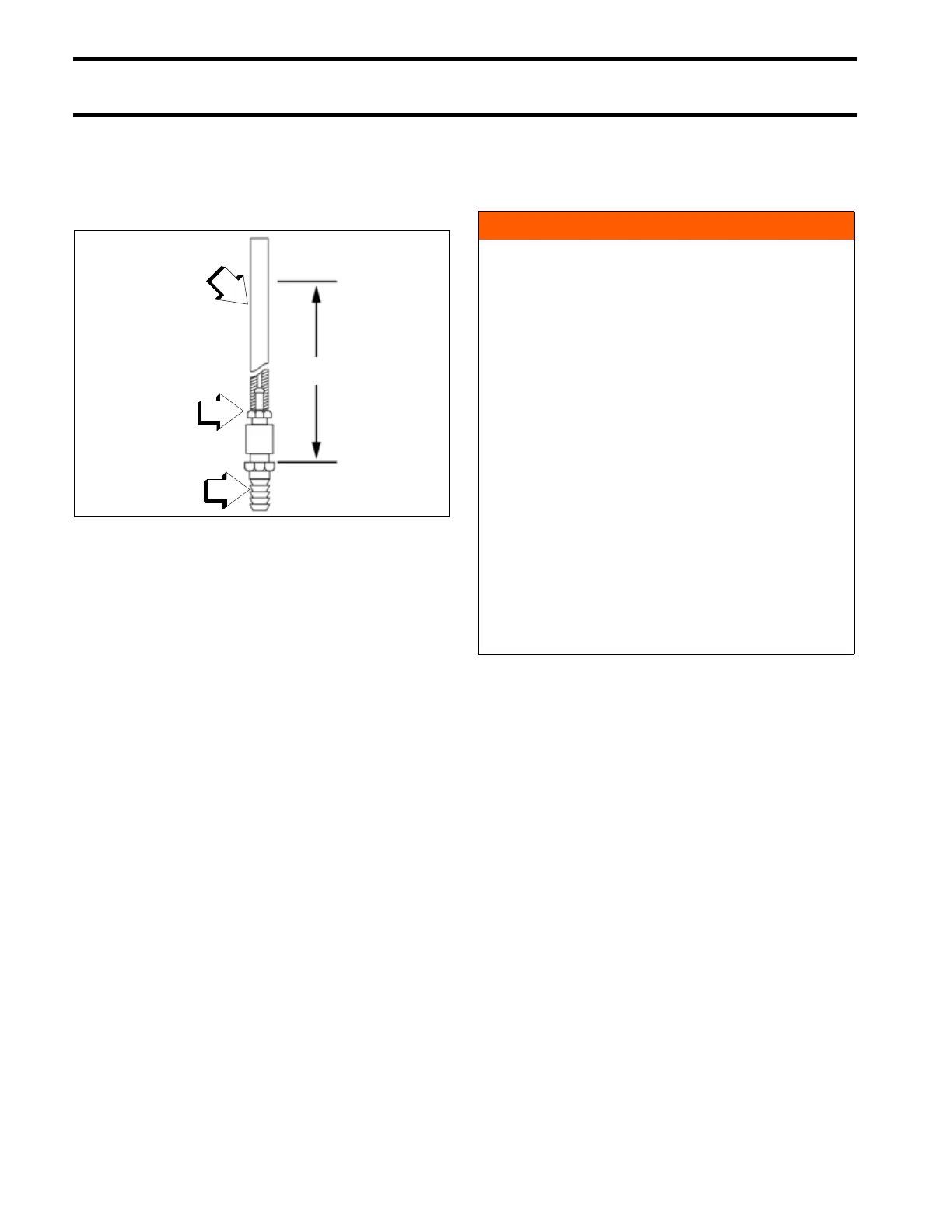
Anti-Siphon Valve Test
Remove anti-siphon valve from fuel tank. Install
adapter fittings and a 36 in. (91.4 cm) length of
clear hose to the inlet side (tank end) of valve.
Fill clear hose with water to a height of 20 in. (500
mm). Water must NOT flow through valve. An
occasional drip is acceptable. Replace valve if
water drips continuously.
Increase height of water to 25 in. (630 mm). Water
should flow through valve as water level reaches
25 in. (630 mm). Replace the anti-siphon valve if
test results are different.
Fuel Component Servic-
ing
Relieving Fuel System Pressure
IMPORTANT: Minimize fuel system pressure be-
fore disassembly. Temporarily restrict the fuel sup-
ply hose from fuel tank with hose pincer. Remove
propeller and disconnect circulation fuel pump
electrical connector. If outboard runs, start and run
at IDLE for 5 seconds and STOP outboard. If out-
board does NOT run, crank for 10 seconds.
Disconnect the battery cables at the battery.
Wrap a shop towel completely around the pres-
sure test valve while connecting fitting from Fuel
1. Anti-siphon valve
2. Adapter fitting
3. Clear hose
DR2277
WARNING
Gasoline is extremely flammable and highly
explosive under certain conditions. Use cau-
tion when working on any part of the fuel sys-
tem.
Protect against hazardous fuel spray. Before
starting any fuel system service, carefully
relieve fuel system pressure. Refer to Reliev-
ing Fuel System Pressure.
Always disconnect the battery cables at the
battery before servicing the fuel system
unless instructed to do otherwise.
Always work in a well ventilated area and
wipe off any fuel spillage.
DO NOT smoke and make certain no open
flames or ignition sources exist.
After servicing the fuel system check for
leaks. Failure to check for fuel leakage could
allow a leak to go undetected, resulting in fire
or explosion.




 To Next Page