41
Routine Service
Lubrication
2
Inspection
Inspect the lubricant and the magnets on the
plugs for metal chips. The presence of metal fuzz
can indicate normal wear of the gears, bearings,
or shafts within the gearcase. Metal chips can
indicate extensive internal damage.
Inspect the lubricant for water contamination.
Water can make the lubricant milky in appear-
ance. However, normal aeration can also cause
the same appearance.
To check for water contamination, put lubricant
into a glass container. Allow the oil to settle for a
minimum of one hour to determine if there is an
abnormal amount of water in the oil.
If water is present, refer to Gearcase Leak Test in
the Gearcase Service Manual.
Overheated lubricant will have a black color and
burned odor.
Internal gearcase inspection is recommended
when lubricant is contaminated or shows signs of
failure.
Filling
Refer to the Inspection and Maintenance
Schedule on p. 18 for service frequency and rec-
ommended lubricants.
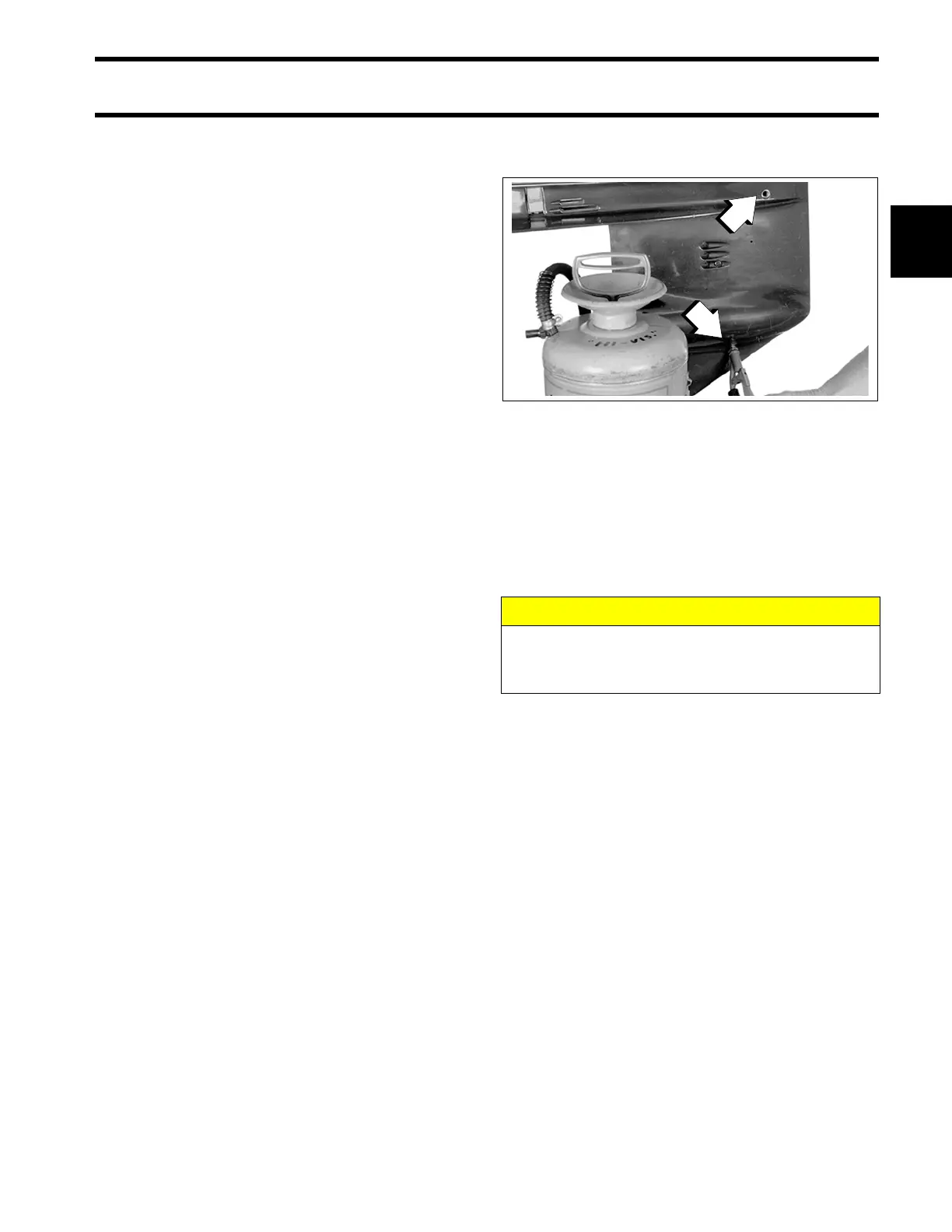
Secure the gearcase in a vertical position.
Remove the lubricant level plug and the lubricant
drain/fill plug.
Use Gearcase Filler, P/N 501882, to slowly fill the
gearcase with HPF PRO lubricant through the
drain/fill hole until it appears at the oil level hole.
IMPORTANT: Filling the gearcase too quickly
can cause air pockets and the gearcase may not fill
completely.
Clean plug seal area and install the lubricant level
plug and new seal, then the lubricant drain/fill plug
and new seal. Tighten plugs to a torque of 60 to
84 in. lbs. (7 to 9.5 N·m).
IMPORTANT: The recommended gear lubri-
cants are formulated for marine applications. Do
not use automotive gear lubricants, engine oils, or
any other oil or grease.
Trim and Tilt
Check reservoir fluid level at least every three
years or 300 operating hours.
• 2-Cylinder Models: System capacity is approx-
imately 15.2 fl. oz. (450 ml).
• 3-Cylinder Models: System capacity is approx-
imately 21 fl. oz. (620 ml).
1. Lubricant level plug
2. Lubricant drain/fill plug
27023
CAUTION
Correct fluid level must be maintained to
ensure operation of the impact protection
built into the unit.




 To Next Page