CAUTION: Do not leave a fiber-optic transceiver uncovered except when
you are inserting or removing cable. The safety cap keeps the port clean
and prevents accidental exposure to laser light.
9. Insert the appropriate cables into the cable connectors on the MIC.
10. Arrange each cable to prevent the cable from dislodging or developing stress points.
Secure the cable so that it is not supporting its own weight as it hangs to the floor.
Place excess cable out of the way in a neatly coiled loop.
CAUTION: Do not let fiber-optic cable hang free from the connector. Do
not allow fastened loops of cable to dangle, which stresses the cable at
the fastening point.
CAUTION: Avoid bending fiber-optic cable beyond its minimum bend
radius.An arc smallerthan a few inches in diameter can damage the cable
and cause problems that are difficult to diagnose.
11. Bring the MIC online by issuing the following CLI command:
user@host> request chassis mic fpc-slot slot-number mic-slot slot-number online
The normal functioning status LED confirms that the MIC is online. You can also verify
correct MIC functioning by issuing the show chassis fpc pic-status command described
in “Maintaining the MX104 MICs and Network Ports” on page 192.
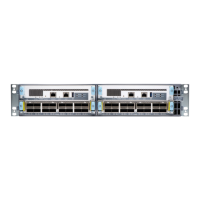
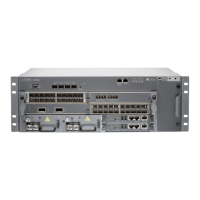
Figure 49: Installing a MIC
Related
Documentation
MX104 Modular Interface Card (MIC) Overview on page 47•
• Maintaining Cables That Connect to MX104 Network Ports on page 191
Copyright © 2017, Juniper Networks, Inc.164
MX104 3D Universal Edge Router Hardware Guide


 To Next Page