3-114
8. HANDLING BATTERY
Observe the followings when handling the battery.
• Stop the engine and turn the main starter switch to the “OFF” position when hecking/handling
the battery.
• Wipe off the dust accumulated on the top of the battery with moistened cloth.
• The battery produces hydrogen gas, involving the explosion hazard. Do not put fire such as
cigarettes close to the battery or take any actions that can cause sparks.
• The battery fluid is diluted sulfuric acid, which corrodes
clothes and skin. Should the battery fluid come into
contact with your clothes or skin, wash the affected area
immediately with plenty of water.
Should it go into your eye, wash your eye immediately
with clean water and consult a physician.
• Wear goggles and rubber gloves when handling the
battery.
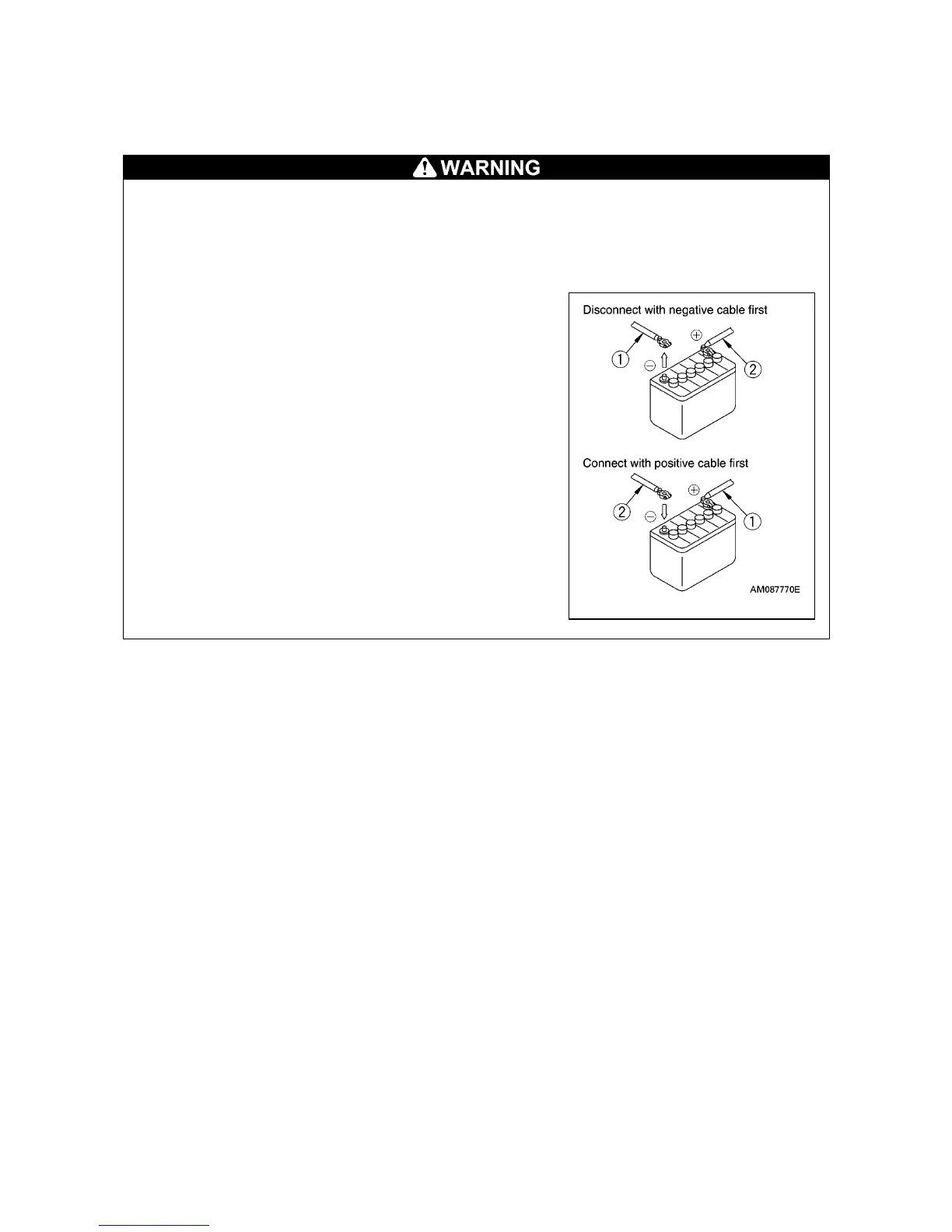
• Disconnect the ground side (normally (-) terminal) first to
remove the battery, and conversely, connect the (+)
terminal first to install the battery.
Objects such as tools coming between (+) terminal and
the machine body will cause sparks.
• Slackened battery terminals can cause sparks with poor
contact, involving explosion hazard. Tighten securely
when Installing the terminals.
• Secure the battery when changing the battery to prevent
the battery from being displaced. If it is not secured, the
terminals will slacken, causing sparks.
• Verify the (+) terminal and (-) terminal when removing and
installing the battery.
8.1 CAUTIONS IN HANDLING BATTERY
• Always try to keep the battery charged.
The battery should not be charged in rush after being discharged. Measure the specific gravity of the
battery fluid in advance and charge the battery as needed.
Keeping the battery in the best condition lengthens the life of the battery.
• Check the electrolyte level earlier than regular check and maintenance schedule during the hot season.
• The battery ability remarkably drops during the cold season. Keep the charging rate as close to as 100 %
and try to keep it warm for starting the operation next morning.



 To Next Page