2-7
Electronic control system
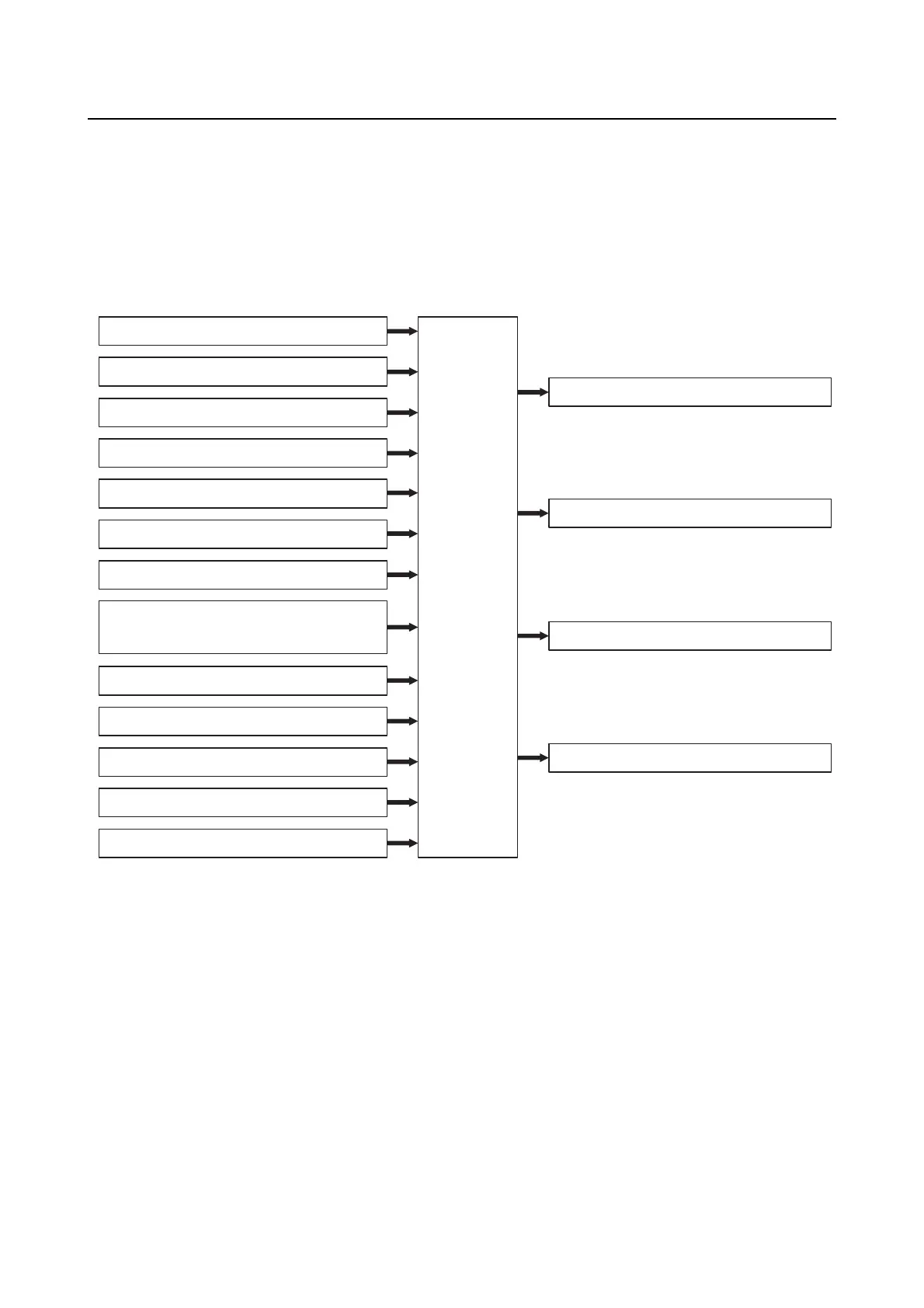
Electronic fuel injection control
Based on signals input from the sensors, the engine ECM determines the injection timing and the
amount to inject, and then injects fuel appropriately. The amount to inject is controlled by the time that
the fuel injectors are operated. There are two types of injection timing controls, synchronous injection
and asynchronous injection. The engine’s operating conditions are detected, and they are automatical-
ly switched during start-up mode, normal operating mode, and fuel injection cut-off mode. In addition,
various compensation controls are done to decide the actual injection timing and injection amount. The
fuel injector’s anti-sticking controls are also used.
14. Engine
ECM
15. Fuel injector
16. High-pressure fuel pump
17. Low-pressure fuel pump
18. Vapor shut-off valve
1. Pulser coil
9. Engine temperature sensor
5. TPS
10. Thermo sensor (PORT)
12. Engine shut-off switch
13. Battery
11. Thermo sensor (STBD)
6. SPS
7. LPS
2. Cam position sensor (PORT EX)
3. Cam position sensor (PORT IN)
4. Cam position sensor (STBD IN)
8. Intake air pressure/
temperature sensor
1. Pulser coil
2. Cam position sensor (PORT EX)
3. Cam position sensor (PORT IN)
4. Cam position sensor (STBD IN)
5. TPS
6. SPS
7. LPS
8. Intake air pressure/temperature sensor
9. Engine temperature sensor
10. Thermo sensor (PORT)
11. Thermo sensor (STBD)
12. Engine shut-off switch
13. Battery
14. Engine ECM
15. Fuel injector
16. High-pressure fuel pump
17. Low-pressure fuel pump
18. Vapor shut-off valve



 To Next Page