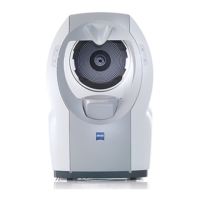
Stratus OCT User Manual PN 2660021134133 A
Introduction
1-1
(1) Introduction
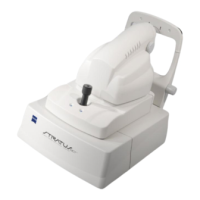
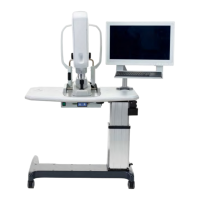
The ZEISS Stratus OCT Model 3000 (Stratus OCT) enables examination of the posterior pole
of the eye at an extremely fine spatial scale, without surgical biopsy or even any contact
with the eye. Stratus OCT Review Software enables you to view, analyze and manage
Stratus OCT data on a personal computer; it provides all the Stratus OCT instrument
functionality, except scan acquisition, in a remote location. The name Stratus OCT (derived
from “stratum,” Latin for “layer”) refers to its unique ability of direct cross-sectional
imaging of the layers of the retina. The Stratus OCT minimizes patient discomfort as it
permits detailed examination of the retina and optic nerve head at the office or clinic. The
Stratus OCT facilitates diagnosis and management of retinal diseases and glaucoma.
Intended Use/Indications For Use
The Stratus OCT is a high resolution tomographic device for the viewing and axial cross
sectional imaging of posterior ocular structures. It is used for in vivo imaging and
measurement of the retina, retinal nerve fiber layer, macula, and optic disc. The Stratus
OCT with Retinal Nerve Fiber Layer (“RNFL”) and Macula Normative Database is a
quantitative tool for the comparison of retinal nerve fiber layer and the macula in the
human retina to a database of known normal subjects. It is intended for use as a
diagnostic device to aid in the detection and management of ocular diseases, including but
not limited to, macular edema, central serous retinopathy, and glaucoma.
.
Note: The Stratus OCT and Stratus Review Software are not intended to
be used as the sole diagnostic for disease.
Patient Population
The Stratus OCT instrument may be used on all adults
and children (over the age of six) in
need of diagnostic evaluation of the eye. This includes (but is not limited to) patients with
the following disabilities or challenges:
•Wheelchair user
• Very low or not measurable visual acuity
• Fixation problems
•Deafness
• Large body, but not those above 99th percentile based on anthropomorphic data
There is a general requirement that the patient be able to sit upright and be able to place
t
heir face in the chin and forehead rest of the instrument (with or without supplemental
human or mechanical support).


 To Next Page