This document is a user guide for IP-COM Outdoor CPE (Customer Premises Equipment), specifically covering models CPE6S and iLBE-5AC. The guide provides comprehensive instructions for configuring, managing, and maintaining the device, outlining various application scenarios and detailed setup procedures.
Function Description
The IP-COM Outdoor CPE is a versatile wireless device designed to establish and extend wireless networks in various outdoor environments. It supports multiple operating modes, allowing it to adapt to different networking requirements:
- AP (Access Point) Mode: In this mode, the CPE connects to a wired network and creates a wireless network, enabling wireless clients (such as smartphones or computers) to access the internet. This is useful for transforming a wired network into a wireless one or for establishing a CCTV surveillance network where one CPE acts as an AP connected to an NVR (Network Video Recorder).
- Client Mode: The CPE functions as a wireless adapter, connecting to an upstream AP's wireless network. In this mode, it does not provide wireless access service itself; instead, a client device needs to be connected to the CPE via an Ethernet cable. This is commonly used in CCTV surveillance setups where a client-mode CPE connects to an IP camera.
- Universal Repeater Mode: This mode extends an existing wireless network to provide broader coverage. The new wireless network shares the same SSID (Service Set Identifier), password, and other wireless information as the upstream network. A key advantage of Universal Repeater mode over Repeater mode is that it does not require the upstream AP to support WDS (Wireless Distribution System) function.
- WISP (Wireless Internet Service Provider) Mode: In WISP mode, the CPE connects wirelessly to an ISP (Internet Service Provider) hotspot and then provides a wireless network for both wireless and wired devices to access the internet. It can obtain an IP address from the upstream wireless router via DHCP (Dynamic Host Configuration Protocol), static IP, or PPPoE (Point-to-Point Protocol over Ethernet). This is ideal for extending ISP hotspots in areas where wired connections are impractical.
- Repeater Mode: This mode connects two or more wired networks (up to four CPEs are supported) through a wireless bridge, and it can also provide a wireless access point. It requires the peer AP to support WDS function. This mode is often used for communication between multiple offices in a city.
- P2MP (Point-to-MultiPoint) Mode: Similar to Repeater mode, P2MP mode connects multiple wired networks (up to four CPEs are supported) through a wireless link but does not provide wireless access service. The configuration procedure is similar to Repeater mode, often used to combine local networks wirelessly.
- Router Mode: In this mode, the CPE connects to a modem in a wired manner and provides a wireless network, assigning IP addresses to connected wireless devices.
Important Technical Specifications
The document highlights two specific models:
- CPE6S: 5GHz 11AC 867Mbps 12dBi Outdoor CPE
- iLBE-5AC: 5GHz 11AC 23dBi Gigabit Outdoor CPE
While detailed specifications for each model are not fully listed in the provided text, the general features and parameters described apply to both.
Default Parameters (iLBE-5AC example):
- Login IP Address: 192.168.2.1
- Administrator User Name/Password: admin/admin
- Quick Setup Working Mode: AP mode
- IP Address Type: Static IP address
- LAN IP Address: 192.168.2.1
- Subnet Mask: 255.255.255.0
- DHCP Server: Enabled
- DHCP Server Start IP Address: 192.168.2.100
- DHCP Server End IP Address: 192.168.2.200
- DHCP Server Gateway Address: 192.168.2.254
- Primary DNS Server: 8.8.8.8
- Secondary DNS Server: 8.8.4.4
- Lease Time: 1 day
- VLAN Settings: Disable
- PVID: 1
- Management VLAN: 1
- WLAN VLAN: 1000
- Wireless Network: Enable
- SSID: IP-COM_XXXXXX (last six characters of LAN MAC address)
- Security Mode: None
- Transparent Bridge: Enable
- IMAX: Disable
- TPC: Enable
- Signal LED1 Threshold: -90 dBm
- Signal LED2 Threshold: -80 dBm
- Signal LED3 Threshold: -70 dBm
- Login Timeout Interval: 5 min
- Ping Watch Dog: Disable
- Telnet Service: Enable
- UPnP: Disable
- Hardware Watch Dog: Enable
- STP: Disable
- Tools Date & Time: Synchronized with the Internet
Usage Features
- Quick Setup: A streamlined process for initial configuration or changing the working mode, simplifying network deployment.
- Web UI: A user-friendly graphical interface composed of a level-1 navigation tree, level-2 navigation tree, tab page area, and configuration area for easy management.
- LED Indicators: Multiple LED indicators (Power, LED1, LED2, LED3) provide visual feedback on device status, connection quality, and received signal strength. The signal strength thresholds for LED1, LED2, and LED3 are customizable.
- PoE Power Supply: The CPE supports Power over Ethernet (PoE), simplifying installation by allowing power and data transmission over a single Ethernet cable.
- Automatic Bridging: For CCTV surveillance, CPEs can automatically bridge to each other when in factory settings, simplifying multi-device deployment.
- Manual Bridging: Provides an alternative for bridging when automatic bridging fails or specific configurations are needed.
- LAN Setup: Allows manual or automatic (DHCP) configuration of LAN IP addresses, subnet masks, default gateways, and DNS servers.
- MAC Clone: Enables cloning of a computer's MAC address to the CPE's WAN port, useful when an ISP binds internet service to a specific MAC address.
- DHCP Server: Assigns IP addresses to clients in the LAN, with customizable IP address pools, lease times, and DNS server settings.
- DHCP Client: Displays details of clients that have obtained IP addresses from the DHCP server.
- VLAN Settings: Supports IEEE 802.1q VLAN function for network segmentation, with configurable PVID (Port-based VLAN ID), Management VLAN, and WLAN VLAN ID.
- Wireless Basic Settings: Configurable parameters include SSID, country/region, broadcast SSID, network mode, channel, channel shift, DFS (Dynamic Frequency Selection) function, transmit power, channel bandwidth, transmit rate, and security mode (None, WEP, WPA-PSK, WPA2-PSK, Mixed WPA/WPA2-PSK, WPA, WPA2).
- Wireless Advanced Settings: Allows fine-tuning of wireless performance with options like WMM (Wi-Fi Multi-media), APSD (Automatic Power Save Delivery), Minimum RSSI Threshold, Preamble (Long/Short), Transparent Bridge, IMAX (IP-COM's proprietary Time Division Multiple Access polling technology), Signal Transmission (coverage/capacity-oriented), TPC (Transmit Power Control), Signal Reception Level, Transmission Distance, Beacon Interval, Fragment Threshold, RTS Threshold, and DTIM Interval.
- Access Control: Filters wireless devices based on MAC addresses, allowing or disallowing connection to the wireless network.
- Bandwidth Control: Assigns specific upload/download rates to connected clients based on IP address ranges, ensuring fair resource allocation.
- Port Forwarding: Maps service ports to LAN server IP addresses, allowing internet users to access internal servers while preventing WAN attacks.
- DDNS (Dynamic Domain Name Service): Enables dynamic WAN IP addresses to be mapped to a domain name, facilitating remote access to internal resources.
- Remote Web Management: Allows remote access to the CPE's web UI from the WAN, with options to restrict access by IP address and configure a custom port.
Maintenance Features
- System Status: Provides an overview of system information (device name, uptime, system time, firmware/hardware version, CPU/RAM usage, MAC addresses) and wireless network status (working mode, SSID, signal strength, TX/RX link, transmit/receive speed, IMAX status).
- Statistics: Offers real-time monitoring of network traffic, including throughput (WLAN and LAN), wireless client/upstream AP information, and interface statistics.
- ARP Table: Displays IP addresses, corresponding MAC addresses, and interfaces for devices the CPE has communicated with.
- Routing Table: Shows destination networks accessible by the CPE.
- Diagnose Tools: Includes Site Survey (for nearby wireless signals), Ping (for network connectivity), Traceroute (for network routes), Speed Test (for throughput between CPEs), and Spectrum Analysis (for wireless noise on channels).
- Reboot Device: Allows for rebooting the CPE to resolve issues or apply settings.
- Reset to Factory Settings: Restores the CPE to its default configurations, useful for troubleshooting or reconfiguring after forgetting login credentials. This can be done via the web UI or by holding the physical RESET button.
- Upgrade Firmware: Updates the CPE's firmware for improved functions and stability.
- Backup/Restore Configuration: Backs up the current configuration to a local computer and allows importing previously saved configurations, useful for mass deployment or restoring settings after a reset/upgrade.
- Account Management: Allows changing administrator and guest account login information for enhanced security.
- System Log: Records various events and user operations, aiding in troubleshooting.
- Reboot Schedule: Configures the CPE to automatically reboot at specified times and dates to prevent performance degradation.
- Login Timeout Interval: Sets a period of inactivity after which the CPE automatically logs out from the web UI for security.
- SNMP Agent: Enables remote management and monitoring of the CPE using SNMP, supporting SNMP V1 and SNMP V2C.
- Ping Watch Dog: Periodically pings a target IP address to check network connectivity and automatically reboots the CPE if malfunctions are detected.
- DMZ Host: Designates a LAN computer as a DMZ host for unrestricted internet communication, beneficial for applications requiring high throughput like video conferencing or online gaming.
- Telnet Service: Enables management of the CPE via Telnet, typically used by technical professionals.
- UPnP (Universal Plug and Play): Facilitates automatic port forwarding for applications like Thunder and BitComet.
- Hardware Watch Dog: An embedded timer that reboots the CPE if its main program malfunctions, ensuring recovery from errors.
- STP (Spanning Tree Protocol): Establishes a loop-free logical topology in Ethernet networks, providing fault tolerance and preventing broadcast storms.

 Need help?
 General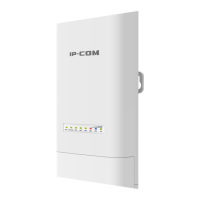

 To Next Page