Safety
information
Product
information
Mechanical
installation
Electrical
installation
Getting
started
Basic
parameters
Running the
motor
Optimization
NV Media Card
Operation
Building
Automation
Advanced
parameters
Technical
data
Diagnostics
UL listing
information
104 HVAC Drive H300
Issue Number: 3
Surge immunity of control circuits - long cables and
connections outside a building
The input/output ports for the control circuits are designed for general
use within machines and small systems without any special precautions.
These circuits meet the requirements of EN 61000-6-2:2005 (1 kV
surge) provided the 0V connection is not grounded.
In applications where they may be exposed to high-energy voltage
surges, some special measures may be required to prevent malfunction
or damage. Surges may be caused by lightning or severe power faults in
association with grounding arrangements which permit high transient
voltages between nominally grounded points. This is a particular risk
where the circuits extend outside the protection of a building.
As a general rule, if the circuits are to pass outside the building where
the drive is located, or if cable runs within a building exceed 30 m, some
additional precautions are advisable. One of the following techniques
should be used:
1. Galvanic isolation, i.e. do not connect the control 0V terminal to
ground. Avoid loops in the control wiring, i.e. ensure every control
wire is accompanied by its return (0V) wire.
2. Shielded cable with additional power ground bonding. The cable
shield may be connected to ground at both ends, but in addition the
ground conductors at both ends of the cable must be bonded
together by a power ground cable (equipotential bonding cable) with
cross-sectional area of at least 10 mm
2
, or 10 times the area of the
signal cable shield, or to suit the electrical safety requirements of the
plant. This ensures that fault or surge current passes mainly through
the ground cable and not in the signal cable shield. If the building or
plant has a well-designed common bonded network this precaution
is not necessary.
3. Additional over-voltage suppression - for the analog and digital
inputs and outputs, a zener diode network or a commercially
available surge suppressor may be connected in parallel with the
input circuit as shown in Figure 4-44 and Figure 4-45.
If a digital port experiences a severe surge its protective trip may operate
(I/O Overload trip). For continued operation after such an event, the trip
can be reset automatically by setting Pr 10.034 to 5.
Figure 4-44 Surge suppression for digital and unipolar inputs and
outputs
Figure 4-45 Surge suppression for analog and bipolar inputs and
outputs
Surge suppression devices are available as rail-mounting modules, e.g.
from Phoenix Contact:
Unipolar TT-UKK5-D/24 DC
Bipolar TT-UKK5-D/24 AC
These devices are not suitable for fast digital data networks, because
the capacitance of the diodes adversely affects the signal. For data
networks, follow the specific recommendations for the particular
network.
4.12 Communications connections
The drive offers a double isolated 2 wire EIA-485 interface. The drive
supports the Modbus RTU, BACnet MSTP and Metasys N2 open
protocols. See Table 4-20 for the connection details.
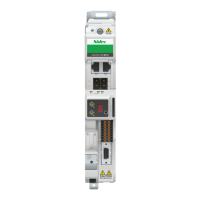
Figure 4-46 Location of the comms connector
Table 4-20 Serial communication port pin-outs
4.12.1 Isolation of the EIA-485 serial
communications port
The serial PC communications port is double insulated and meets the
requirements for SELV in EN 50178:1998. Depending on network
topology a termination resistor of 120 Ω maybe required.
This drive does not provide the necessary line polarization for correct
operation of the EIA-485 port, the data lines (Rx Tx and /Rx /Tx) must be
correctly biased in accordance with the relevant protocol specification,
this is normally done in the communication master or controller. Please
refer to the relevant communication protocol specification for more
information.
Signal from plant Signal to drive
0V 0V
30V zener diode
e.g. 2xBZW50-15
Signal from plant Signal to drive
0V 0V
2 x 15V zener diode
e.g. 2xBZW50-15
Pin Function
1RX TX
2 Isolated 0V
3RX\ TX\
In order to meet the requirements for SELV in IEC60950 (IT
equipment) it is necessary for the control computer to be
grounded. Alternatively, when a lap-top or similar device is
used which has no provision for grounding, an isolation
device must be incorporated in the communications lead.



 To Next Page