Page 165
31.1.8 High Pressure Alarm
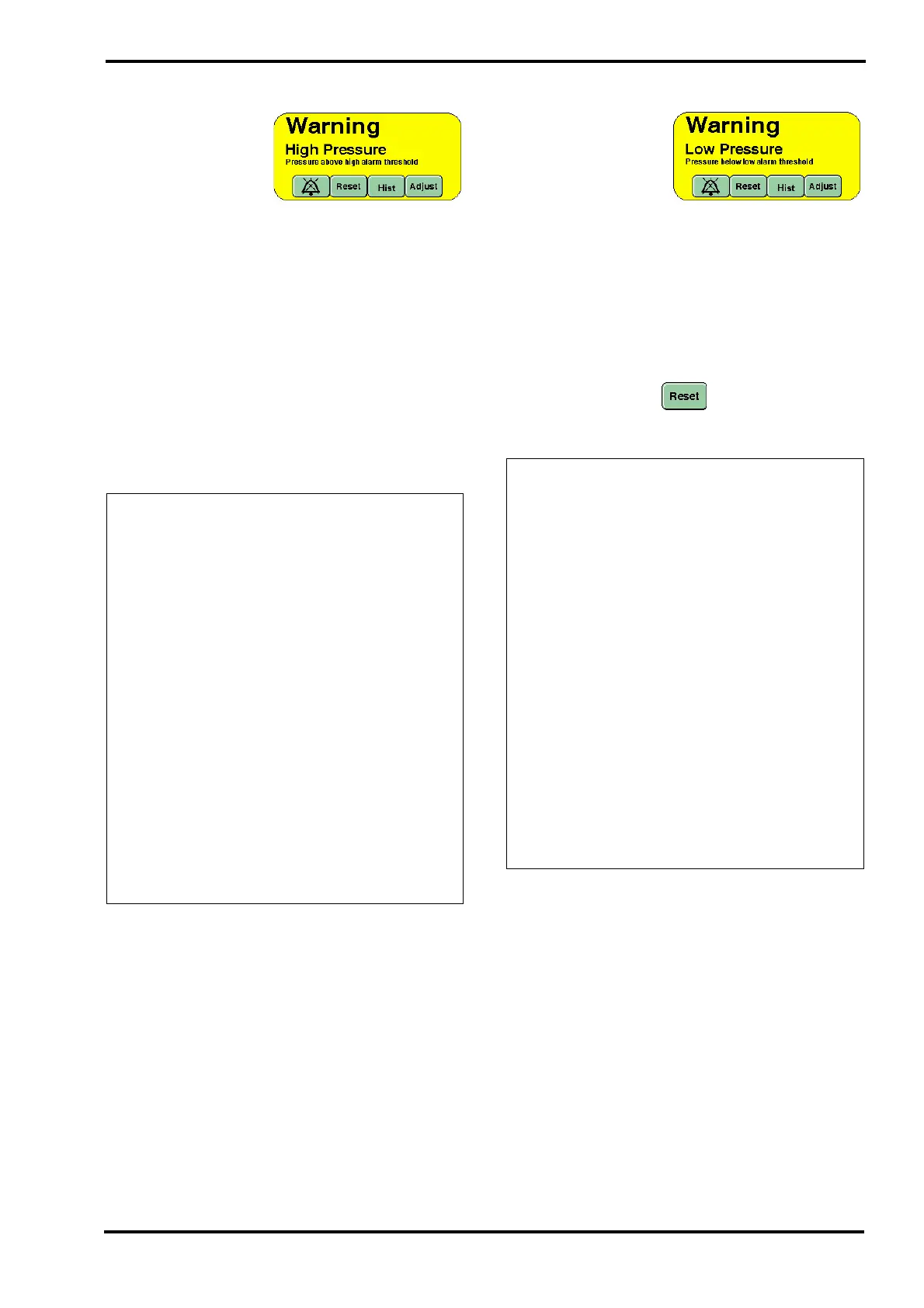
Step 21. Reduce high
alarm setting to
19mbar. This should
initiate an audible
alarm and a “High
Pressure” visual
alarm.
Reduce the high alarm threshold a further 6mbar
below the measured PIP. The “High Pressure” alarm
should remain but all fresh gas should now be cut
off. After 3 seconds the fresh gas should be re-
instated and a further 6 seconds the ventilator
should try to re-instate ventilation. The fresh gas cut
off cycle should repeat.
Return alarm setting to 25mbar and press the Reset
button to clear the alarm panel of the alarm
notification and restart ventilation.
31.1.9 Low Pressure Alarm
Step 22. Increase the
“Low Pressure” alarm
setting to 6mbar. This
should initiate an
audible alarm and a
Low Pressure visual
alarm.
Increase the Low Pressure alarm threshold a further
6mbar above the measured PEEP. The Low
Pressure alarm should remain but all fresh gas
should now be cut off (the PEEP will be
maintained).
Set the Low Pressure alarm threshold to 0mbar and
press the reset button to clear the alarm
panel of the alarm notification and restart
ventilation.
Action: If the “High Pressure” alarm is not
triggered or the PEEP is not maintained under
alarm conditions or the fresh gas flow is not
switching off perform the following actions.
After each action retest the ventilator. If the
ventilator successfully passes all these tests
after performing one of these actions go to
Step 22.
• Ensure the alarm threshold is set correctly.
• Check patient circuit is set up correctly as
shown in section 12. on page 58: Ventilator
Set-up. Pay close attention to proximal
airway, fresh gas connection and the
expiratory limb.
• Check the test lung and replace it if
necessary.
If the fault continues after checking all
possible causes remove the ventilator from
service and contact an SLE approved
engineer.
Action: If the “Low Pressure alarm” is not
triggered, or the PEEP is not maintained
under alarm conditions, or the fresh gas flow
is not switching off perform the following
actions. After each action retest the
ventilator. If the ventilator successfully
passes all these tests after performing one of
these actions go to Step 23.
• Ensure the alarm threshold is set correctly.
• Check patient circuit is set up correctly as
shown in section 12. on page 58: Ventilator
Set-up. Pay close attention to proximal
airway, fresh gas connection and the
expiratory limb.
• Check the test lung and replace it if
necessary.
If the fault continues after checking all
possible causes remove the ventilator from
service and contact an SLE approved
engineer.


 To Next Page