CPS100 SERIES OPERATION MANUAL
SECTION 5:
Unpacking and Installation
Entire Contents Copyright 2018 by Adaptive Power Systems, Inc. (APS) • All Rights Reserved • No reproduction without written authorization from APS.
APS CPS100 Series Power Source Operation Manual Page 40 of 231
5 Unpacking and Installation
Inspection
The CPS100 Series of power sources are inspected before shipment. If instrument damage
has occurred during transport, please inform Adaptive Power Systems’ nearest sales and
service office or representative.
Proper Lifting and Handling Guidelines
Lifting properly is important. While there are some general lifting guidelines, a different
approach may be needed for each load to be lifted. Generally, it is best to lift with your legs,
not your back. Lifting techniques depend on the size
and shape of the load, and the frequency of lifting that
is required.
The higher power CPS Series units (2kVA and higher)
are considered heavy; proper lifting and handling
techniques must be used at all times.
Removing CPS units from their packaging should be
done with ergonomics in mind. Items to be planned
include determining routes between staging areas and
work spaces and soliciting assistance from other
members of your team.
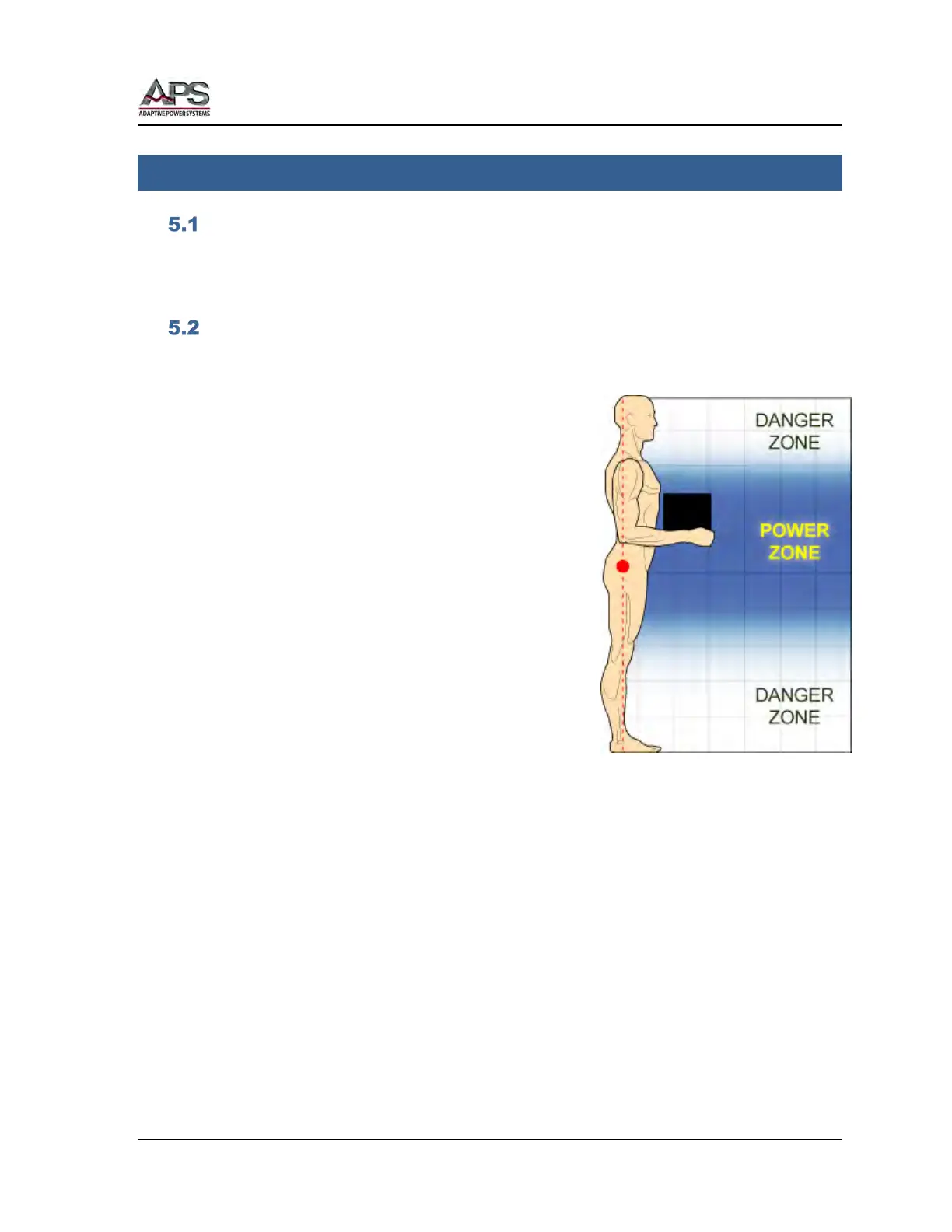
The power zone for lifting is close to the body, between
mid-thigh and mid-chest height. Comparable to the
strike zone in baseball, this zone is where arms and
back can lift the most with the least amount of effort.


 To Next Page