5.5.1 Necessary and optional sensors
Depending on the controller type and the operating mode, there are necessary and optional sensors for the
case controller. A sensor scan is performed automatically during the first start of the controller. The number of
scanned sensors can be checked in the menu (6-1) or with the LDSWin PC software. This allows unconnected
sensorstoberemovedfromthemonitoringforsensorfault.
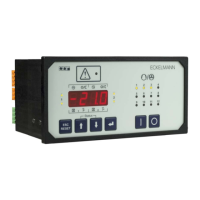
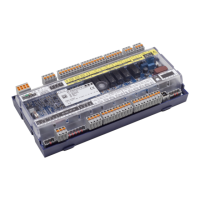
The following lists show required and optional sensors in the complete design:
Controller type Sensors necessary for regulation Optional sensors - extended functionality
(if terminal available;
see chapter Versions)
Single-zone operation
UA 121 E
UA 131 E / UA 131 E LS
UA 141E
Zone 1: R1.1, R2.1, R4.1, R6.1 Zone 1: R5.1
R1.2, R2.2, R4.2, R5.2, R6.2 (or R4.3, R4.4)
UR 141 NE
UR 141 TE
Zone 1: R1.1, R4.1, R6.1 Zone 1: R2.1, R5.1
R1.2, R2.2, R4.2, R5.2, R6.2
UK 100 E **
KR 160 E **
Zone 1: R4.1, R6.1 Zone 1: R1.1, R5.1
R1.2, R4.2, R5.2, R6.2
Two-zoneoperation-onlyUA400ECC/UA410EAC
UA 121 E
UA 131 E / UA 131 E LS
UA 141E
Zone 1: R1.1, R2.1, R4.1, R6.1
Zone 2: R1.2, R2.2, R4.2, R6.2
Zone1:R5.1(orR4.3)*
Zone2:R5.2(orR4.4)*
UR 141 NEUR 141 TE Zone 1: R1.1, R4.1, R6.1
Zone 2: R1.2, R4.2, R6.2
Zone 1: R2.1, R5.1
Zone 2: R2.2, R5.2
UK 100 E **
KR 160 E **
Zone 1: R4.1, R6.1
Zone 2: R4.2, R6.2
Zone 1: R1.1, R5.1
Zone 2: R1.2, R5.2
*only UA 131 E LS for operation with 4 return air sensors (R4.3 / R4.4 are activated)
** only UA 410 E AC
•
•
ATTENTION
Compressor damage! Danger due to liquid refrigerant on the suction side of the compressor!
Operatingmodet
0
via CAN bus (menu 6-2-6)
The evaporator inlet sensors R5.1 and R5.2 should also be connected in the t
0
via CAN
busoperatingmode.Thisresultsinimprovedemergencyrunningcharacteristicsintheeventof
failure of the CAN bus transmission. In standalone operation (without local pressure transmitter),
the sensors, R5.1 and R5.2 must be connected; see chapter Standalone operation using
evaporator inlet sensors!
Operatingmodet
0
local Z1 / Z2 (menu 6-2-6)
In the case of evaporators with high cooling capacity which require high control dynamics, the
superheat control should be realised via a local pressure transmitter (only UA 410 E AC); see
chapters Standalone operation using activated local pressure transmitter and Emergency Op..
Superheat control only via sensors R5.1 and R5.2 is not recommended, as there is a risk of
evaporator flooding due to the slow response behaviour!


 To Next Page