sound with all the analog personality, smooth modulations, and inherent musicality. Its capabilities have
been expanded, and now you can even take your phaser on an excursion from the 70s far into the future
with the delightfully characteristic “Age” knob. Outfitted with a complete host of control options, the
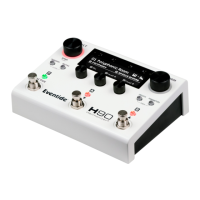
Instant Phaser is out of the rack and into your pedal arsenal.
Depth: Controls the mix of wet and dry signals. At 0% the output is solely the phase shifted signal.
At 100% the output is the addition of the phase shifted signal and the input. This will cause a gain of
6dB at certain frequencies depending on the phase shift.
Feedback: Controls the feedback of the phase shift sections. 0% sends none of the output back to
the input to the phase shift sections and 100% sends the maximum amount of output back to the
input of the phase shift sections.
Mode: Adjusts the stereo width of the phasing: Shallow, Deep, and Wide
Note
The original Instant Phaser had two unique outputs called Main and Aux. The main output
had two extra stages of phase shifting compared to the aux out, which means the two
outputs are 180 degrees out of phase with each other. The Mode control gives you access
to which of these outputs is used by the Algorithm, and it can drastically change the
sound.
In Shallow mode, all outputs will correspond to the Aux output of the hardware unit.
In Deep mode, all outputs will correspond to the Main output of the hardware unit.
In Wide mode, the Main output is routed to the left channel and the Aux output is
routed to the right channel.
Note that if you are using a mono output, Wide mode will be the same as Deep mode.
Age: Controls the age of the electrical components that make up the Instant Phaser. 0% is a factory
fresh unit from 1971, 25% is the box we modeled as it is now, 100% is a very ungracefully aged
Instant Phaser.
Source: Sets the source of the modulation. This can be any combination of the following:
Oscillator: The classic LFO-controlled phasing, with a variable rate.
Manual: Controls the phasing manually.
•
•
•
•
•
•
•
•
•
•
11. ALGORITHM GUIDE



 To Next Page