SynchroPulse
welding
SynchroPulse is available for all processes (standard/pulsed/LSC/PMC).
Due to the cyclical change of welding power between two operating points, Syn-
chroPulse achieves a flaking seam appearance and non-continuous heat input.
CMT process CMT = Cold Metal Transfer
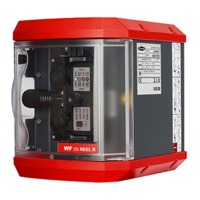
A special CMT drive unit is required for the CMT process.
The reversing wire movement in the CMT process results in a droplet detachment
with improved dip transfer arc properties.
The advantages of the CMT process are as follows
-
Low heat input
-
Less spattering
-
Reduced emissions
-
High process stability
The CMT process is suitable for:
-
Joint welding, cladding and brazing – particularly in the case of high require-
ments in terms of heat input and process stability
-
Light-gauge sheet welding with minimal distortion
-
Special connections, such as copper, zinc, and steel/aluminium
NOTE!
A CMT reference book is available complete with typical applications;
see ISBN 978-3-8111-6879-4.
CMT Cycle Step
welding process
CMT Cycle Step is a further development of the CMT welding process. A special
CMT drive unit is also required for this process.
CMT Cycle Step is the welding process with the lowest heat input.
The CMT Cycle Step welding process switches cyclically between CMT welding
and pauses of an adjustable duration.
These pauses in the welding process lower the heat input; the continuity of the
weld seam is maintained.
Individual CMT cycles are also possible. The size of the CMT spot welds is de-
termined by the number of CMT cycles.
SlagHammer The SlagHammer function is implemented in all steel characteristics.
In conjunction with a CMT drive unit WF 60i CMT, slag is knocked off the weld
seam and wire electrode end by a reversing wire movement without arc before
welding.
Knocking off the slag ensures reliable and precise ignition of the arc.
A wire buffer is not required for the SlagHammer function.
The SlagHammer function is automatically executed if a CMT drive unit is
present in the welding system.
Stitch welding With stitch welding, all welding processes can be cyclically interrupted. This fa-
cilitates targeted control of the heat input.
Welding time, pause time and the number of interval cycles can be set individu-
40



 To Next Page