104
How much does entering an incorrect value for the composite layer thickness affect analysis results?
8.10 How much does entering an incorrect value for
the composite layer thickness affect analysis
results?
How much entry of an inaccurate value affects analysis results depends on a variety of parameters,
including electrode sheet resistance, composite thickness, and collector thickness. Please enter
as accurate a thickness as possible before performing analysis. Additionally, the system provides
re-analysis capability to repeat analysis for previous measurements (
p. 47)
. If you entered an
incorrect value, please correct the composite layer thickness and then perform re-analysis.
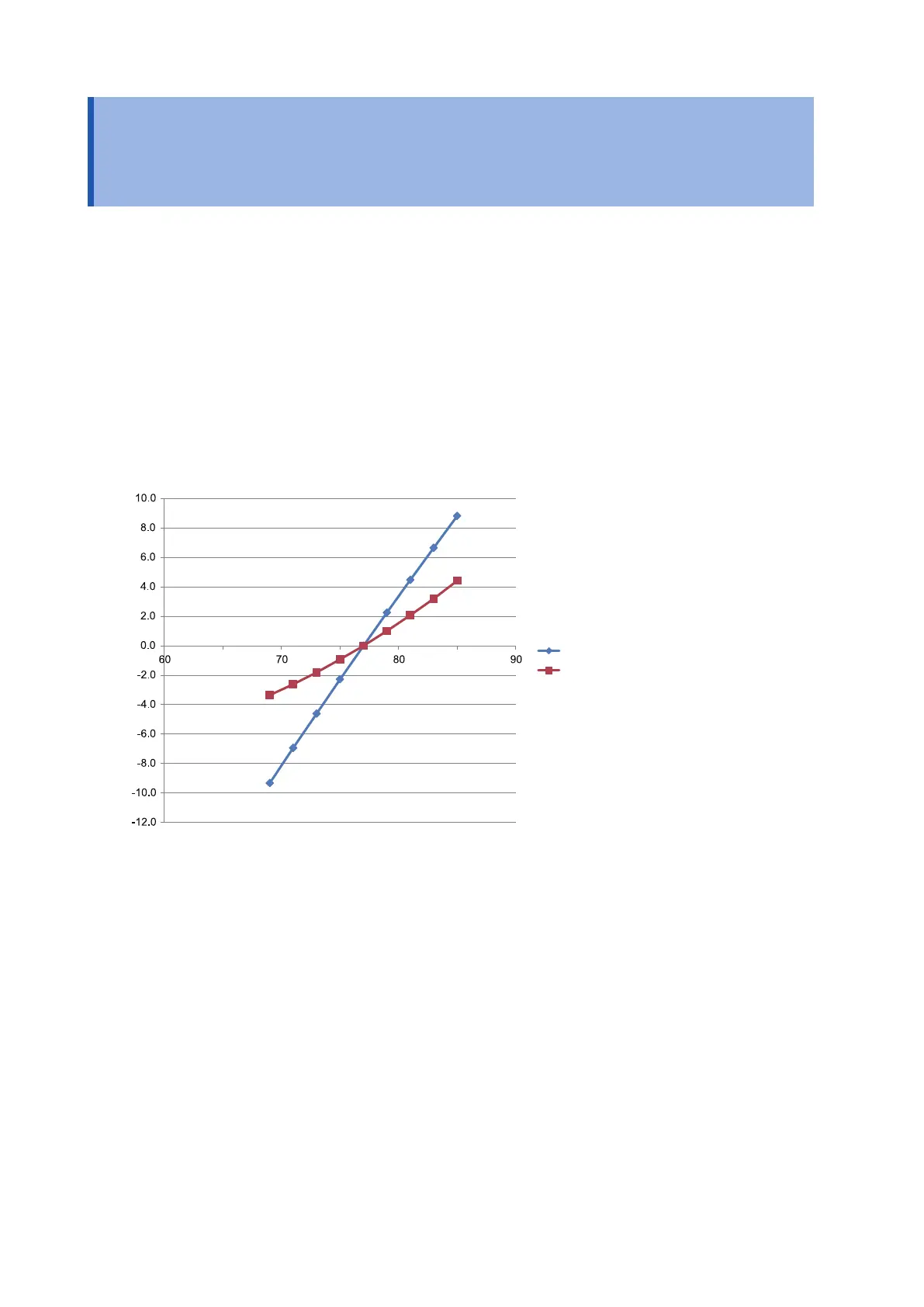
Hioki evaluated the effect of entering an incorrect thickness when measuring a standard positive
electrode sheet (with a composite thickness of 77 μm). This evaluation showed that the incorrectly
entered thickness produced an error in analysis results on par with the ratio indicating the extent to
which it differed from the correct thickness value.
(This relationship may not obtain for all electrode sheets.)
(These results are not suitable for use in correcting for the effects of thickness.)
Composite layer resistivity error [%]
Interface resistance error [%]
Figure: Effects of incorrectly entering the thickness (representative example for a positive electrode)



 To Next Page