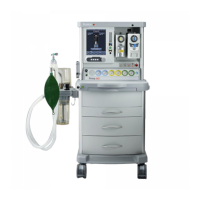
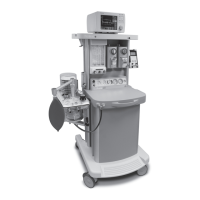
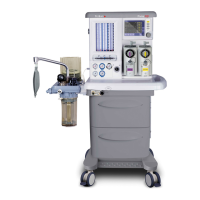
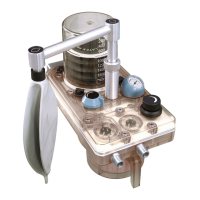
Prma 460 3 User Manual
Warnings and Cautions
Medcal as Supples
1 There s a rsk of fre or exploson Make sure that no ol,
grease or other flammable lubrcant or sealant s used
on any part of the machne n close proxmty to medcal
gas dstrbuton components
2 Attachng or removng a medcal gas cylnder
a) Follow approprate manual handlng gudelnes when
lftng
b) Ensure that the machne yoke and cylnder faces are
dust free and clean, and that the sealng washer s
n poston between the cylnder valve and the yoke
Refer to secton 562
c) Tghten the yoke securely before openng the cylnder
valve
Dust and drt presents a fre hazard n the presence of
hgh pressure gas Leakage of hgh pressure gas can
cause serous nury
3 Auxlary gas outlets Flow rates greater than 60 L/mn
could affect the fresh gas flow to the patent
4 The gas supply falure systems wthn the anaesthetc
machne wll not necessarly operate as ndcated n ths
manual durng any procedures that are outsde the scope
of the ndcatons for use of the machne
a) Machne set to delver Ar only
When the machne s operated wth an Ar flow only,
note that there may stll be retaned oxygen n the
system, and that the oxygen supply vsual ndcator
wll contnue to ndcate green, even though oxygen s
not beng delvered
b) Machne set to delver Oxygen only through Auxlary
Outlets
The oxygen falure alarm s desgned to operate
durng normal use of the machne, e when
provdng controlled concentratons and flows of
gases to a patent breathng system
c) Do not use the machne solely to provde large flows
of oxygen, va the anaesthetc machne auxlary
outlets, to external devces whch may not be
equpped wth a supply falure alarm
Anaesthetc gas scavengng system
1 The anaesthesa system must be connected to an
anaesthetc gas scavengng system (ASS) to dspose
of waste gas and prevent possble health hazards to
operatng room staff
Ths requrement must be observed durng test
procedures as well as durng use wth a patent
2 Anaesthesa apparatus must be connected to an
anaesthetc gas scavengng system (ASS) to dspose
of waste gas and prevent possble health hazards to
operatng room staff Ths requrement must be observed
durng test procedures as well as durng use wth a
patent
The scavengng transfer and recever system must
conform to ISO 80601-2-13
Any problem arsng from an mproperly functonng
scavengng system s solely the user’s responsblty
Do not use a scavengng system that restrcts drve gas
flow when negatve pressure s exerted on t
Vaporzers
1 The Prma 460 machne must only be used wth a
vaporzer that comples wth BS EN ISO 80601-2-13
In addton, the vaporzer must be a Selectatec-
compatble type vaporzer, nstalled on the Selectatec-
type backbar system
2 Free-standng vaporzers may be accdentally tpped,
resultng n excessve and uncalbrated volumes of
anaesthetc drug enterng the breathng system
Do not nstall or connect a vaporzers between the
ommon as Outlet (O) and the breathng system
unless they are specfcally desgned for such use If
ths s done, the oxygen flush flow wll pass through the
vaporzer and may result n gross overdosage when the
flush valve s operated
3 Only vaporzers wth the Selectatec compatble nterlock
functon wll nterlock f nstalled on a two staton
manfold
The nstallaton of non-nterlock vaporzers allows the
possble operaton of more than one vaporzer at the
same tme
Breathng System
1 The breathng system whch conveys gases from the
anaesthetc machne to the patent, and dsposes of
expred gases, s a vtal part of the anaesthetc delvery
system
2 When mechancal ventlaton s employed the patent
breathng system must be connected drectly to a
pressure relef valve to prevent the possblty of
barotrauma
3 Do not use conductve breathng system hoses
The use of antstatc or electrcally conductve breathng
hoses s not recommended when usng hgh frequency
electrcal surgery equpment Burns may be caused
4 Do not touch any electrcal devce cable or connector at
the same tme as the patent
5 The breathng system must conform to the requrements
of ISO80601-2-13
Because breathng systems requre frequent cleanng
and dsnfecton they are not a permanent part of
the anaesthetc ventlator and therefore cannot be
drectly under the control of the anaesthetc ventlator
manufacturer However, we strongly recommend that
only breathng systems whch have been approved
and authorsed by the manufacturer for use wth the
ventlator should be employed
6 When the anaesthetc machne s connected to a patent,
t s recommended that a qualfed practtoner s n
attendance at all tmes to react to an alarm or other
ndcaton of a problem
7 Patent oxygen concentraton must be montored
contnuously



 To Next Page