Note: In an emergency - and only if
the approved antifreeze is unavailable
- top up the cooling system with clean
water, but be aware of the resultant
reduction in frost protection. Do not
top up or refill with conventional
antifreeze formulations. If in doubt,
consult a qualified technician.
3. Refit the coolant reservoir filler cap by
rotating clockwise, until the cap's
ratchet clicks.
CHECKING THE BRAKE/CLUTCH
FLUID LEVEL
Seek qualified assistance
immediately if brake pedal travel
is unusually long, or if there is any
significant loss of brake fluid.
Driving under such conditions
could result in extended stopping
distances or complete brake
failure.
Brake fluid is highly toxic - keep
containers sealed and out of the
reach of children. If accidental
consumption of fluid is suspected,
seek medical attention
immediately.
If the fluid comes into contact
with the skin or eyes, rinse
immediately with plenty of clean
water.
Brake fluid is highly inflammable.
Do not allow brake fluid to come
into contact with naked flames or
other sources of ignition (e.g., a
hot engine).
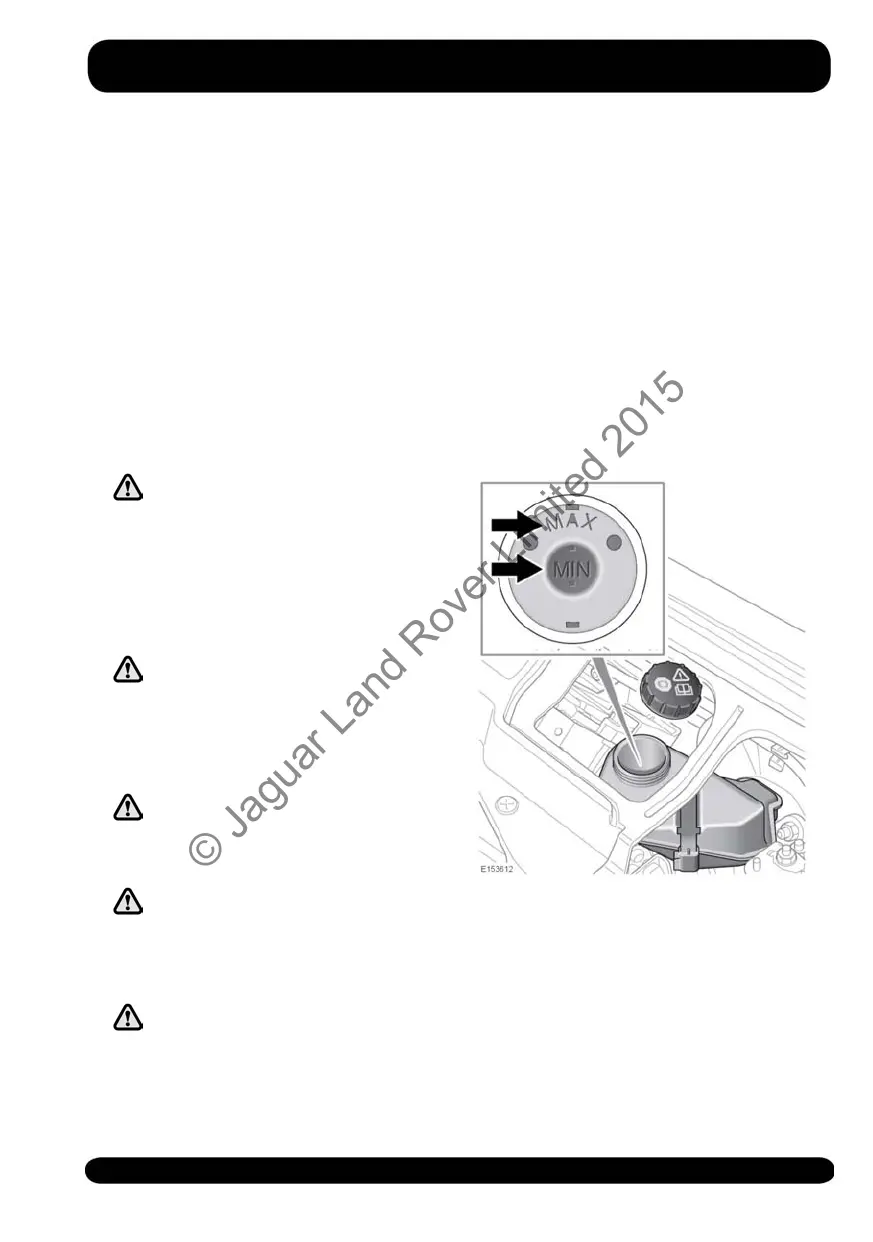
Do not drive the vehicle with the
fluid level below the MIN mark.
If the quantity of fluid in the brake
reservoir drops below the recommended
level, a red warning lamp in the Instrument
panel will illuminate. See 54, BRAKE
(RED).
Note: If the warning lamp illuminates
while the vehicle is being driven, stop the
vehicle as soon as safety permits by gently
applying the brakes. Check and top up
the fluid level, if necessary.
With the vehicle on level ground, check
the fluid level at least every week (more
frequently in high mileage or arduous
operating conditions).
1. Remove the relevant under bonnet
cover. See 215, FLUID FILLER
LOCATIONS and 201, UNDER
BONNET COVERS - REMOVAL.
2. Clean the brake fluid reservoir and the
filler cap before removing, to prevent
dirt from entering the reservoir.
219
Fluid level checks
© Jaguar Land Rover Limited 2015


 To Next Page