CHILD SEAT POSITIONING
Crash statistics show that children
are safest when properly
restrained in a child or infant
restraint system that is secured in
a rear seating position.
Seat belts (or suitable child
restraints) should be used by all
vehicle occupants, for every trip,
no matter how short. Failure to
do so will greatly increase the risk
of death or serious injury in the
event of an accident.
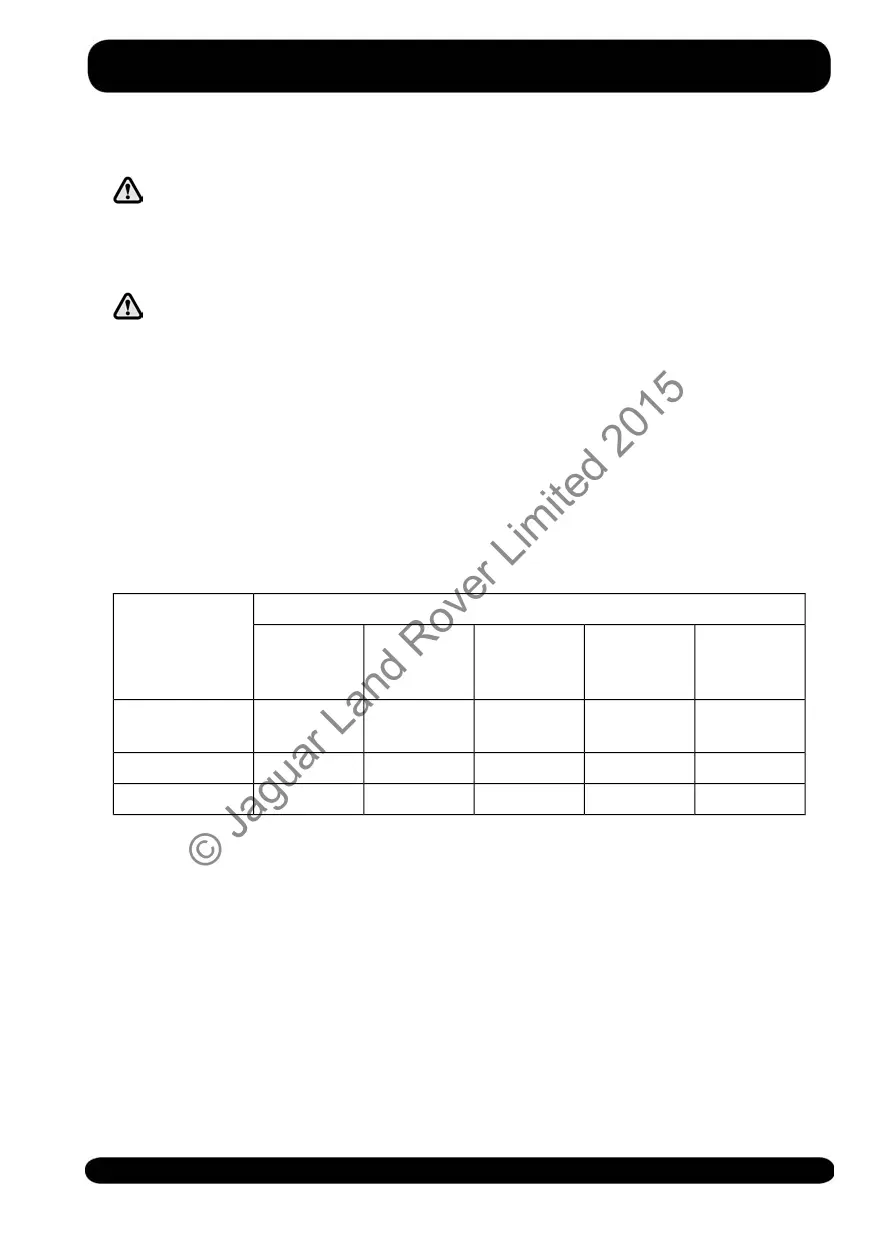
Information given within the table is
correct at the time of going to press.
However, availability of child restraints
may change. Please consult your Retailer/
Authorised Repairer for the latest
recommendation.
Note: The information contained in the
following tables may not be applicable to
all countries. If you are in any doubt
regarding the type and fitment of child
seats, seek advice from a Retailer/
Authorised Repairer.
Note: Ages given are approximate. In
case of doubt, the child’s weight, not age,
should be used when considering an
appropriate child seat.
Note: The legislation which governs how
and where children should be carried
when travelling in a vehicle, is subject to
change. It is the responsibility of the driver
to comply with all regulations in force.
Mass groupSeating
positions
III = 22-36
kg
8-12 years
II = 15-25
kg
4-9 years
I = 9-18 kg
9 months to
4 years
0+ = Up to
13 kg
0-18 months
0 = Up to
10 kg
0-9 months
UUUUUFront
passenger*
UUUUURear outboard
UUUUURear centre
U = Suitable for universal category
restraints, approved for this mass group.
X = Not suitable for the use of child
restraints of this mass group.
UF = Suitable for universal forward-facing
child restraints of this mass group.
* Always make sure the passenger airbag
has been disabled before using a child
restraint in this seating position. See 46,
DISABLING THE PASSENGER AIRBAG.
The front passenger seat should be
positioned fully rearward, the seat cushion
to its highest position and the seatback
adjusted to an upright position to support
the child restraint.
37
Child safety
© Jaguar Land Rover Limited 2015



 To Next Page