If the TPMS warning lamp does not
extinguish, even after checking the tyre
pressures and driving for more than ten
minutes above 25 km/h (16 mph), seek
qualified assistance as soon as possible.
AVOIDING FLAT SPOTS
In areas of extended high ambient
temperature, vehicle tyres can be affected
by a softening of the tyre's sidewall. If the
vehicle is stationary for long periods, the
effect is to slightly deform the tyre at the
point where the tyre meets the standing
surface. This is known as a flat spot.
This is normal tyre behaviour. However,
when the vehicle is subsequently driven,
vibration may be experienced from the
flat spot. The condition will steadily
improve with extra mileage.
In order to minimise flat spotting while the
vehicle is stationary for a long period, tyre
pressures can be increased to the
maximum, as stated on the tyre's sidewall.
The tyres must be returned to the
specified running pressures before driving.
See 237, TYRE PRESSURES.
TYRE DEGRADATION
Tyres will degrade over time, due to the
effects of ultraviolet light, extreme
temperatures, high loads, and
environmental conditions. It is
recommended that tyres are replaced at
least every 6 years from the date of
manufacture, but they may require
replacement more frequently.
USING WINTER TYRES
In many countries legislation exists that
requires the use of winter tyres during
specified periods of the year.
M+S (mud and snow) tyres have a
recognised level of winter performance
and need not be renewed. The M+S
marking on the tyre sidewall indicates an
'all season' tyre designed for use all year
round, including cold temperatures, snow
and ice.
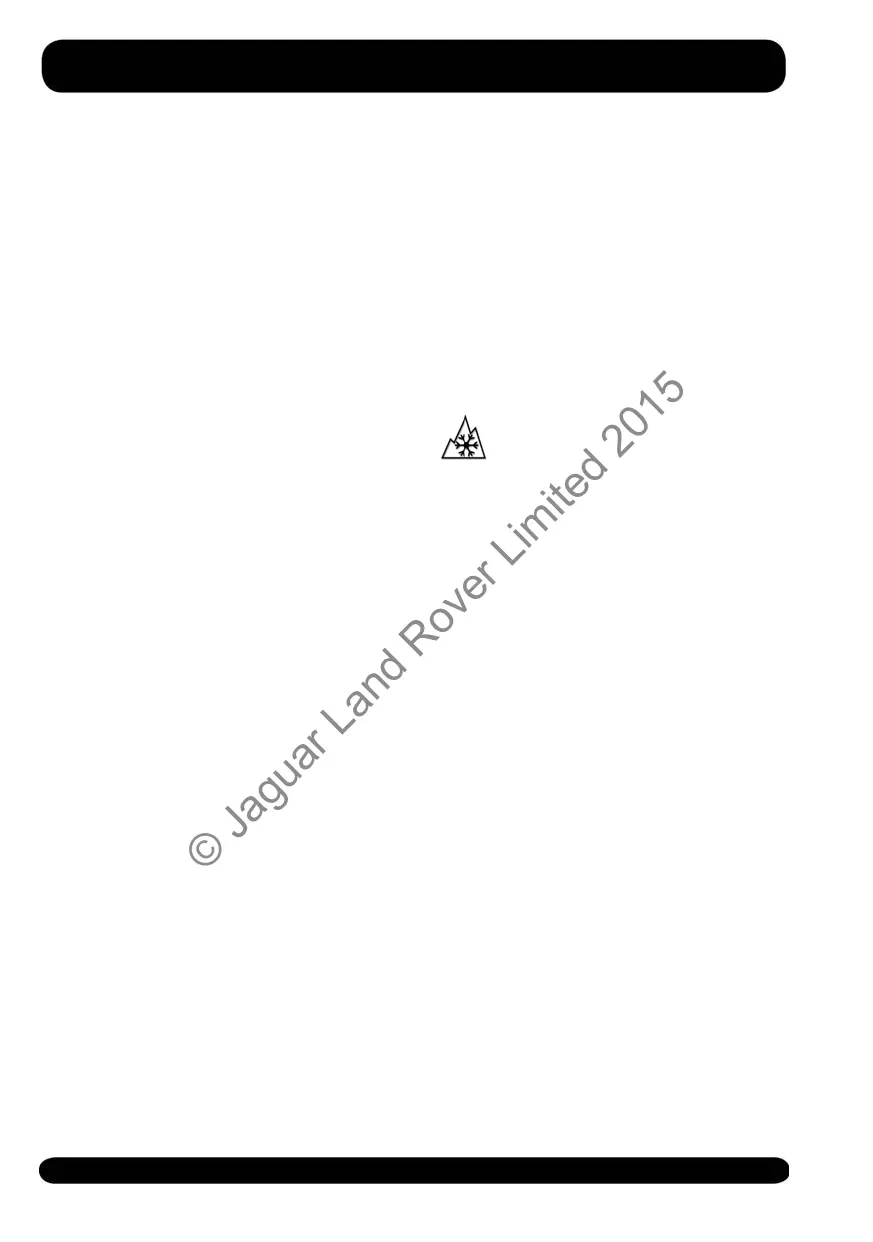
This symbol identifies dedicated
winter tyres, which can be fitted
if optimum winter traction is
required, or the vehicle is to be
used in more extreme winter
conditions.
Note: A dedicated winter tyre often has
a lower speed rating than the original
equipment tyre, and the vehicle must
therefore be driven within the speed
limitation of the tyre. Consult your
Retailer/Authorised Repairer for further
information. In markets that require a tyres
maximum speed label to be fitted, the
tyre's maximum speed label should be
placed within the driver's field of vision.
These can be obtained from the tyre
Retailer.
The tyre pressures indicated on the tyre
information label are for use in all
conditions on the original equipment
tyres. If a reduced speed rating tyre is
fitted, the recommended pressures are
only suitable for use below 160 km/h (100
mph).
For optimum traction, tyres should be run
in for at least 160 kilometres (100 miles)
on dry roads before driving on snow or
ice.
240
Tyres
© Jaguar Land Rover Limited 2015



 To Next Page