5.11
Date Code 20081022 Instruction Manual SEL-787 Relay
Metering and Monitoring
Load Profiling
Synchrophasor
Metering
The MET PM serial port ASCII command may be used to view the SEL-787
synchrophasor measurements. There are multiple ways to use the MET PM
command:
➤ As a test tool, to verify connections, phase rotation, and scaling
➤ As an analytical tool, to capture synchrophasor data at an exact
time, in order to compare it with similar data captured in other
phasor measurement unit(s) at the same time.As a method of
periodically gathering synchrophasor data through a
communications processor.
The MET PM command displays the same set of analog synchrophasor
information, regardless of the Global settings PHDATAV, PHDATAI, and
PHCURR. The MET PM command can function even when no serial ports are
sending synchrophasor data. It is unaffected by serial port setting PROTO.
The MET PM command will only operate when the SEL-787 is in the IRIG
timekeeping mode, as indicated by Relay Word bit TSOK = logical 1.
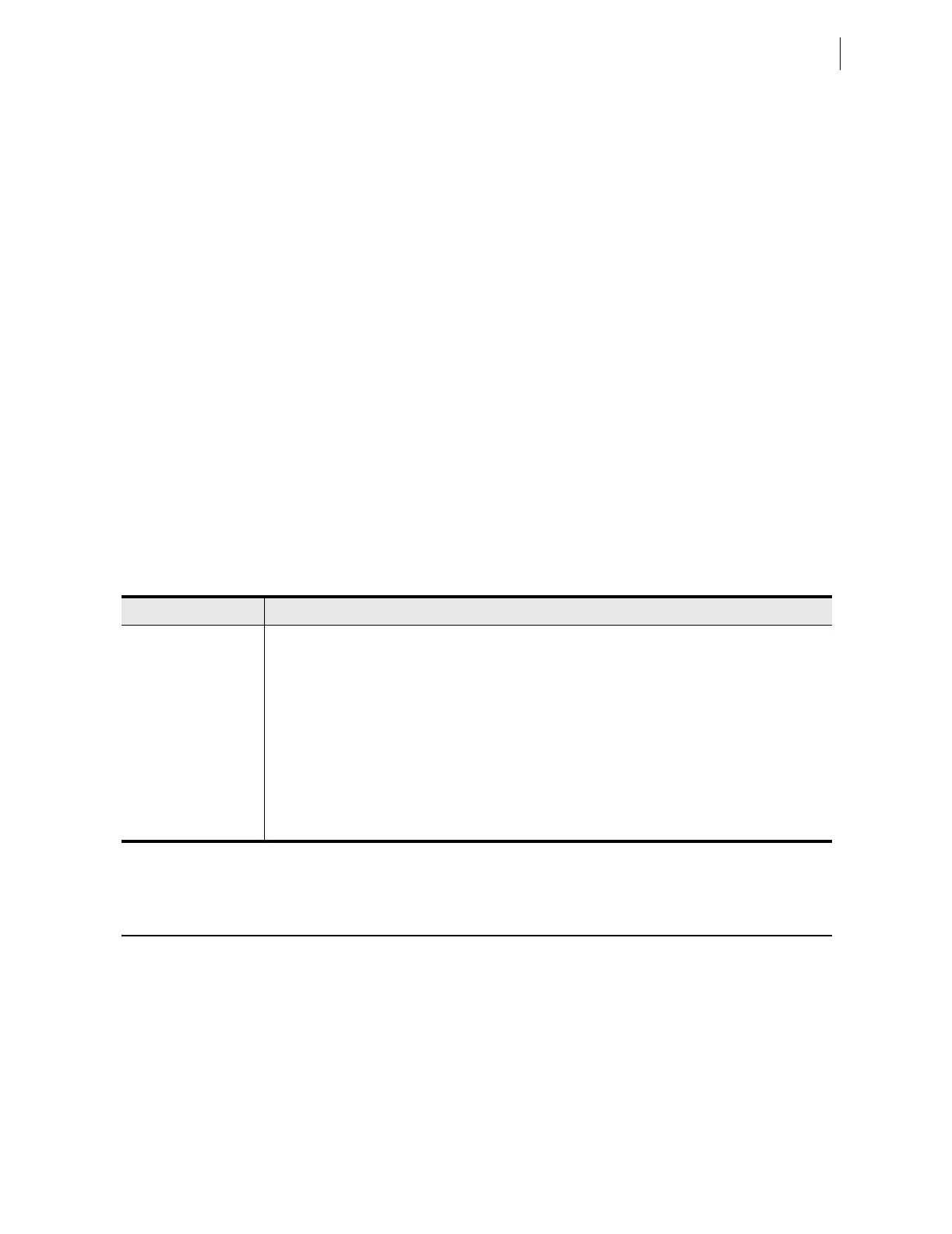
Table 5.9 below, shows the measured values for the MET PM Command.
Table H.4 in Appendix H: Synchrophasors, shows a sample MET PM
command response. The MET PM TIME command can be used to direct the
SEL-787 to display the synchrophasor for an exact specified time, in 24-hour
format. For example, entering the command MET PM 14:14:12 will result in
a response similar to Figure H.4, occurring just after 14:14:12, with the time
stamp 14:14:12.000. Refer to Appendix H: Synchrophasors, for further details
on synchrophasor measurements, settings, C37.118 Protocol etc.
Load Profiling
The SEL-787 includes a load profiling function. The relay automatically
records selected quantities into nonvolatile memory every 5, 10, 15, 30, or 60
minutes, depending on the LDAR load profile report setting (see Load Profile
Settings on page 4.108). Choose which analog quantities you want to monitor
from the analog quantities listed in Appendix K: Analog Quantities. Set these
quantities into the LDLIST load profile list report setting.
The relay memory can hold data for 4,000 entries. For example, if you chose
to monitor 10 values at a rate of every 15 minutes, you could store 41.67 days
worth of data.
Table 5.9 Synchrophasor Measured Values
Relay Option Meter Values
All Models Currents: IAW1, IBW1, ICW1, I1W1 (Winding 1 positive-sequence current) and IAW2, IBW2, ICW2,
I1W2 (Winding 2 positive-sequence current), magnitudes (A primary) and phase angles (deg)
Digitals TSOK and SV17–SV32 Relay Word Bit status
Analogs MV29–MV32 Math Variables
a
System Frequency (Hz) = 50 or 60 Hz
Rate of change of Frequency = 0
With Voltage Option Voltage phasors: VAB, VBC, VCA or VAN, VBN, VCN, and V1 (positive-sequence voltage),
magnitudes (V or kV) and phase angles (deg)
System Frequency (Hz)
Rate of change of Frequency (Hz/s)
a
This data is calculated every 100 ms. Only the data that occurs at the “Top of the Second” will be used for MET PM responses.


 To Next Page