Virtual Private LAN Services
7750 SR OS Services Guide Page 471
VPLS Access Redundancy
A second application of hierarchical VPLS is using MTUs that are not MPLS-enabled which must
have Ethernet links to the closest PE node. To protect against failure of the PE node, an MTU can
be dual-homed and have two SAPs on two PE nodes.
There are several mechanisms that can be used to resolve a loop in an access circuit, however from
operation perspective they can be subdivided into two groups:
• STP-based access, with or without mVPLS.
• Non-STP-based access using mechanisms such as MC_LAG, MC-APS, MC-RING.
STP-Based Redundant Access to VPLS
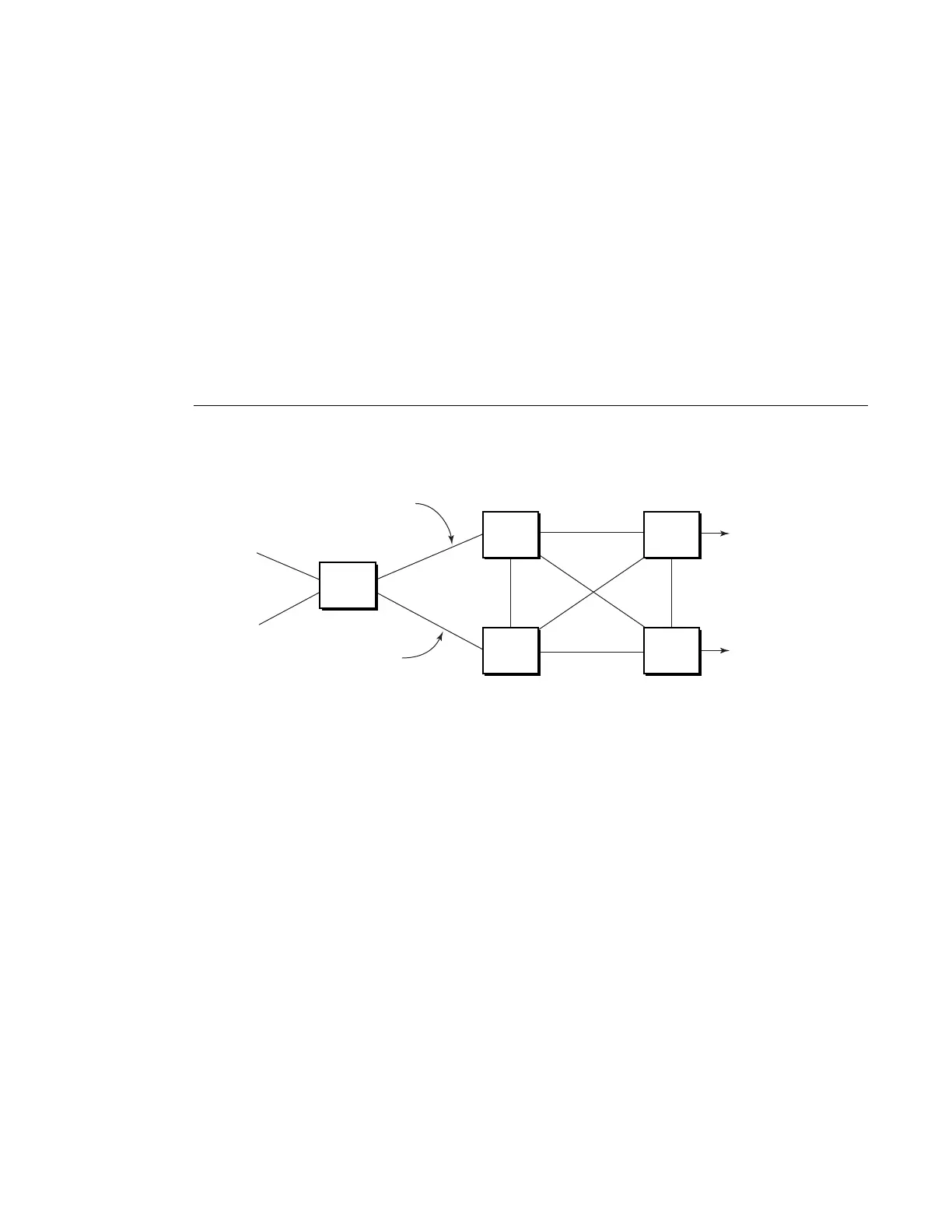
Figure 72: Dual Homed MTU-s in Two-Tier Hierarchy H-VPLS
In configuration shown in Figure 72, STP is activated on the MTU and two PEs in order to resolve
a potential loop. Note that STP only needs to run in a single VPLS instance, and the results of the
STP calculations are applied to all VPLSes on the link.
In this configuration the scope of STP domain is limited to MTU and PEs, while any topology
change needs to be propagated in the whole VPLS domain including mesh SDPs. This is done by
using so called “MAC-flush” messages defined by RFC 4762. In case of STP as an loop resolution
mechanism, every TCN (Topology Change Notification) received in a context of STP instance is
translated into LDP- MAC address withdrawal message (also referred to as MAC-flush message)
requesting to clear all FDB entries, but the ones learned from originating PE. Such messages are
sent to all PE peers connected through SDPs (mesh and spoke) in the context of VPLS service(s)
which are managed by the given STP instance.
OSSG206
s
S
S
sS
PE-1
CE-1
Customer
Site 1
Primary Spoke
Pseudowire
Backup Spoke
Pseudowire
Customer
Site 2
CE-1
(MTUs)
PE-3
PE-2
H-VPLS Full
Mesh
Core
PE-4










 To Next Page