Chapter 3 Operation
44
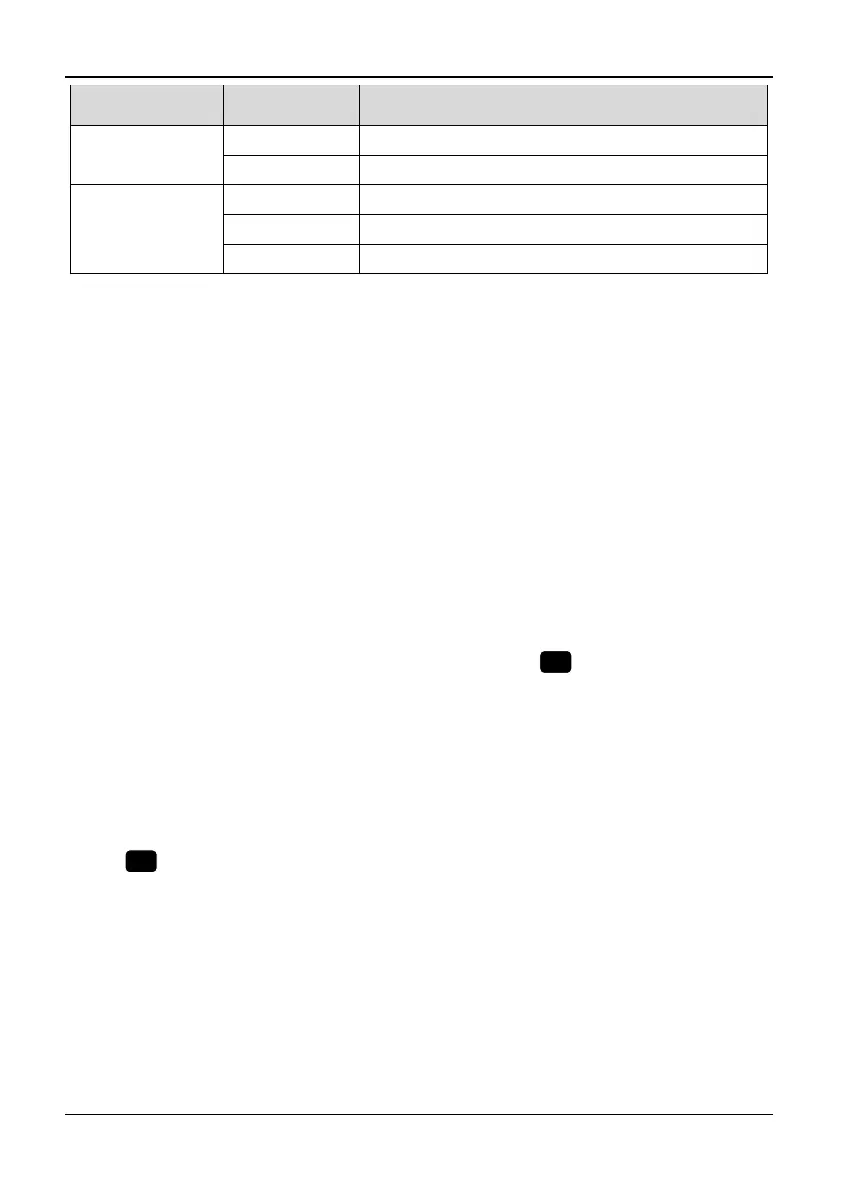
Indicator Display state Mean: Indicator the state of inverter
TRIP failure
indicator
OFF Normal
Slow flicker Failure
REMOTE
command mode
indicator
OFF Keypad control state
ON Terminal control state
Slow flicker Serial communication state
3.1.4 Display State of Keyboard
The working state of this series inverter includes two states: stop state and running state.
Stop State: If there is no running command input after the inverter is power on and
initialized, or the inverter has received a stop command input, the inverter will come into
stop state.
Running state: The inverter has received a running command and then comes into
running state.
Therefore, the display states of keyboard include display of stop state, display of running
state and display of programming state and display of fault and warning state.
Display of stop state
If the inverter is in stop state, the four digitals of keyboard will display the parameters
value of stop state: For example, the output frequency. See figure-3-2, and the unit
indicator will indicate the unit of the parameter. Press
>>
key, the keyboard will
cycling display the value of different monitoring objects (selected by the parameter
group PC).
Display of running state
If the inverter gets an effective running command, it will come into running state. Then
the four digitals of keyboard will display the parameters value of running state. See
example of figure 3-3-3. and the unit indicator will indicate the unit of the parameter.
Press
>>
key, the keyboard will cycling display the value of different monitoring
objects (selected by the parameter group PC).
Fault and warning state
If the inverter has checked out a warning signal, it will come into warning state and
show the warning code flickeringly. See example of figure 3-3-5. If the warning signal
disappears, the warning code will automatically disappear.
If the inverter has checked out an error, it will come into fault state and show the fault
code steadily. Moreover, the indicator TRIP will light up, see example of figure 3-3-6.


 To Next Page