Introduction P/N 709C011801 Page 15
1 Introduction
1.1 About ONE™
The Optical Network Evolution Platform (ONE™) by Corning provides a flexible in-building RF and network digital coverage
solution based on a fiber optic transport backbone.
The fiber-optics infrastructure is easily deployable via a wide range of pre-terminated composite cables and advanced
end-to-end equipment. Easy to design, Plug and Play™ connectors, significantly reduce installation cost and deployment time.
The ONE™ solution is an ideal fit for large, high-rise or campus-style deployments. It generates significant CAPEX savings and
OPEX savings through the use of user configurable service distribution groups and an infrastructure that is simple to deploy and
efficient in usage.
Dynamic service distribution group management allows precise service distribution control to meet changing density needs,
and provides further savings by enabling sharing of equipment at various levels for service providers.
Radio source agnostic, remote units can be used as network extenders. Ethernet capability with dedicated fiber link for Wi-Fi
offload brings a higher level of granularity and support for devices and applications with very high speed requirements.
ONE™ fiber-optics infrastructure allows various combinations of SISO and MIMO services to be routed from the headend to
specified remote locations on each floor, according to user defined configurations (via the Web Management GUI). This allows
optimizing service coverage and provides equipment savings. While the fiber-optics infrastructure is common, the services can
be routed via service provider shared or dedicated equipment. By default, the system is configured to support a single service
group: all services are transferred to all remote locations. This default configuration can be easily modified according to site
requirements.
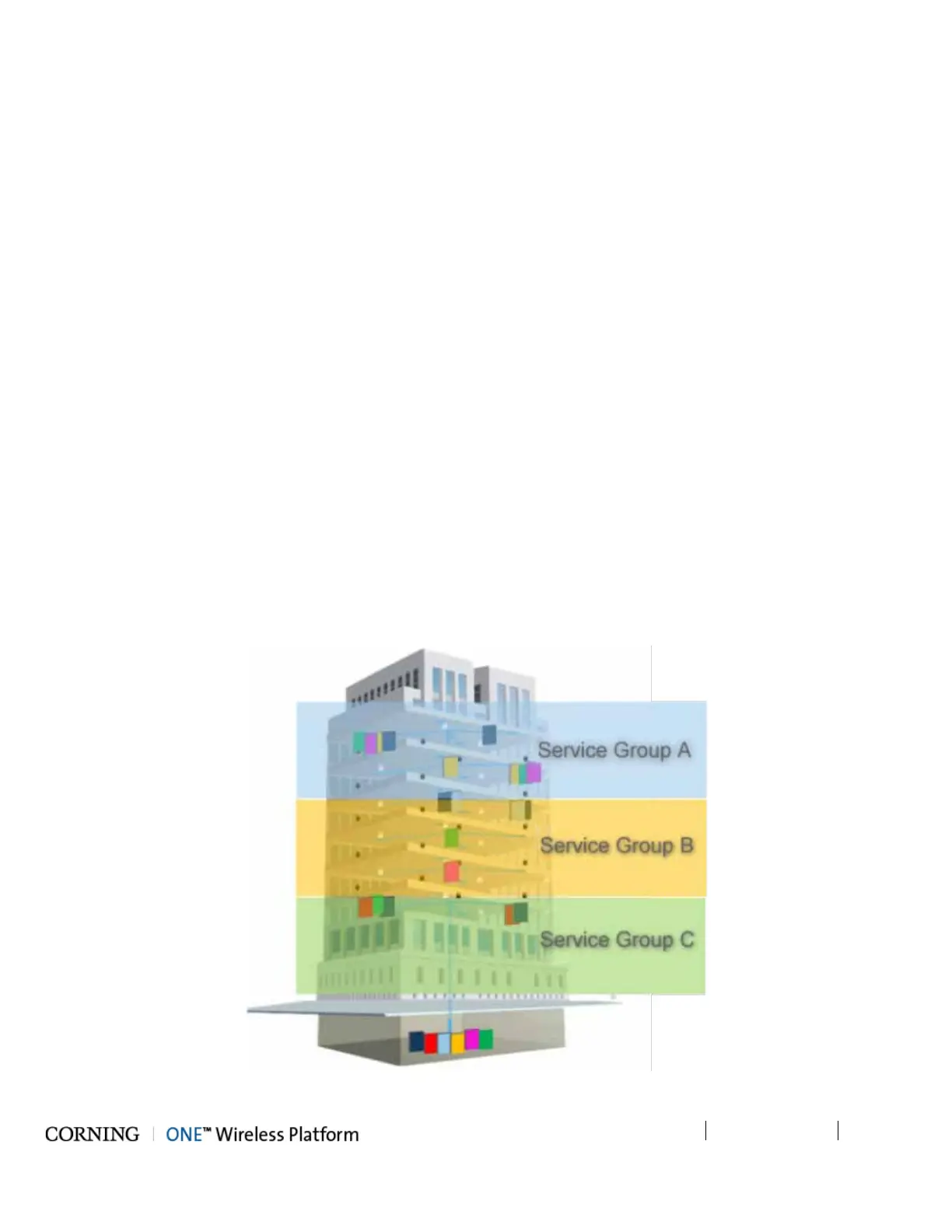
The following figure illustrates service distribution from the head-end to various locations on each remote floor. Each color
represents a specific service, where different combinations of services are distributed at various locations on the same floor
according to coverage requirements.
Figure 1-1. Illustration of Precise Service Distribution over Selected Remote Areas



 To Next Page