Nose Unit Overview and Precautions
The Role of the Nose Unit
Attaching the nose unit and setting [AUTO Z CONTROL] to [ON] enables automatic detection of the Z origin as the
position where the tip of the nose unit touches the surface of the workpiece. This makes it possible to perform
engraving on a workpiece of uneven surface height at a uniform depth. It also eliminates the need to set the Z
origin each time you engrave more than one dierent workpiece.
Nose Unit Limitations
Trackable height displacement
When [AUTO Z CONTROL] is set to [ON], then as long as the tip of the nose unit is in contact with the surface of the
workpiece, the engraving depth can be kept uniform even if the height of the workpiece changes. However, there
is an upper limit to the amount of height displacement that can be tracked. Before you do the actual engraving,
carry out an engraving test to make sure the desired engraving can be accomplished.
• Trackable undulation height: Gentle undulations of about 1 mm (0.04 in.)
Fill range
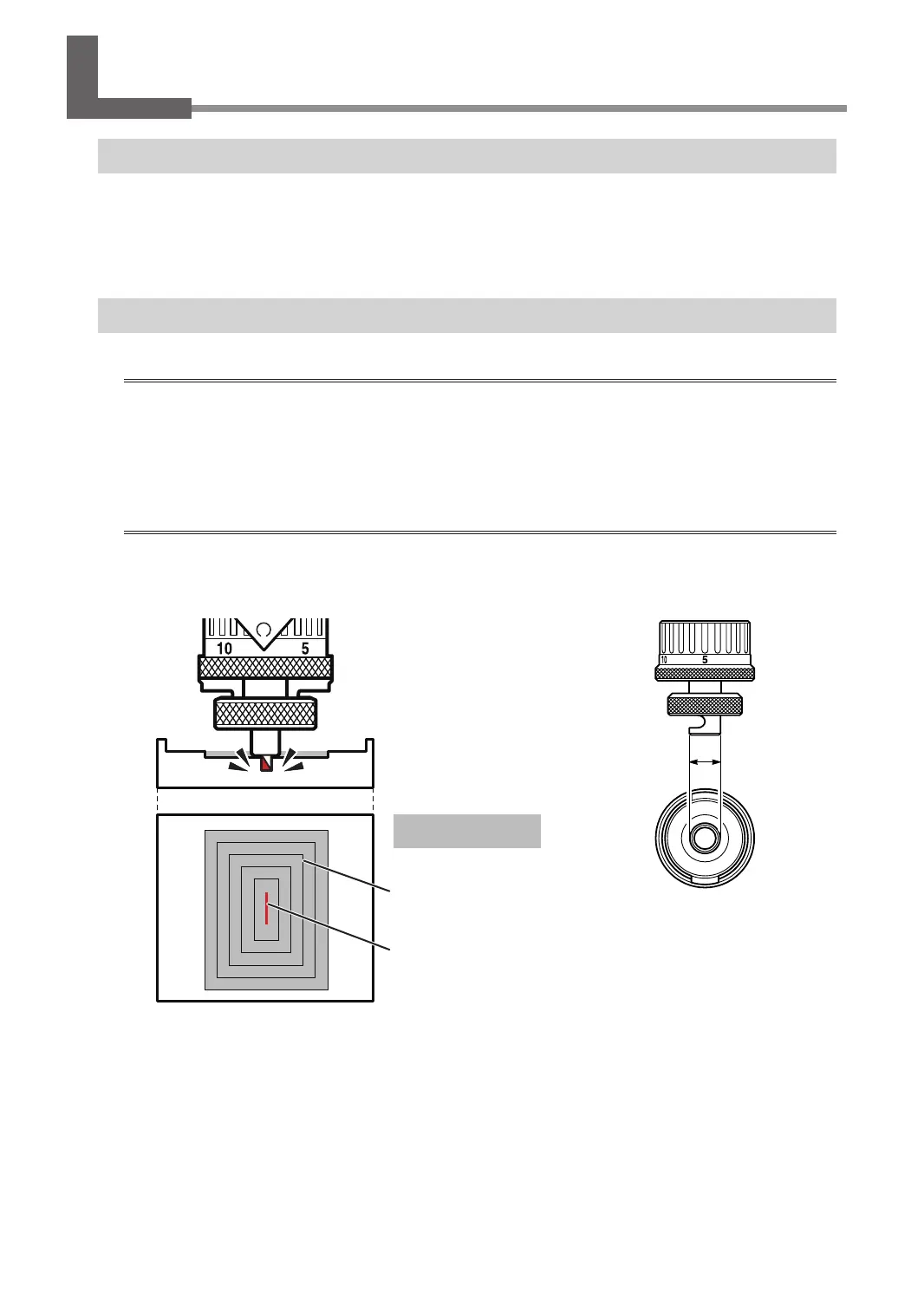
The nose unit cannot be used with ll engraving over a wider range than the 8 mm (0.3 in.) diameter of the tip of
the nose unit. Using the nose unit may lead to engraving deeper than an already engraved surface with the nal
pitch.
8 mm (0.3 in.)
Tool path (path the tool takes)
Final pitch (nal path that the tool takes)
Area already worn o
83
Chapter 5 Various Engraving Methods


 To Next Page