215922 317 Revision A
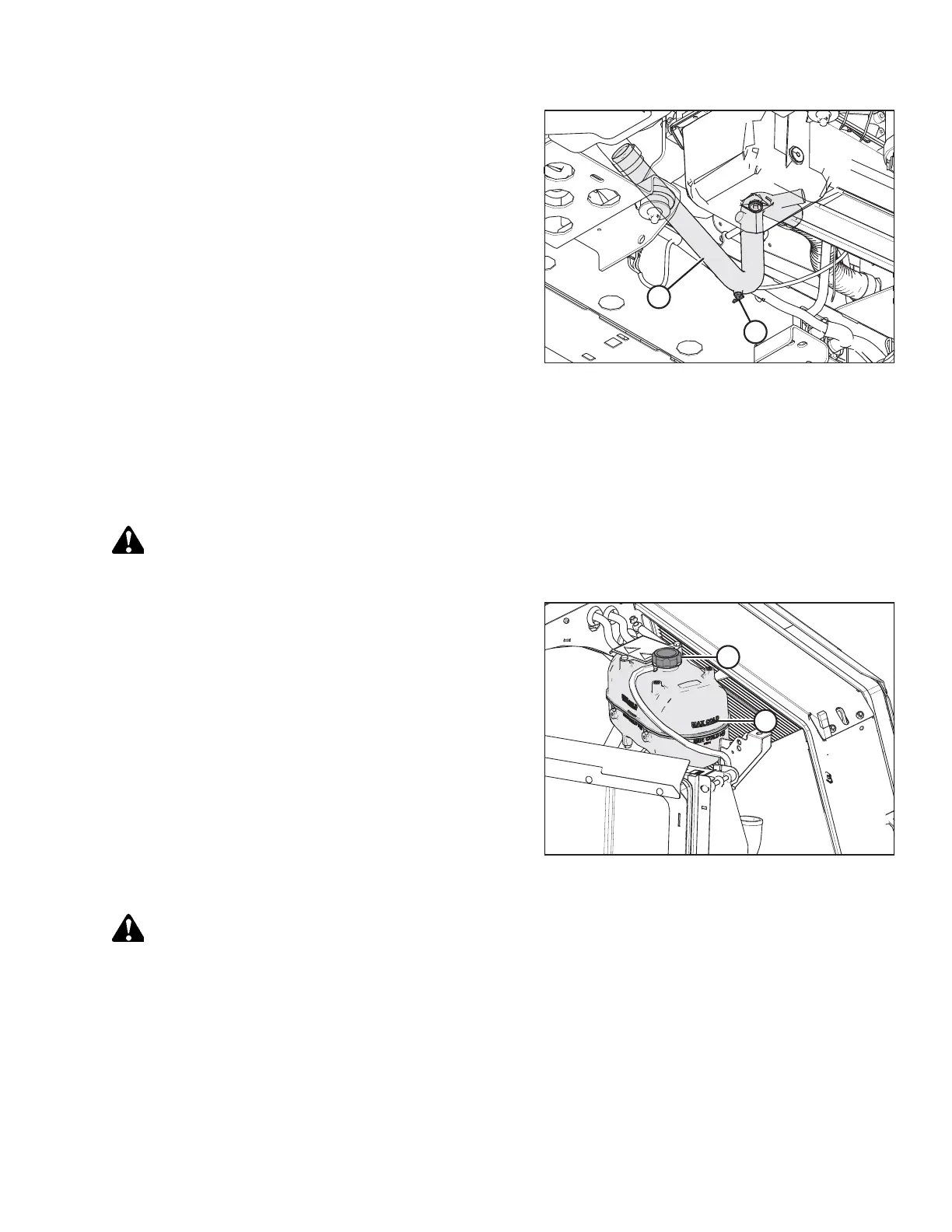
Figure 5.130: Radiator Drain Valve
6. Locate radiator drain valve (B) on radiator inlet tube (A). It
is located inside the frame beside the engine.
7. Place a drain pan (about 30 liters [8 U.S. gallons] capacity)
under the drain valve, and then open radiator drain
valve (B).
8. When the system has been completely drained, close
radiator drain valve (B).
9. Shut down the engine, and remove the key from
the ignition.
10. Add coolant after a system drain. For instructions, refer to
Adding Coolant after System Drain, page 317.
11. Close the hood. For instructions, refer to 5.3.2 Closing Hood, page 240.
Adding Coolant after System Drain
Coolant is cycled through the engine to help reduce internal heat. The coolant tank should be at least one-half full. If it’s
less, add coolant.
CAUTION
To avoid personal injury from hot coolant, do NOT attempt to open the pressurized coolant tank cap until the
engine cools.
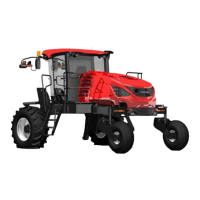
Figure 5.131: Coolant Recovery Tank
1. Open the hood. For instructions, refer to 5.3.1 Opening
Hood, page 239 .
2. Remove pressurized cap (A) from the coolant recovery tank.
NOTE:
For coolant specifications, refer to. 5.1.4 Lubricants, Fluids,
and System Capacities, page 232..
3. Add coolant at a rate not exceeding 11 L/min (3 gpm) until
the recovery tank is one-half full.
NOTE:
When adding coolant, use MAX COLD line (B) on the side of
tank that faces the cab for an accurate measurement.
DANGER
Never start or move the machine until you are sure that all bystanders have cleared the area.
4. With the pressurized cap off, start the engine and run at high idle for approximately 20 minutes or until the engine
temperature reaches 85°C (185°F).
5. Add coolant until the recovery tank is one-half full. Check the coolant level again. For instructions, refer to 5.7.5
Checking Engine Coolant Level, page 274.
6. Replace pressurized cap (A).
7. Close the hood. For instructions, refer to 5.3.2 Closing Hood, page 240.
MAINTENANCE AND SERVICING



 To Next Page