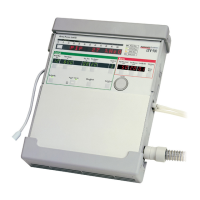
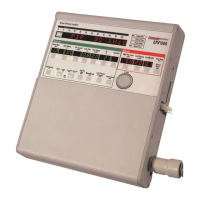
Page 1-4 LTV
®
Series ventilator Operator’s Manual
p/n 10664, Rev. Y
WARNING
BAT EMPTY Alarm - A BAT EMPTY alarm indicates the internal battery is almost depleted. Connect
the ventilator to an external power source immediately.
Battery run time - When the battery reaches the BAT LOW level, the ventilator will only run for
approximately 10 minutes before generating a battery empty alarm (BAT EMPTY). The approximate
time shown is based on tests using the nominal settings, a new battery and a full 8 hour charge cycle
as specified in Appendix A - Ventilator Specifications. Actual run time may be more or less depending
on ventilator settings, patient demand, and battery age or condition. It is highly recommended that an
alternate power source is connected PRIOR to the ventilator reaching the BAT EMPTY alarm
condition to ensure continuous, uninterrupted patient ventilation
INOP Alarm - If an INOP alarm occurs during operation, ventilate the patient using an alternative
method, disconnect the ventilator, and immediately contact a certified Pulmonetic Systems’ service
technician or Pulmonetic Systems.
NO CAL Condition - Operation of the LTV
®
Series ventilator under a NO CAL condition may result in
inaccurate pressure and volume measurements. Should this condition occur, disconnect the patient
from the ventilator, provide an alternative method of ventilation and immediately contact a certified
Pulmonetic Systems’ service technician or Pulmonetic Systems.
XDCR FAULT Alarm - Continued operation of the LTV
®
Series ventilator with an activated XDCR
FAULT alarm may result in inaccurate flow and volume measurements. Should this condition occur,
disconnect the patient from the ventilator, provide an alternative method of ventilation and
immediately contact a certified Pulmonetic Systems’ service technician or Pulmonetic Systems.
Personal Injury and Electric Shock - Operation of the LTV
®
Series ventilator if any of its panels
have been removed may result in electrical shock to the patient or operator. All servicing must be
performed by a certified Pulmonetic Systems’ service technician.
NPPV Mode – NPPV
1
is not a life support mode and is not suitable for patients that require life
support ventilation. NPPV Mode should only be used for supplemental ventilation of non-life support
patients.
NPPV Mode - When operating in NPPV
1
mode, many of the standard alarms are disabled. This may
result in reduced ventilation accuracy should a problem occur. Carefully read Chapter 4 - Ventilation
Modes, NPPV, before selecting this mode of operation.
Accuracy of PEEP setting - Variations in the patient’s breathing pattern and/or leaks in the patient
circuit (including leaks around the tracheostomy tube cuff) can affect PEEP. PSI recommends that the
clinician set the PEEP to the prescribed level on a test lung while observing the PEEP value in the
LTV display window. The clinician should also periodically monitor the PEEP value in the LTV display
window. Using an inaccurate PEEP setting due to a patient leak can result in less than prescribed
PEEP or undesirable increases in patient circuit pressure when the patient circuit leak changes.
Audible Alarms - Failure to immediately identify and correct audible alarm situations may result in
serious patient injury.
1
NPPV, Non-Invasive Positive Pressure Ventilation



 To Next Page