USER MANUAL (Instruction for Use) SW 6.1
Treatment Selection
Version 6.1.6 dated 2020-01-31 EN Page 157 of 201
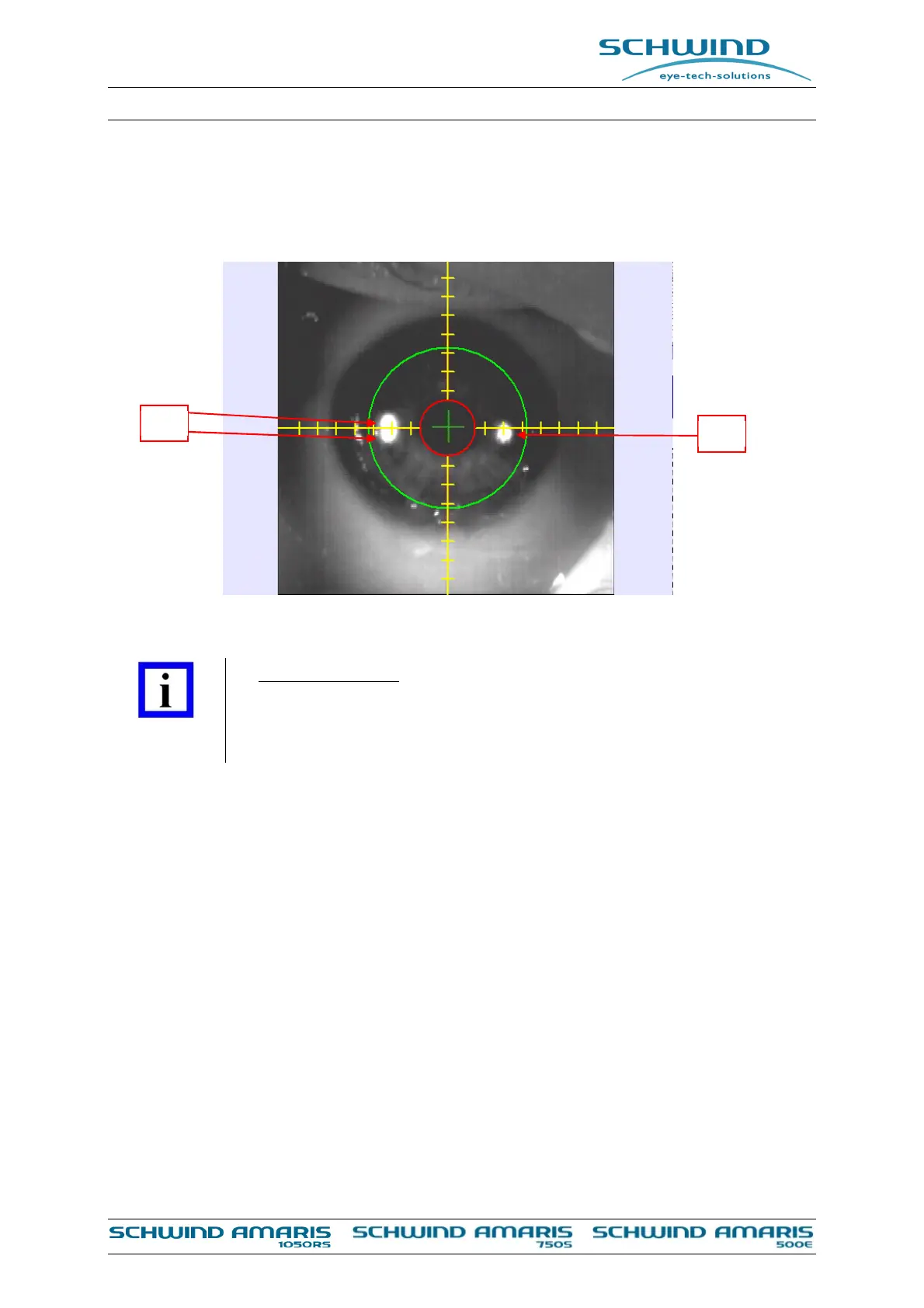
Bad quality live images (Figure 8-15) can be recognized, because there are less than four infrared
reflections visible on the cornea and the overall contrast of the image is bad.
Figure 8-15: Poor eye tracking contrast
IMPORTANT NOTE.
In case of a bad eye tracking live image, the user should check the position
of the patient’s head or the surgical draping to minimize the effect on the
infrared illumination.
8.5.3 Static Cyclotorsion Control
The eye tracker has the possibility to compare the patient's eye with reference images taken
during the diagnosis with the ocular or corneal wavefront analyzer, SCHWIND SIRIUS or
SCHWIND PERAMIS, in order to acquire the cyclotorsional offset of the eye between the
diagnosis and treatment. The pupil size shall not differ more than 30% compared to the diagnosis
image. The resulting angle is automatically calculated into the ablation profile. This correction of
the cyclotorsional movement of the eye between upright and supine position of the patient is
called Static Cyclotorsional Correction (SCC).
The static cyclotorsional measurement is started with pressing the button <Start SCC> which
appears below the eye tracking live image if the Treatment Assistant Manager is at the Step SCC
(Static Cyclotorsional Control).
1, 2
6


 To Next Page