USER MANUAL (Instruction for Use) SW 6.1
Device / System Description
Version 6.1.6 dated 2020-01-31 EN Page 49 of 201
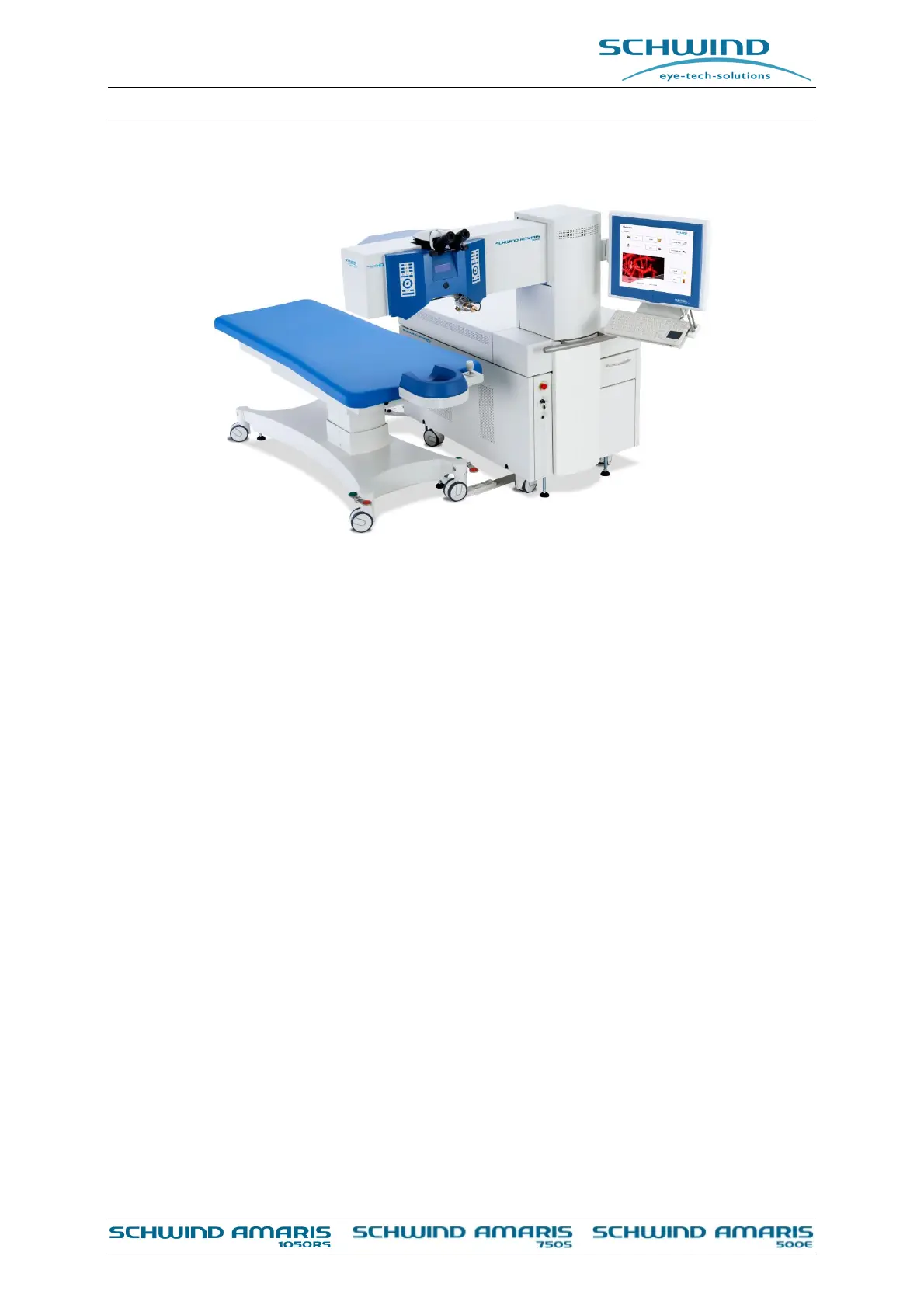
Figure 4-2: View of AMARIS 500E excimer laser with patient bed
4.4 System Description
The overall design of the SCHWIND AMARIS 750S and AMARIS 1050RS provides low height of
the basic unit with a tower and laser arm for the beam delivery system, which doesn't give the
patient the feeling of being crowded by a big machine. The motorized laser arm can be swivelled
over the basic unit. Thus, the patient can easily sit and lay down on the patient bed or chair and
surgical personnel have no constraints during patient preparation.
The SCHWIND AMARIS 500E is a more compact version with shorter, but higher basic unit and
a fixed laser arm. The laser arm can only be swivelled by a service technician for transportation
purposes.
The laser head operates at a repetition rate of 750 Hz (model AMARIS 750S), 1050 Hz (model
AMARIS 1050RS) or 500 Hz (model AMARIS / AMARIS 500E), respectively, with two levels of
fluence: higher fluence for speed of ablation and lower fluence for smoothing and finer ablation.
The transition between the two fluence levels is made on the fly (Automatic Fluence Level
Adjustment).
An optical system guides the laser beam through the tower and laser arm onto the treatment
plane and forms the 6x3 mm² rectangular sized beam profile of the laser source into a small
round spot of 0.54 mm (FWHM) in diameter with super-Gaussian energy distribution.
The active laser medium of the laser source is an argon-fluorine gas buffered with neon and must
be changed in periodic intervals, depending on the working or idle times of the laser. In case of
too low energy of the laser source, the system requests the user to start a gas exchange. Once
started, the gas exchange procedure is fully automatic.
A 1050 Hz eye tracker ensures that even fast eye movements up to six dimensions are
compensated within 3 ms (milliseconds) during the ablation process. While the laser is ablating
the eye tracker compensates X- and Y-lateral movements, as well as X- and Y-eye rolling



 To Next Page