THE DRIVER’S CAB
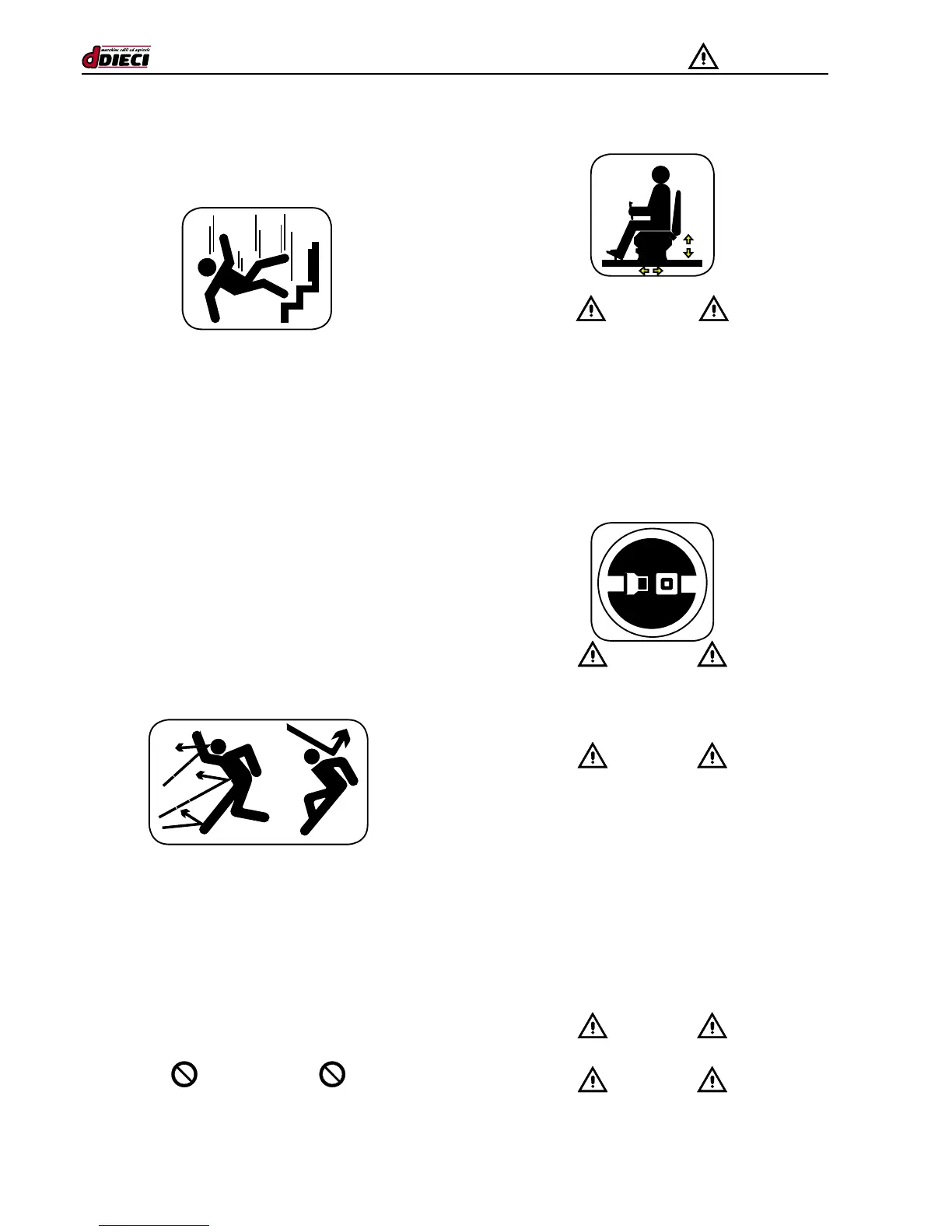
- Use appropriate handles and steps to reach the driver's seat.
- Always face the machine when getting in or out, keeping
a tight hold of the machine using the steps and handles.
- Never use the controls for any other uses other than
the uses they are designed for (e.g. to get on or off the
forklift, hang clothing, etc.)
- Never jump off the machine.
- Never get on or off a moving machine. Never jump in or
out of the machine.
- If the machine starts moving while no one is in the driver's
seat, do not jump on the machine in an attempt to stop it.
- Never get on or off the machine while holding tools.
- Always keep footboards, steps and handles clean to en-
sure they are not slippery.
- Do not stick suction cups on the windows. Suction cups
act like magnifying glasses and can cause res.
- Do not use mobile phones in the cab while driving or
operating the machine.
- Never put dangerous items such as inammable or ex-
plosive objects inside the cab.
- When working in places where there is a risk that objects
may fall on, bounce off or penetrate the cab and hit the
operator, assemble appropriate guards to shield the ope-
rator. Always close the windows. Always ensure that any
bystanders are at a safe distance and that they cannot
be hit by bouncing or falling objects.
- Take the utmost care when adjusting the windows because
any unintentional contact with any of the control levers could
suddenly move the machine with the risk of serious injury.
- If the cabin window on the side of the boom breaks, the-
re is a danger of contact between the operator and the
boom. Stop work immediately and replace the glass.
- PROHIBITION -
IT IS FORBIDDEN to expose arms, legs or any part of
the body in general out of the driver's seat.
- CAUTION -
Only use the machine if the seat is adjusted properly.
An incorrect seat adjustment can quickly tire the ope-
rator and force him or her to accomplish incorrect ma-
noeuvres; it can alter the driver's perception of the con-
trols and external objects; it can compromise sensitivity
when carrying out manoeuvres.
- The seat must be adjusted according to the height and
weight of the driver.
- The driver should be able to press the pedals down comple-
tely and operate the control levers correctly while keeping
his/her back leaning well up against the back of the seat.
- DANGER -
Always fasten your seatbelt correctly before operating the machine.
- The belt is correctly adjusted when it ts snugly around
your waist.
- DANGER -
The machine cab is strong enough to support the weight
of the machine should it tip over (ROPS); therefore, it
is essential that the driver remains rmly fastened in
the seat thanks to the seat-belt to prevent him/her from
falling out and possibly getting crushed.
- Before starting the machine, carefully check the belt, buckle
and fastenings. If any parts are damaged or worn, replace
the seat belt or the component before using the machine.
- Always remain seated with the seat belt correctly faste-
ned while using the machine to reduce the risk of injury
if you have an accident.
- After a serious accident, replace the seat belts even if
they do not appear damaged.
- DANGER -
Do not carry passengers on the machine.
- DANGER -
The operator must always remain seated in the normal
driving position.


 To Next Page