Operation
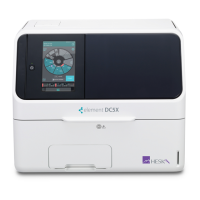
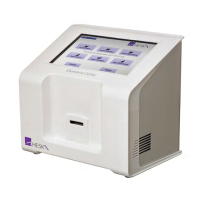
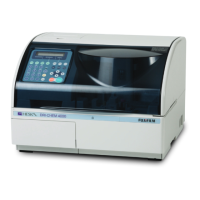
This section provides an overview of the operations and the process that the Element DC needs to produce test results.
3.1 Slide Loading
The analyzer can compensate for the differences between the slide production lots by reading the QC card in the box of
slides.
The slides are unwrapped and loaded in the slide cartridge after they reach room temperature. ISE slides can be loaded
along with colorimetric (CM) slides.
The slide cartridge can contain a maximum of 20 slides (including ISE slides) at one time.
The analyzer determines the test name from the slide information printed on the reverse side of the slide.
3.2 Sample Loading
Single-use, disposable sample tubes (0.5 ml or 1.5 ml) can be set in the sample rack. Each tube has a maximum and
minimum volume for sample.
When running ISE tests, the reference fluid must be loaded prior to the test.
When diluting the sample automatically, a mixing cup and the diluent must be loaded for automatic tests.
3.3 Sampling and Spotting
The sampler detects the surface of the sample, aspirates a required volume of sample, and spots it on the slide. If the
analyzer is operated in dilution mode, the sampler aspirates the diluent, mixes it with the sample, and spots the diluted
sample on the slides.
3.4 Incubation
The incubator can hold a maximum of 12 CM slides and one ISE slide. The incubator incubates the CM slides for
approximately 6 minutes at 98.6°F (37°C) and the ISE slide for approximately 1 minute at 86°F (30°C). If slides remain in the slide
cartridges, they will be transported one by one into the incubator until the cartridge is empty.
3.5 Photometer and Potentiometer Readout
By touching START, the analyzer performs tests automatically.
The photometer head below the incubator reads the reflectance of the slides as well as the white reference plate and
the black reference plate. The analyzer uses the reflectance readings, together with the reference readings, the standard
curves, and the QC information to determine the concentrations of the samples.
The potentiometer head below the ISE incubator reads the electrical potential of the ISE slide. The analyzer
determines the concentrations of the electrolyte in the sample using the electrical potential readings, together with the
standard curves.
The test results are printed out and can also be transmitted to an external computer if necessary.
Section 3: Principles of Operation
25
Element DC
Veterinary Chemistry Analyzer


 To Next Page