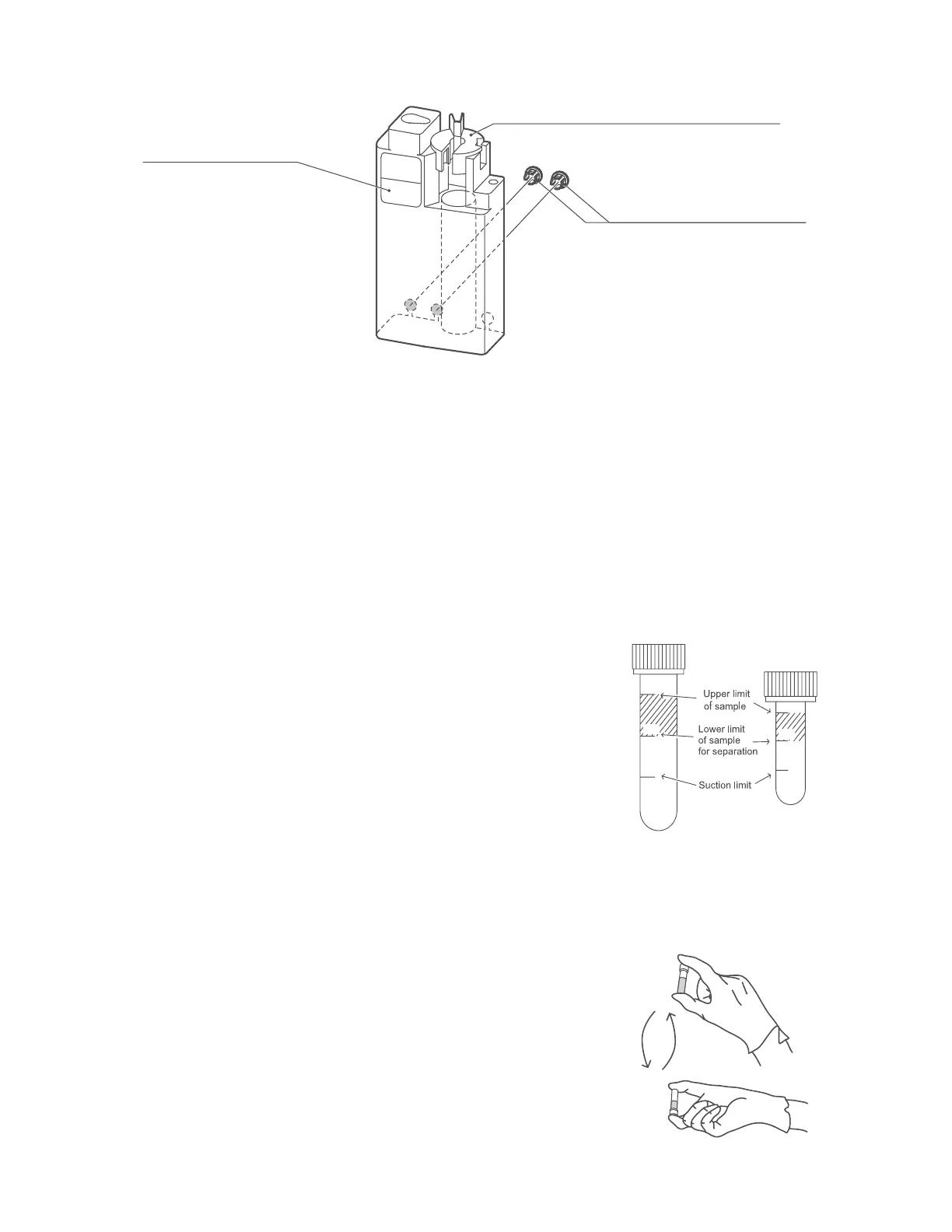
2. Sample rack assembly for a 0.5 mL sample tube.
The tube contents of a blood collection tube determine which slide is applicable.
The following is general information about tube contents and the applicable tests.
a. Heparin tube
• Applicable to all tests (For GLU and NH3, measure the samples as soon as possible after blood collection).
• General color of cap: Green
b. Plain tube (no additives, available coagulant contained)
• Applicable to other than GLU and NH3
• General color of cap: Red
0.5mI
MIX CUP
a
b
Place label “0.5 ml”.
Insert the tube holder “4” (for 0.5 mL tubes)
in the hole.
Insert pins “7” in the right
(back view) and the center
holes.
1.5
1.0
0.5
0.5
0.3
0.1
3.7.7 Producing Samples Using Sample Tubes
1. Obtaining plasma samples
a. Untreated whole blood can be collected and placed
directly into heparin tubes (green cap). Whole blood
samples already containing lithium heparin from another
collection tube can be transferred into non-heparinzed
tubes (red cap).
NOTE: The top surface of the sample fluid must be within the
shaded section of the tubes as shown in the figure to the right.
If the blood in the tube is below the suction limit mark, the
analyzer will indicate an insufficient sample volume error.
NOTE: For aspirating only the supernatant fluid (plasma) of the
centrifuged sample (to avoid aspiration of red blood cells), at least
1.0 ml (for 1.5 ml tube) or 0.3 ml (for 0.5 ml tube) of the whole
blood sample should be put in each tube.
b. Put caps on the tubes and mix the contents by rotating
them five or six times.
c. Centrifuge the samples using a commercially available
centrifuge.
31


 To Next Page