Installation
Operating environment and site requirements
•
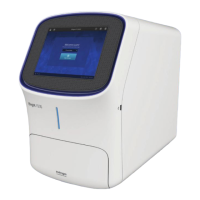
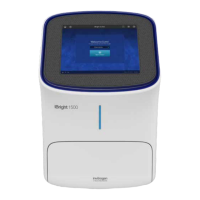
The dimensions of the EVOS
™
M5000 Imaging System are 18×23×18in (46×59×46cm)
(W × H × D). The system requires a benchtop of approximately 36×36in(92×92cm).
•
If the system includes the optional EVOS
™
Onstage Incubator (Cat. No. AMC2000), then add 16in
(40 cm) to the width of the bench.
•
Allow at least 2 in (5 cm) of free space at the back of the instrument to allow for proper ventilation
and prevent overheating of electronic components.
•
Place the EVOS
™
M5000 Imaging System on a level surface away from vibrations from other pieces
of equipment. Tabletop centrifuges, vortex mixers, and other laboratory equipment can vibrate the
instrument during operation and interfere with instrument performance.
•
If possible, install the EVOS
™
M5000 Imaging System away from direct light sources such as
windows. Ambient light can enter the imaging path and aect the image quality.
•
Operating temperature range: 4°–32°C (40°–90°F).
•
Relative humidity range: 0–90%.
•
Operating power: 100–240 VAC, 1.8A
•
Frequency: 50–60Hz
•
Electrical input: 12VDC, 5A
IMPORTANT! Do not position the instrument so that it is
dicult to turn o the main power switch
located on the back of the instrument base (see “Rear view” on page14). In case of an instrument
malfunction, turn the main power switch to the OFF position and disconnect the instrument from the
wall outlet.
Cell culture hood setup
The EVOS
™
M5000 Imaging System
fits in cell culture hoods that are at least 24in (61cm) deep and
36 in (92 cm) high with a 30 in (76 cm) opening. If your cell culture hood is smaller, it may be possible to
fit the instrument by turning it at a slight angle.
3
16
EVOS
™
M5000 Imaging System User Guide



 To Next Page