LDI Intellectual Property.
Not for secondary distribution or replication, in part or entirety.
DIGISONDE-4D
SYSTEM MANUAL
VERSION 1.2.11
SECTION 3 - OPERATING INSTRUCTIONS 3-21
receive signals in synch with the older DPS4 model, it inserts additional pauses between individual CITs to rep-
licate delays that DPS4 requires to complete internal processing and data transfer. Such timing mode for
oblique sounding is called “Oblique” (for reception from DPS4) and “Compatible” (for transmission to DPS4).
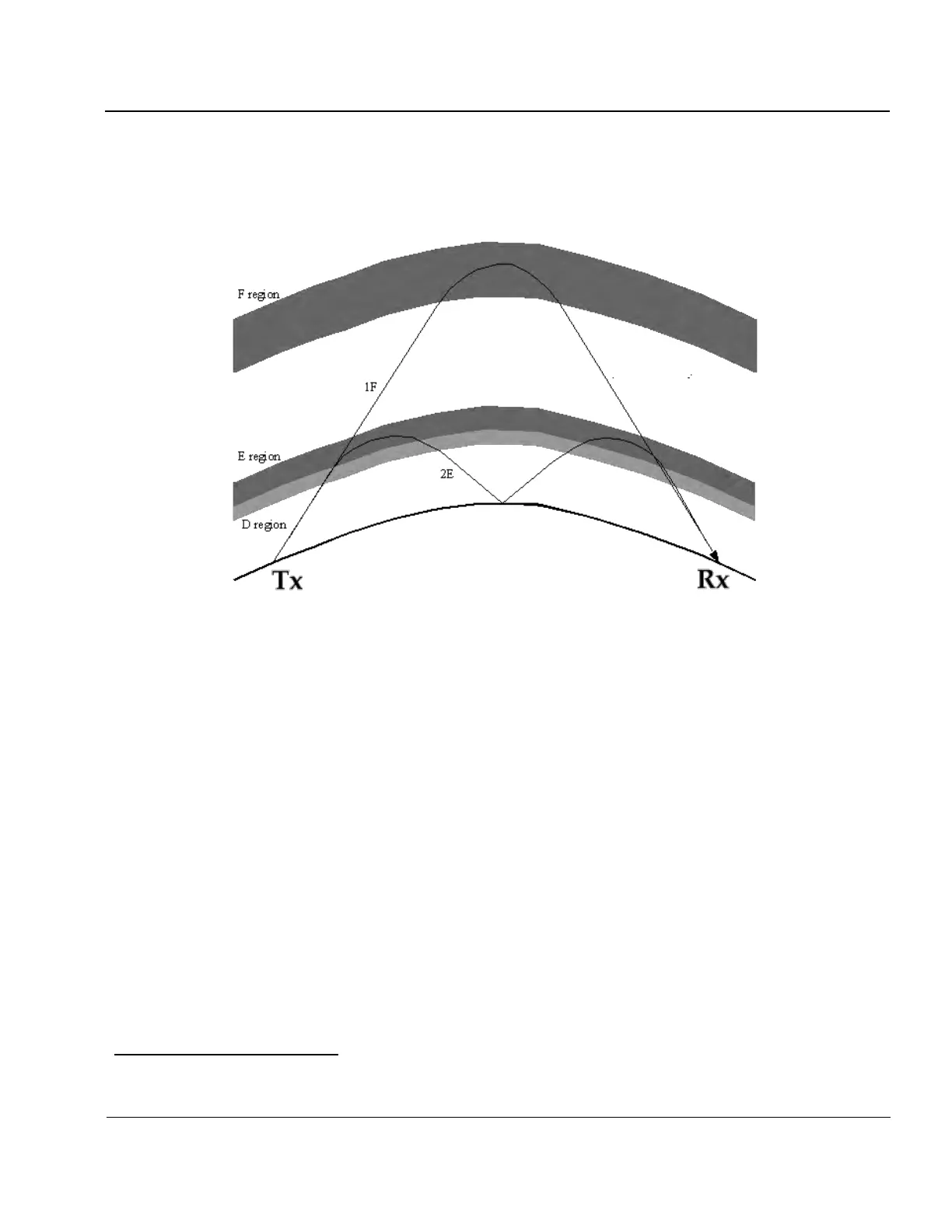
Figure 3-13: Signal Propagation During Oblique Incidence Ionogram Measurement Between
Two Digisonde
®
Systems.
3:36. For a Digisonde-4D to receive only oblique incidence signals, it is necessary to:
• Disable transmission of its own pulse (by selecting Radio Silent option),
• Select appropriate interpulse period to match transmitter mode, and
• Select transmitting Digisonde-4D or DPS4 station from the list of stations
1
.
o When a particular Digisonde
®
station is selected as transmitter, DCART automatically
▪ calculates delay start of receiver sampling (start range) to skip the bottom ranges at
which no signal can be observed, and
▪ selects appropriate timing synchronization mode (Digisonde-4D or DPS4).
o It is possible to select UNKNOWN transmitter from the list to allow manual specification of
the delay and synchronization mode.
o It is possible to manually specify the reception delay via modifying either the path or delay pa-
rameters if the propagation time between the stations is longer than one listening period.
3:37. Sample oblique incidence program specification is shown in Figure 3-14. There are two options for the
interpulse period; 5 ms (256 samples resulting in 1500 km range coverage) and 10 ms (512 sampels resulting
in 3000 km). The sampling start delay is determined by two controls, (1) integer number of 5 ms periods (1500
km delay) to skip prior to starting sampling, (2) choice of the leading edge (0 km delay) or trailing edge (160
km delay) of the R pulse to trigger sampling.
1
When DCART starts up, it reads available station UDD files in its /UDD folder to discover all Digisonde-4D and DPS-4
station. The URSI codes of qualifying digisondes are then added to the drop-down menu of transmitters.



 To Next Page