LDI Intellectual Property.
Not for secondary distribution or replication, in part or entirety.
DIGISONDE-4D
SYSTEM MANUAL
VERSION 1.2.11
1-18 SECTION 1 - GENERAL SYSTEM DESCRIPTION
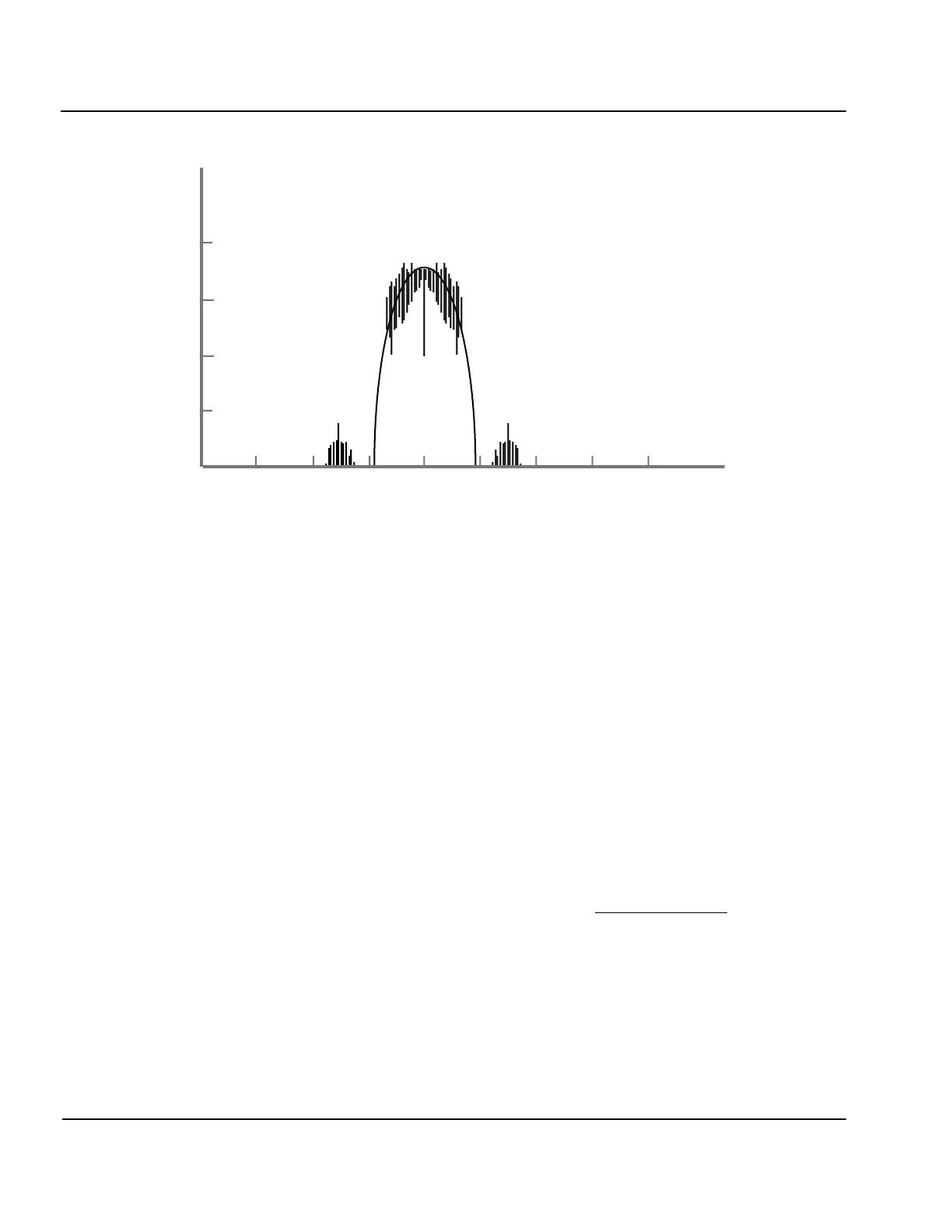
Figure 1-10: Spectral Content of a Spread-Spectrum Waveform
1:34. Since the transmitted signal would obscure the detection of the much weaker echo in a monostatic sys-
tem the transmitted pulse must be turned off before the first E-region echoes arrive at the receiver which, as
shown in Figure 1-11, is about T
E
= 600 μsec after the beginning of the pulse. Also, since the receiver is satu-
rated when the transmitter pulse comes on again, the pulse repetition frequency is limited by the longest time
delay (listening interval) of interest, which is at least 5 msec, corresponding to reflections from 750 km altitude.
To meet these constraints, a 533 μsec pulse made up of sixteen 33.33 μsec phase code chips (15 000 chips/sec)
is selected which allows detection of ionospheric echoes starting at 80 km altitude. To avoid excessive range
ambiguity, a highest pulse repetition frequency of 200 pps is chosen, which allows reception of the entire pulse
from a virtual height of 670 km (the pulse itself is 80 km long) altitude before the next pulse is transmitted.
This timing captures all but the highest multihop F-region echoes which are of little interest. Under conditions
where higher unambiguous ranges, and therefore longer receiver listening intervals, are desired 100 pps can be
selected under software control.
1:35. The key to the pulse compression technique lies in the selection of a spreading function, p(t), which
possesses an autocorrelation function appropriate for the application. The ideal autocorrelation function for any
remote sensing application is a Dirac delta function (or instantaneous impulse, (t) since this would provide
perfect range accuracy and infinite resolution. However, since the Dirac delta function has infinite instantane-
ous power and infinite bandwidth, the engineering tradeoffs in the design of any remote sensing system mainly
involve how far one can afford to deviate from this ideal (or how much one can afford to spend in more closely
approximating this ideal) and still achieve the accuracy and resolution required. More to the point, for a discus-
sion of a discrete time digital system such as the DPS, the ideal signal is a complex unit impulse function, with
the phase of the impulse conveying the RF phase of the received signal. The many different pulse compression
codes all represent some compromise in achieving this ideal, although each code has its own advantages, limi-
tations, and trade-offs.
VIS1- 4
0
10
20
30
40
2 4 6 80
PSK MODULATED MAXIMAL LENGTH CODE ON NORMALIZED
CARRIER FREQUENCY AT 4 TIMES MODULATION RATE
10dB PER DIV VERTICAL SCALE



 To Next Page