Developing the Site Plan
2-13
• Other sources of interference and reflection
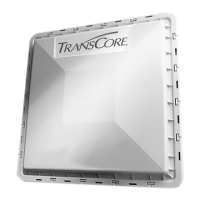
The Encompass 4 Reader must be positioned to allow the RF
signal to travel to and
return from the tags within the designated range and be placed in an area where it is
not likely to be bumped out of alignment. If the antenna becomes misaligned or some
nearby structure is added or removed, system operation can be seriously affected.
The external antenna must be positioned to allow the RF
signal to travel to and return
from the tags within the designated range and be placed in an area where it is not
likely to be bumped out of alignment. If the antenna becomes misaligned or some
nearby structure is added or removed, system operation can be seriously affected.
For instructions on setting
the read zone, see “Fine-Tuning and Verifying the Read
Zone” on page 8-19.
Other Encompass 4 Readers in the Area
Sites with more than one Encompass 4 Reader in proximity should have them config-
ured with a frequency separation of at least 2 MHz
from adjacent readers. If more than
one Encompass 4 Reader and antenna is in a side-by-side or multiple lane application,
the frequencies should be staggered. Also, Encompass 4 Readers may not operate
accurately if they directly face each other or are positioned back-to-back.
Table 2-1 shows examples of staggered reader frequencies in a site with up to 14 rea
d-
ers.
Table 2-1 Examples of Staggered Reader Frequencies
Lane Number Reader Frequency Lane Number Reader Frequency
1 912.5 2 915
3 917.5 4 913.5
5 916 6 918.5
7 914.5 8 917
9 913 10 915.5
11 918 12 914
13 916.5 14 919
Lane Configurations
TransCore recommends that traffic be guided through a controlled lane to consistently
obtain accurate tag readings and to prevent physical damage to the Encompass 4
Reader. The following subsections describe some common lane configurations and
offer suggestions for positioning the Encompass 4 Reader within the controlled traffic
flow.


 To Next Page