Encompass 4 Reader System Guide
2-16
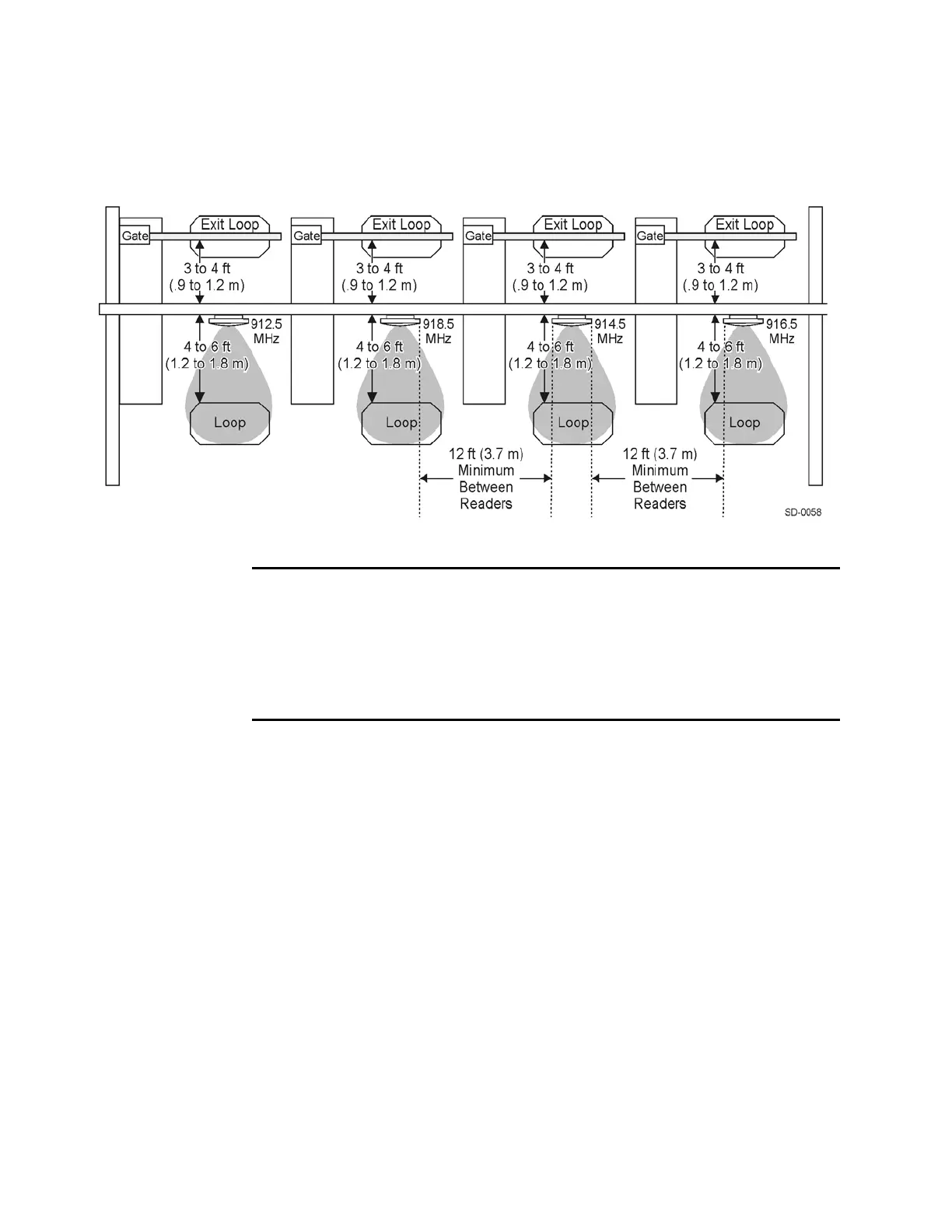
Figure 2-8 Overhead Installation
Lane Configurations for Encompass 4 Readers
Using an External Antenna
TransCore recommends that traffic be guided through a controlled lane to consistently
obtain accurate tag readings and to prevent physical damage to the Encompass 4
Reader and antenna.
Reflection, Refraction, and Diffraction of RF
Signals
RF signals can be reflected, refracted, or diffracted by metal objects, walls, and even
wet pavement or ice. Any of these factors can alter or degrade system performance.
When designing your site plan, you must consider permanent structures and transient
factors in the vicinity that may affect RF signals being generated by the Encompass 4
Reader. Permanent structures include buildings, chain link fences, guard shacks, and
gates. Transient factors include passing traffic and local weather conditions, such as
rain or snow. Symptoms of reflection, refraction, and diffraction include reading tags
that are out of the desired read zone or tags being read from another lane.
The most common RF reflectors are
metallic surfaces. RF signals may also be par-
tially reflected by nonconducting materials suc
h as dirt, wood, ice, asphalt, and con-
crete. When nonconducting materials in the system
environment become wet, they
increase reflection of RF signals.
The Encompass 4 Reader and/or antenna mounting loca
tion, aiming, and range con-
trol adjustment, and use of presence detectors can reduce
interference from RF reflec-
tions. When these actions cannot
adequately control reflections, other techniques such


 To Next Page