31
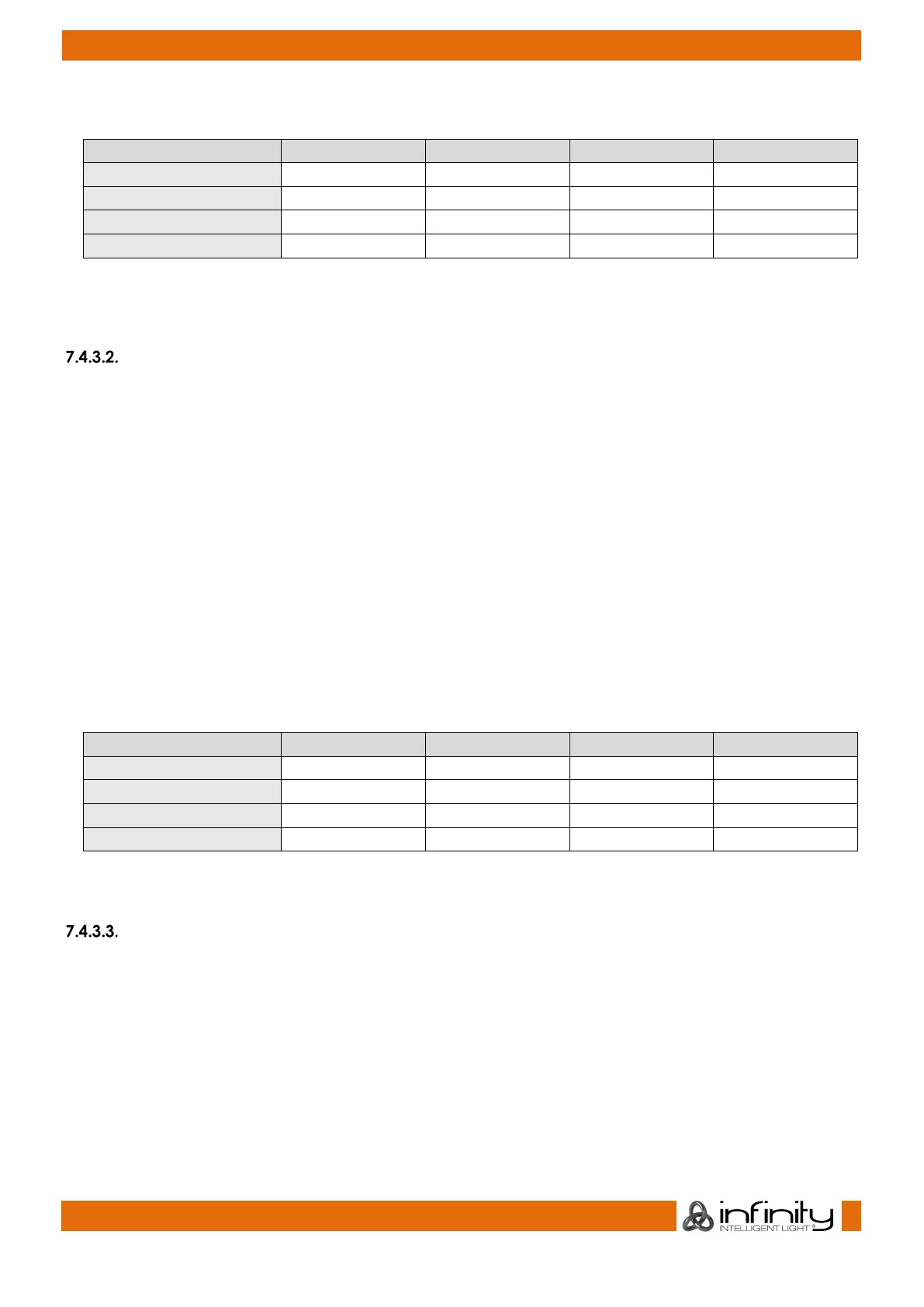
With a tracking console, however, the recorded information would be:
Cue 2 50% 100%
If the intensity has not been changed or touched, then no value is recorded for that attribute. During
playback, if Tracking is enabled, attributes remain at their last assigned level, i.e.: Fixture 4 remains at 50%
intensity while cue 2 is played back, because no change was recorded into cue 2.
Tracking through Changes
One advantage of tracking is that changes can be ‘tracked through’ a series of cues. In the example
given above, if you changed the intensity of Fixture 1 in cue 1 to 60%, this value would track through into
cue 2, since Cue 2 has no information for Fixture 2 recorded. The value will still change to 100% in cue 3,
because a value is recorded.
Tracking can be very useful when you want to make the same change to a series of cues: for example,
you might have a series of cues that include a fixture that lights a part of the set in the same way
throughout. If you later want to change the intensity of that light, you may change it in the first cue the
light appears, and the change will track trough to all the cues until the next change for this attribute of
this fixture.
While tracking can help speed up the modification of cues, you may not always want changes to track
through. For example, in a theatre show, you probably would not want changes to track through from
one scene to the next, and in a music concert, you would not want changes to track through from one
song to the next. To prevent changes tracking through, you may record a so-called “blocking cue”. A
blocking cue contains values for all attributes that have values in the cuelist, regardless of whether the
values have tracked through from previous cues. In the example given below, cue 4, would act as a
blocking cue:
Cue 1 80% 80% 50% 50%
Cue 2 50% 100%
Cue 4 acts as an end-stop, preventing any future changes to cues 1-3 from tracking through to
subsequent cues after cue 4.
Maintaining Tracking
Sometimes you may need to playback cues out of order – For example in a rehearsal situation where it
might be necessary to jump between different scenes or even acts. The Chimp Console is taking care of
maintaining the tracking state and will always calculate all values as if the cuelist was played back in
order.



 To Next Page