Section 7. Component Procedures Model 8210/8250 Maintenance Manual
Hydraulic Reservoir Hydraulic Components
7-100 Publication: 1146945/001, Revised: 25 Sep 2018
Hydraulic Reservoir
Draining and cleaning the hydraulic reservoir is
important to control the accumulation of
condensation and contamination that could
damage the hydraulic system.
Condensation is caused by the repeated heating
and cooling of hydraulic fluid during normal
operation. Contaminants include dirt, rust,
scaling, and products of fluid deterioration.
Reservoir Removal
1. Remove the hydraulic unit from the truck.
See “Hydraulic Unit Removal” on
page 7-98.
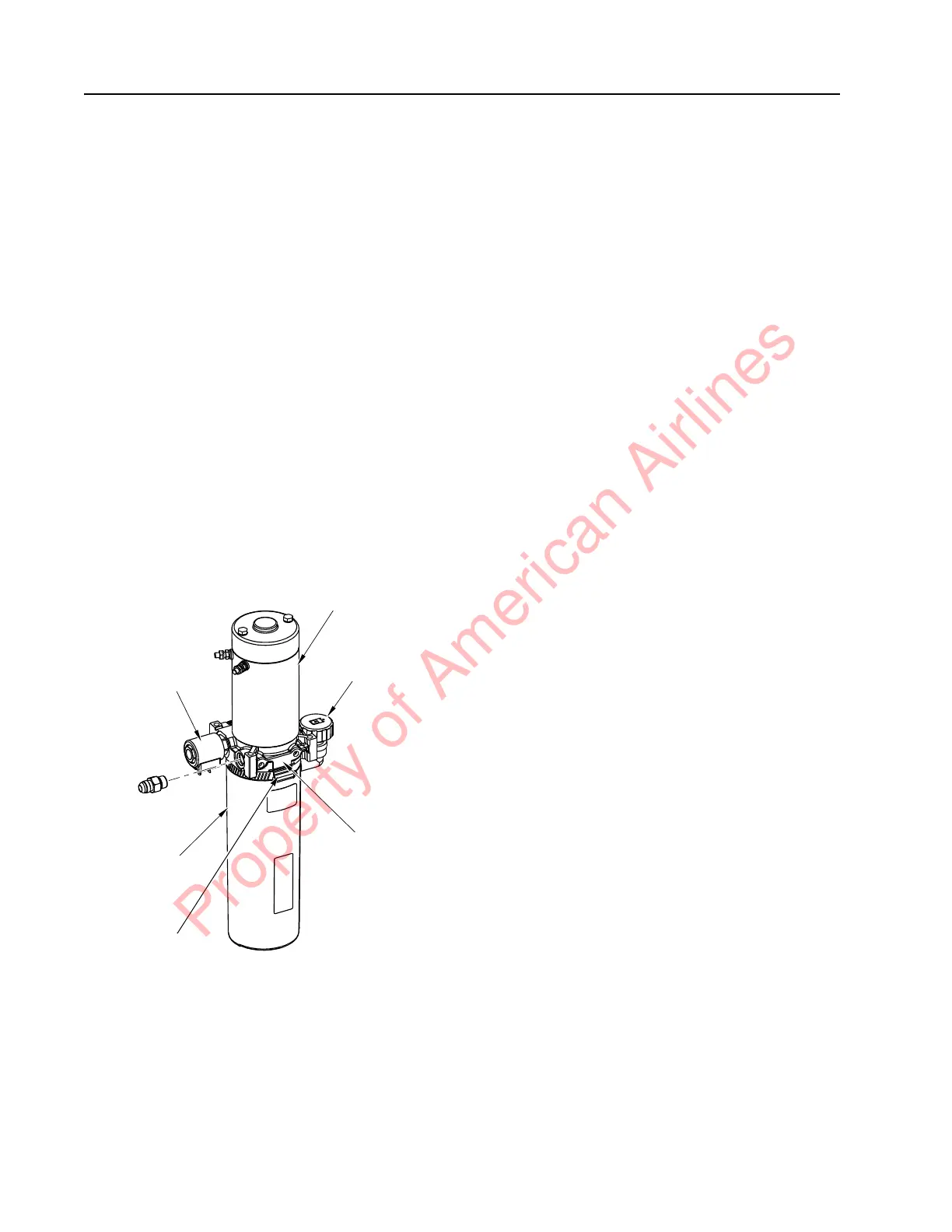
2. Remove the hose clamp that secures the
hydraulic reservoir to the adapter housing.
See Figure 7-110.
Figure 7-110. Hydraulic Unit
6349-021.jpg
3. Tap the reservoir lightly to loosen. Wiggle
the reservoir sideways while pulling up on
the pump and motor at the same time to
remove.
4. Remove the reservoir and correctly dispose
of the old hydraulic fluid.
5. After the fluid has drained, flush the
inside of the reservoir with a suitable
cleaning solvent.
6. Dry the inside of the reservoir with clean,
dry compressed air.
Reservoir Installation
1. Inspect the reservoir O-ring and the inside
leading edge for burrs. Replace if
necessary.
2. Lubricate the O-ring (with applicable
hydraulic fluid) and install the O-ring.
3. Carefully install the reservoir on the
adapter housing and attach with a hose
clamp. Torque the hose clamp to 48 to
60 in. lb. (5.4 to 6.8 Nm).
4. Install the hydraulic unit in the truck. See
“Hydraulic Unit Installation” on page 7-99.
Lift Motor
Fill/Vent Plug
Adapter Body
Reservoir
Solenoid
Hose Clamp
Property of American Airlines



 To Next Page