VIsualEyes 515/525 - Additional Information Page 32
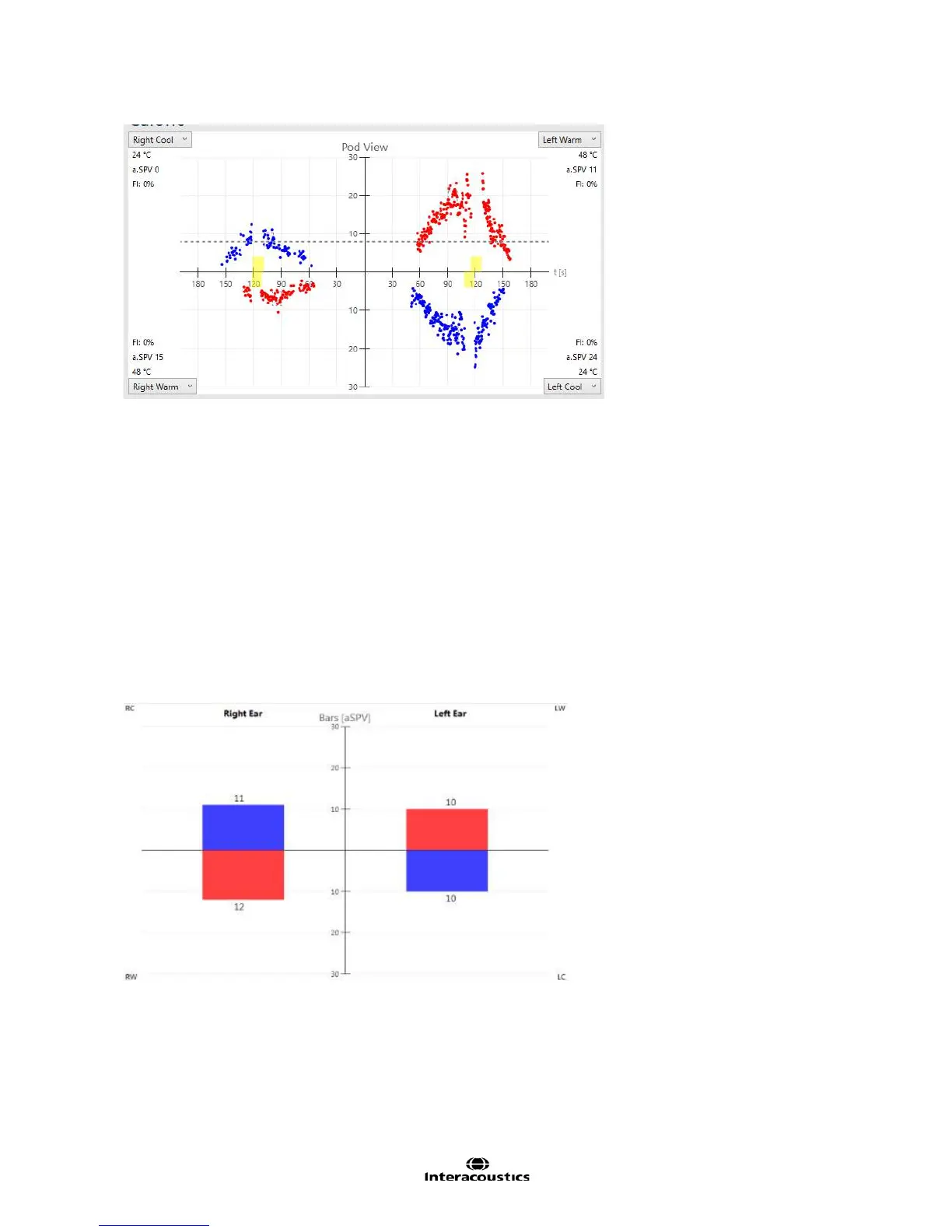
Figure 3.5.6 Pod View
The horizontal axis represents time (seconds) and the vertical axis is the SPV (degrees). In the corner of
each quadrant is an area that displays temperature of irrigation, a.SPV and FI.
In subjects with normal vestibular function this specific arrangement of data plots results in a shape similar to
the outlines of a pea pod. Click on a beat in the pod diagram, to open the edit mode.
Normally nystagmus beats are illustrated by triangles in the same color as the waveform. However, if data
collected is contradictory to what would be expected, i.e. warm irrigation of the right ear resulting in all left-
beating nystagmus, triangles will appear in a green color to alert the examiner of the unexpected outcome:
An alert message will also appear indicating an unexpected result.
Bar graph
The bar graph represents the average slow phase velocity during the peak response of each irrigation. Warm
irrigations are indicated in red color and cool irrigations in blue. The graph is divided in two, with one side
displaying the right eye and the opposite the left eye. The vertical axis displays the average slow phase
velocities, which correspond to the height of each individual bar. The numerical value defines the maximum
average slow phase eye velocity.
Figure 3.5.7 Bar graph






 To Next Page