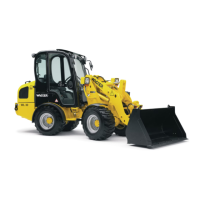
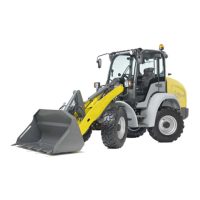
SHB WL34 * 2.0 E-31
Introduction E
Safety instructions
Safety instructions for work on the hydraulic system
Risk of injury due to liquids under high pressure.
Liquids can penetrate the skin and cause death or serious injury.
► Work on the hydraulic system may only be performed by authorized
service centers.
► Check the hose pipes regularly.
► Search for leaks with a piece of wood or cardboard.
► Ensure that the oil jet is not directed toward your body.
► Replace damaged hose pipes.
► Replace flexible lines no later than 6 years after production date.
Country-specific regulations possibly requiring shorter intervals must
be observed.
► If hydraulic liquid penetrates the skin or the eyes, have the injury
treated by a specialist physician immediately. Open only unpressurized
hydraulic systems.
► Wear protective clothes.
• Work on the hydraulic system must be performed only by trained
personnel with special knowledge and experience in hydraulic
systems!
• Residual pressure is only slow to ease! Even if the machine is parked
on level ground with its loader unit fully lowered and its engine
stopped, there can still be considerable residual pressure in parts of
the hydraulic system.
• Release the pressure before performing repair work on the hydraulic
system – see "Releasing residual pressure in the hydraulic system" on
page E-32.
• Oil leaks must be removed in order to prevent the following risks:
- Environmental hazard
- Fire hazard
- Slipping hazard
- Explosion hazard
- Injury hazard
• Do not search for leaks with your hands! Search for leaks using
cardboard or paper on which the escaping oil can been seen.
• Do not repair damaged pipe lines and hydraulic lines, but replace them
immediately by new ones – even if only minor moisture penetration is
visible.
• Replace hydraulic lines after a maximum use of six years.
• Open hydraulic connections carefully to ensure you can react appropri-
ately if a large quantity of oil escapes.
• Never open malfunctioning pre-tensioned units (for example pressure
accumulators), but always replace them completely!
• Always use a suitable container to collect the drained hydraulic oil.
• Dispose of spilled oil and oily wastes in an environmentally friendly
manner.
• Handle O-rings, quad rings and seals with special care.
• Replace damaged or lost O-rings, quad-rings and seals immediately.



 To Next Page