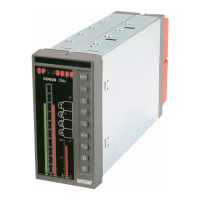
LC700 Architecture
2.23
- Shock Immunity: 10 g, 2 times.
- Noise Immunity: 1,000Vpp, 1 μs.
Protection against Pollution
The LC700 is intended for use in a Pollution Degree 2 industrial environment.
Altitudes
This equipment can operate up to 2000 meters.
Transportation Conditions
Transportation Temperature
The temperature range allowed for this equipment is -25 ºC to 70 ºC.
Transportation Precautions
- Always carry the controllers on the packages supplied by Smar according to the position
indicated on the box.
- Always protect the product from sunlight, moisture, shocks and vibration when transporting.
- If the boxes need to be opened for some reason, be sure to re-package, according to what was
previously packaged by Smar.
- Always keep the packages indoors, away from direct sunlight, corrosive gases, shocks and
vibrations.
CPU Communication
The LC700 programmable logic controller can communicate with a host (supervisory and/or
configurator) using one of the three channels in the CPU Module. This communication can be
established via the Serial Port EIA-232-C for local connection or EIA-485 for long distance
connections in an industrial environment.
The protocol used in these 3 channels is the “Modbus” defined by AEG. This protocol defines the
message structure which controllers will recognize and use, no matter what type of physical network
they communicate through.
These Modbus channels can be used for configuration or monitoring when the EIA-232-C channel is
used, it automatically cancels the use of EIA-485 and maintains communication with the local
computer until it is disconnected.
The EIA-232-C provides a point-to-point transaction for a local connection while the EIA-485
provides multi drop capability and better noise immunity performance for high speed and larger
distances communication.
With the EIA-232-C or EIA-485 channel using Modbus protocol, we can access:
- All I/O signals (discrete or analog) from the Modules and the Auxiliary Variables (Virtual
Variables).
- All linked signals (discrete or analog) from the I/O interface blocks from any Fieldbus Module
installed.
NOTES
a) The Modbus protocol provides the internal standard for analyzing messages. When communicating on a
Modbus network, the protocol determines how each controller knows its assigned address, recognize a
message addressed to each device, determines the type of action to be performed, and extracts
information contained in the message.
b) Many of the Man Machine Interface packages on the market are able to interact with the LC700 for
monitoring purposes. Consult your local distributor for details.
c) Also see the Modbus Communication section for more information.


 To Next Page