LC700 – User’s Guide
3.16
Phase 2- Updating Transference
After the Configuration Transfer Phase, it is necessary to transfer only the dynamic variables and
the settings that can be done without configuration download.
Note: This refers to Modbus variables, configuration of switches in the CPU module and
communication settings.
Rules to select the Sender and Addressee
When the CPU detects the presence of the other CPU through the SSIO, they exchange some
status information to decide which will be the Sender of configuration.
Three main cases may happen:
Situation Rule Scenario
0
If configuration name, date and time in both CPUs are the same and
Good-Config, the rules to select the active CPU will be applied, and
the active CPU will be also the Sender.
Power cycle of configured
system
1
If configurations mismatch and a sequential power up happened and
the first CPU has a Good-Config, then the first CPU to power up will
be the Sender.
Replace of CPU module
2
All other cases (configuration mismatch and simultaneous power up
OR one or both with bad-config) CPUs do not enter transference
status.
First power up of system
after a firmware download or
abnormal cases.
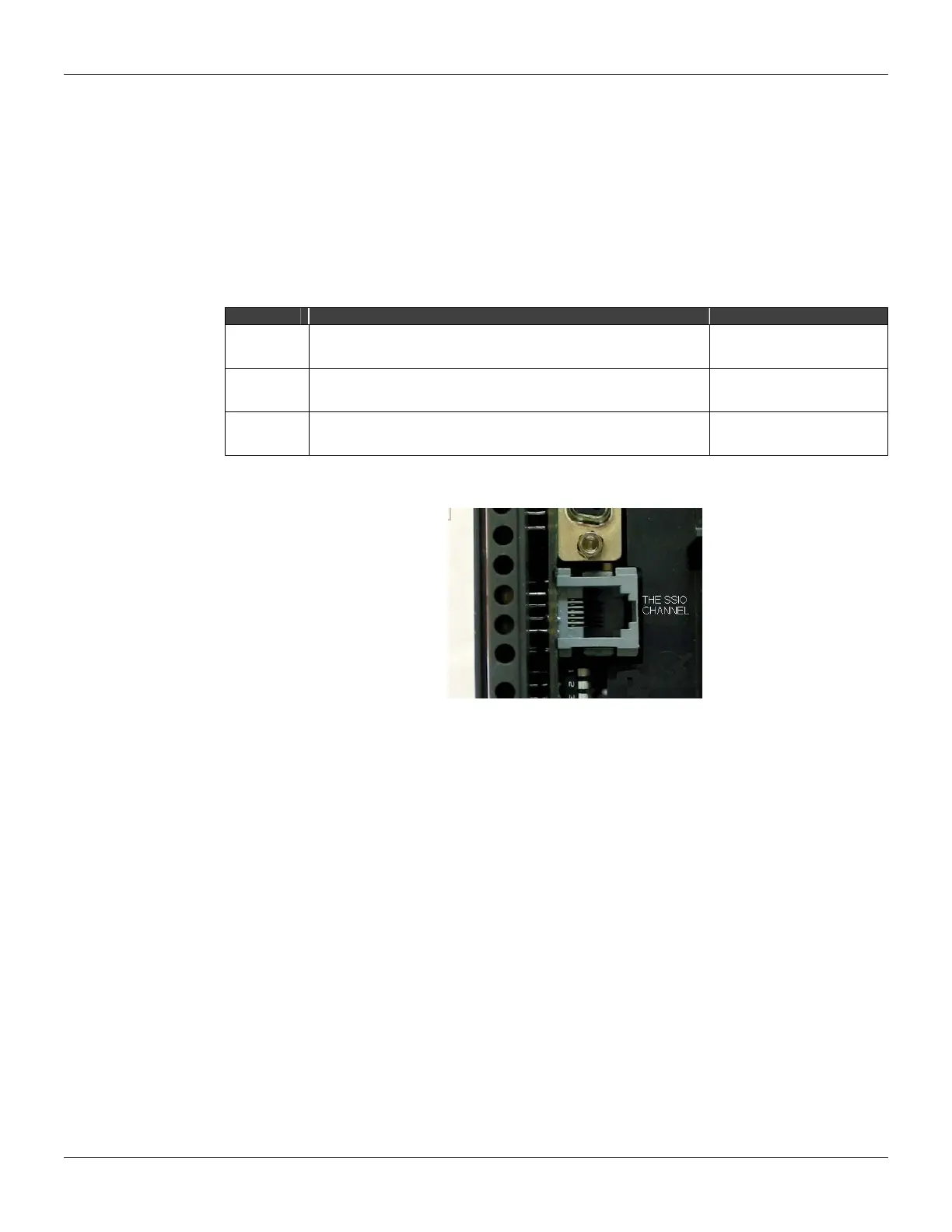
The SSIO port diagram
Figure 3.7- The SSIO channel
To transfer the configuration from the active CPU to the passive it is necessary to use a special
cable to connect the two CPUs. This cable part number is ICP-700-D3.
This port cable is a 4 wires-cable that implements a full-duplex channel whose baud rate is 1.875
Mbits/second.


 To Next Page