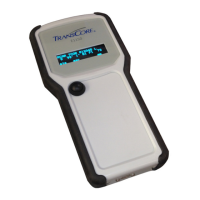
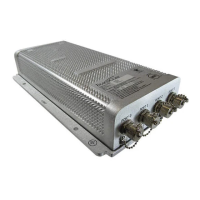
The IT2200 Reader System with Multimode Capability is an electronic identification (EID) system designed for automatic vehicle identification (AVI) and electronic toll collection (ETC) applications. It uses radio frequency identification (RFID) technology to communicate with tags and transfer data to a host computer system. The system is designed for use in various environments, including toll plazas, and supports both IT2200-series tags and ATA-type tags.
Function Description:
The IT2200 Reader System facilitates bidirectional communication between readers and tags. It processes signals from tags, decodes identification information, validates codes, and transmits data to a host computer or control system. The reader also controls the RF module, instructing it to generate RF signals. Key operations include directing the RF module to transmit RF, receiving encoded signals from tags, decoding tag ID codes, validating ID codes, transmitting ID and other tag data to the host, and sending requests to tags to return or write data. The system can also integrate with other input devices like vehicle detectors and control toll lane gates and signal lights. In ATA mode, tags are read-only and continuously backscatter when powered and in the presence of an unmodulated signal.
Important Technical Specifications:
IT2020 Reader Logic Card:
- Memory: 2 MB flash memory (program memory), 1 MB RAM (data memory), 512 KB battery-backed SRAM (for data retention during power loss).
- Processor: Motorola MC68EN360 microprocessor.
- Frequency Operation: 902 to 904 MHz and 909.75 to 921.75 MHz bands.
- Host Interface: 16-bit ISA interface.
- Power Requirements: +5 VDC and +12 VDC (from host computer or lane controller).
- Power Consumption: ISA PWA: 500 mA (+5 VDC); Encoder/Decoder/TDM Module: 200 mA (+5 VDC); I/O Module: 75 mA (+5 VDC), 200 mA (+12 VDC). Total: 775 mA (+5 VDC), 200 mA (+12 VDC).
- Warm-up Time: < 30 seconds.
- Environmental Tolerances:
- Shock: 5 G ½-sine pulse, 10 ms duration, 3 axis.
- Vibration: 1.0 Grms 10-500 Hz.
- Operating Temperature: -20°C to +55°C (-4°F to +131°F).
- Storage Temperature: -20°C to +70°C (-4°F to +158°F).
- Humidity: 10 to 95% noncondensing.
- Physical Specifications: 33.3 x 12.2 x 1.5 cm (13.1 x 4.8 x 0.6 in), 0.45 kg (1 lb).
IT2611 RF Module:
- RF Sources: Two RF sources (one for downlink/write, one for uplink/read).
- Frequency: Programmable carrier frequency with 250-kHz steps.
- Power Output: 1 W maximum to each channel (downlink and uplink).
- Power Attenuation: Programmable in 1 dB steps to -15 dB.
- Receiver: Three-channel differential receiver with pre-amplifier.
- Power Requirements: 19-28 VAC @47-63 Hz or 16-28 VDC.
- Power Consumption: 40 W maximum.
- Environmental Specifications:
- Shock: 5 G ½-sine pulse, 10 ms duration, 3 axes.
- Vibration: 1.0 Grms 10 to 500 Hz.
- Operating Temperature: -20°C to +55°C (-4°F to +131°F).
- Humidity: 95% noncondensing.
- Physical Specifications: 33 x 35.6 x 21.6 cm (13 x 14 x 8.5 in), 11.34 kg (25 lb).
AA3152 Universal Toll Antenna (UTA) and AA3153 Beacon Antenna:
- Frequency Range: 902 to 928 MHz.
- Radiation Pattern: Optimum, with virtually no side or back lobes to confine coverage to a single lane.
- Weatherproof: Housed in a radome resistant to ultraviolet radiation.
- Environmental Tolerances:
- Dust/Rain/Corrosion: NEMA pub 250-1991 compliant.
- Shock: 5 G ½-sine pulse, 10 ms duration, 3 axes.
- Vibration: 0.5 Grms 10-500 Hz.
- Temperature Range: -40°C to +75°C (-40°F to +167°F).
- Humidity: 100% condensing.
- Memory: 16 pages of 16 bytes (128 bits) for a total of 256 bytes of data (IT2200-series).
- Read/Write Accuracy: Greater than 99.97% with specified equipment and configuration.
- Tag Lifetime: Housing and internal electronics (excluding battery) have an operational life of at least 10 years.
- IT2221 Tag: Windshield-mounted, no visual displays, 915-MHz band, 300 kbps data rate, 8-year battery, read/write capability, 256 bytes RAM, data protection with passwords.
- IT2211 Exterior Tag: Identical to IT2221 but in a sealed, watertight, UV-stabilized case for exterior mounting.
- IT2235 Tag: Windshield-mounted, includes audio tones, LED lights (red, yellow, green), and an alphanumeric LCD for transaction activity and status. Same BIST and memory as IT2221. Downlink data rate: 300 kbps (encoded/Manchester decoded). Uplink data rate: 600/1200 kHz (encoded), 300 kbps (FSK decoded).
IT2410 Tag Programmer:
- Interface: RS-232 compatible (19200 bps).
- Programming Distance: Up to 5.08 cm (2 in) from the programming head.
- Power: Standard 120 VAC outlet with a UL-approved 12 VDC power module.
- FCC Compliance: Class A computing device.
Usage Features:
- Multimode Capability: Can read IT2200-series tags, ATA tags, or a mixed population of both.
- Flexible Mounting: Components can be mounted in various configurations (canopy, overhead gantry, overpass, cantilever arm, laneside "pillbox").
- Customizable Operations: Reader firmware accepts commands from a host computer or local terminal for customized operations.
- Direct Access Protocol: Allows communication with a target tag even when multiple tags are present.
- Internal Synchronization: Multiple readers can operate in close proximity without requiring external RF synchronization.
- Self-Diagnostic Capability: Built-in hardware and software diagnostics for troubleshooting.
- Expandable: Hardware and firmware features can be expanded.
- Lane Tuning: Allows adjustment of read/write zone footprint, antenna position, mounting angle, and RF power to optimize performance and minimize cross-lane interference.
- Check Tag: Integrated into the RF module for system self-testing, simulating toll transactions to verify antenna, RF source, preamplifier, encoder/decoder, microprocessor, communications port, and I/O control.
Maintenance Features:
- Preventive Maintenance Schedule:
- Weekly: Visually inspect antennas and RF module housing for physical damage (cracks, stressed cables).
- Quarterly: Visually inspect all antenna and RF module cables for signs of damage or water invasion.
- Semiannually: Check lane tuning.
- Troubleshooting Guide: Provides instructions for diagnosing and remedying common installation problems, including cross-lane interference, using host software diagnostics, check tag tests, and vehicle-mounted tag tests.
- Component Replacement Procedures: Detailed steps for removing and replacing the reader logic card, RF module, transmit/receive antennas, check tag antenna, data cable, and antenna cables.
- ESD Protection: Emphasizes the use of wrist straps during handling and installation of sensitive components like the reader logic card.
- RF Power Safety: Warnings to switch off RF power before working on antennas and to connect the RF module transmit port to an antenna or load device before switching on RF power.

 Need help?
 General

 To Next Page