Technical / Programming Manual
FT128 Rev 2.2
101
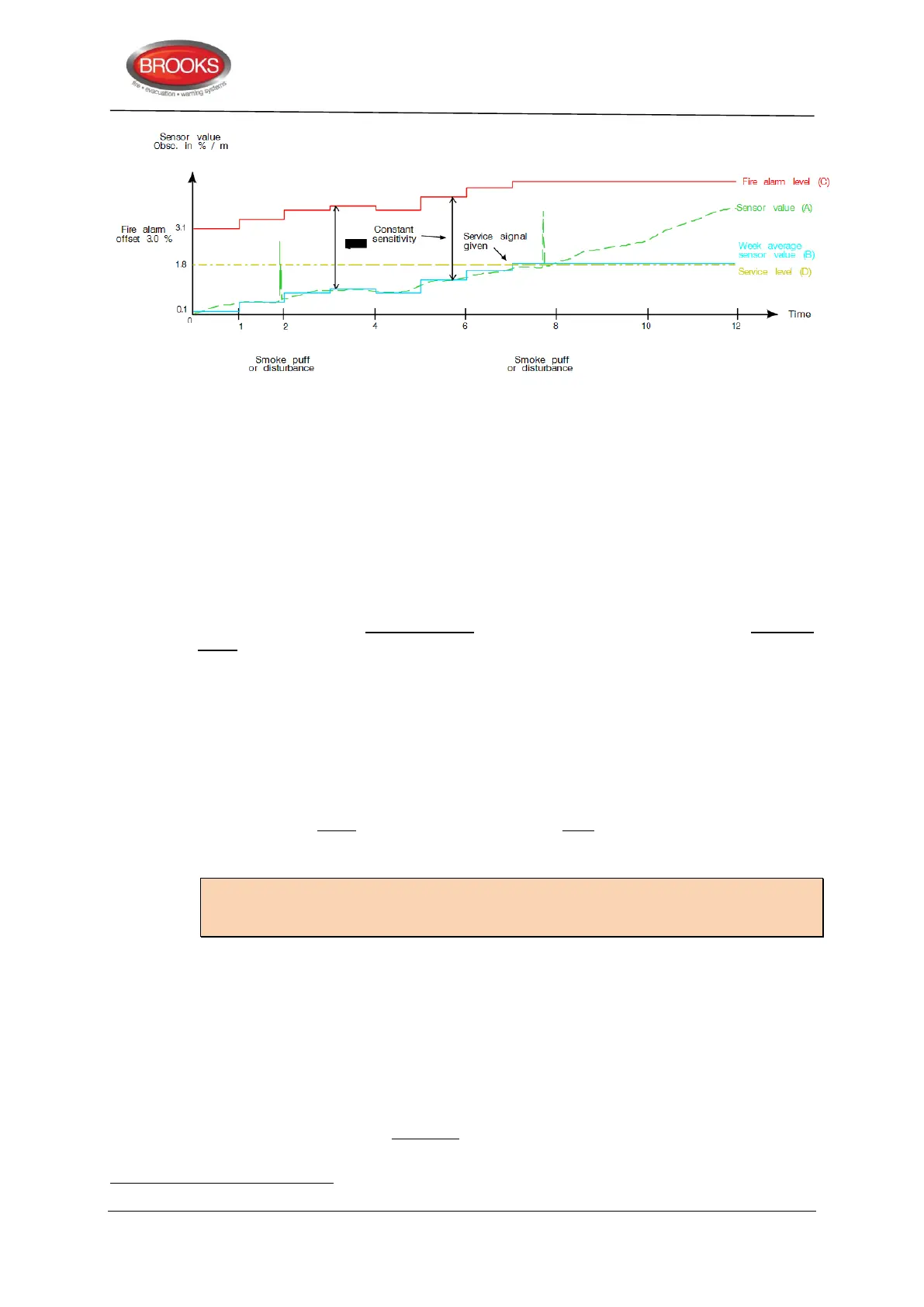
Figure 34 Fire Alarm Level Graph for the Analogue Smoke Detector
14.3 Decision Value
In order to secure real fire alarms and reduce the nuisance alarms, a decision value is
calculated. The decision value is used to decide if it is normal state, pre-warning, fire alarm
or heavy smoke alarm. It is also used in the smouldering smoke algorithm (see page 103).
The decision value is calculated, see chapter “Filtering Algorithm”, page 102.
14.4 Alarm Algorithms for Smoke Detectors / Detection Levels /
Offsets
Each detector uses an alarm algorithm and each detector has three different detection
levels for:
1. Fire Alarm (fire alarm level = the week average sensor value + the fire alarm offset)
2. Pre-Warning will be activated (if selected in EBLWin – Control unit Properties) at
a lower level (smaller offset) than for fire alarm, i.e. pre-warning will be activated
before the fire alarm from the same alarm point.
3. Heavy Smoke Alarm will be activated at a higher level (bigger offset) than for fire
alarm, i.e. heavy smoke alarm will be activated later than the fire alarm from the
same alarm point.
The pre-warning offset and the heavy smoke alarm level can, for all detectors, be set in
EBLWin, see chapter “Alarm Algorithms for Smoke Detectors / Detection Levels / Offsets”,
page 101.
Note: Changing the alarm algorithm will affect the sensitivity and detection time and
should be done by authorised personnel only! In addition, a special password is required
to change the fire alarm parameters.
"Pre-warning", "Fire Alarm" and "Heavy Smoke Alarm" can activate programmable outputs
respectively, see chapter “Control Expression”, page 84. See also the FT128 Operation
Manual.
14.4.1 Alarm Algorithm / Alternative Alarm Algorithm
In order to secure real fire alarms and reduce nuisance alarms
, six different alarm
algorithms are available. See Table 13, page 102.
The alarm algorithms are based on:
Normal, high or low sensitivity
So called false / unnecessary alarms.



 To Next Page