Technical / Programming Manual
FT128 Rev 2.2
115
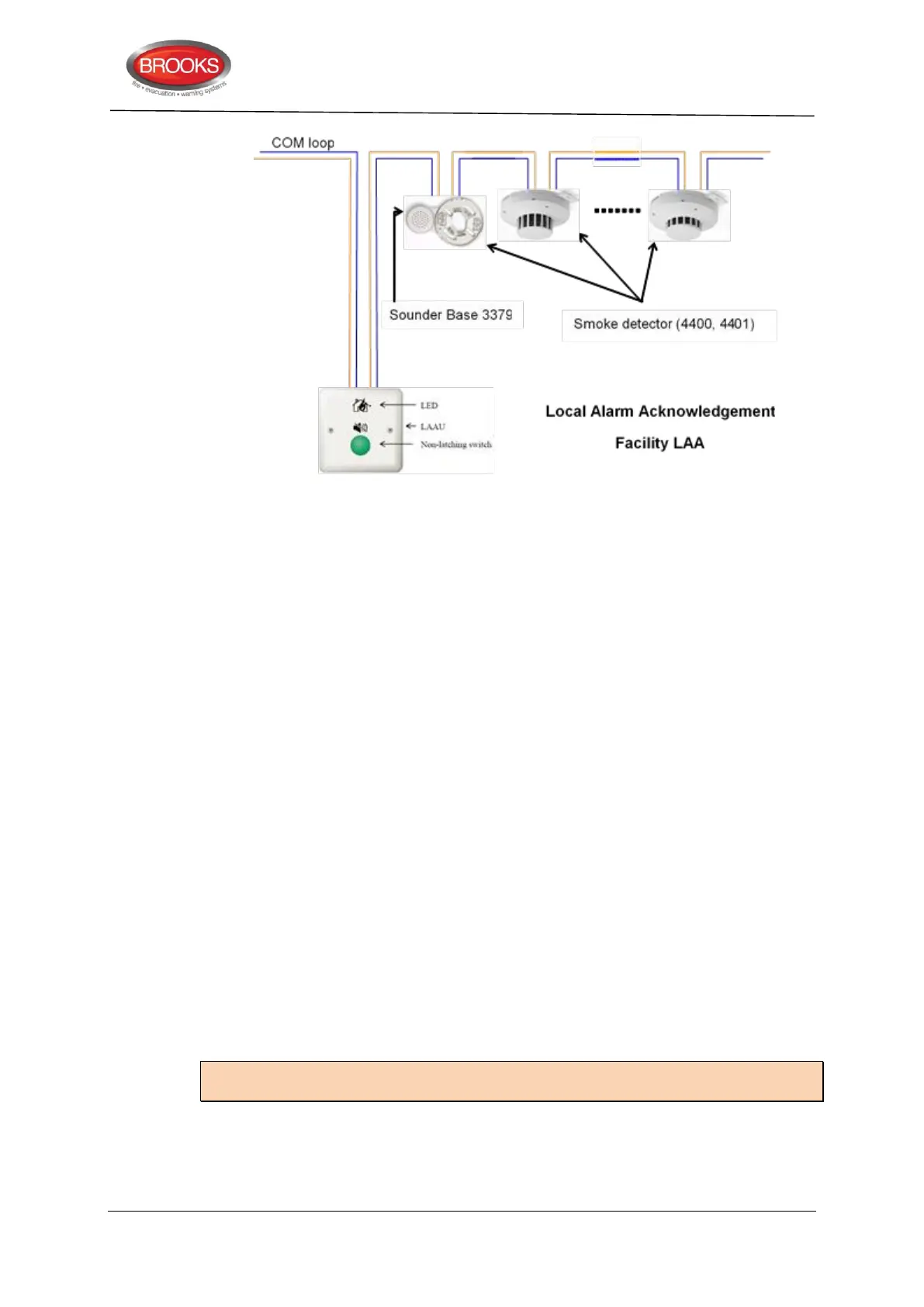
Figure 42 Local Alarm Acknowledgement Facility Connection Diagram
For more details, refer to the flowchart in Figure 41 page 113.
14.13 Quiet Alarm
A smoke detector can be set to quiet alarm i.e. non-latching detector / non-brigade call
alarm. This feature is used in AS1668 supply air / stair pressurization fan control
applications or in residential units as a non-latching smoke alarm.
In AS1668 supply air fan applications, the type “Quiet alarm” is used to set up the duct
detector to be non-latching and resets automatically after the time delay that is configured
in EBLWin is expired. In residential applications, type “Quiet alarm” is used in conjunction
with the sounder base 3379 as a localised warning in a designated area within the unit
while the active fire alarms are situated elsewhere within the unit. It can also be activated
from general fire alarm in the common areas.
Photo electric smoke detectors, programmed for quiet alarm are used to control AS1668
fans, this requires fan control module in the control panel and an I/O unit 3361 for fan
control. See “Trigger Conditions” page 84.
Indications and actions:
Detector LEDs are turned on (i.e. also a connected RIL).
In the CIE display: Quiet alarm detector ZZ-AA and a user definable alarm
text, if programmed.
LEDs "Fire" in the CIE are blinking (0.4 / 0.4 sec.).
Buzzer in the CIE sounding (0.8 / 5 sec.).
Programmable outputs for quiet alarm is activated, e.g. 3361 outputs controlling
the AS1668 fans i.e. any output with a control expression containing trigger
conditions "Quiet Alarm Zone" or "Quiet Alarm Zone Address".
Note: Quiet alarm can also be programmed for a 3361 unit "Zone Line Input". In such a
case, only non-latching detectors can be used.
14.14 Fire Alarm Type A and Fire Alarm Type B
Normally the CIE relay output "R0" is used as an output for Routing Equipment (Fire
Brigade TX).



 To Next Page